Moving Money Like Data

Prabhakar Reddy
,
Founder & CEO

Since the 1980s, technology has changed almost everything about the way we interact with the world. Letters became faxes became emails became text messages. Our hard drives found their way into the cloud, as did e-commerce and almost everything else. We describe the arc of these changes in more detail in our playbook.
Even finance, as slow as it usually is to adopt anything new, has become unrecognizable in so many ways. High frequency trading, electronic order books, CLS, direct market access, all the infrastructure that allows businesses and economies to scale.
There is one glaring exception.
FX, "cross-border payments," said differently, money. Money moves around most of the world in much the same way it did in the 1980s.
"Most" is a critical distinction. We are not talking about the G7s, innovation there looks a lot like it does in most other parts of the economy. If you're trading USD to JPY, liquidity is deep, settlement is cheap and near instant.
But there are billions of people whose experience remains stuck in the era of power ballads and shoulder pads, who aren't just forced to run on rails built a half-century ago, but whose economies are bound to half-century old logic: time zones, weekends, prices negotiated by hand, payments reconciled the same way.
This has consequences. It changes the way these economies operate, slowing growth and constraining economic dynamism. It's a tax that supports nothing but the inertia of a traditional financial system that was never built with a truly global perspective.
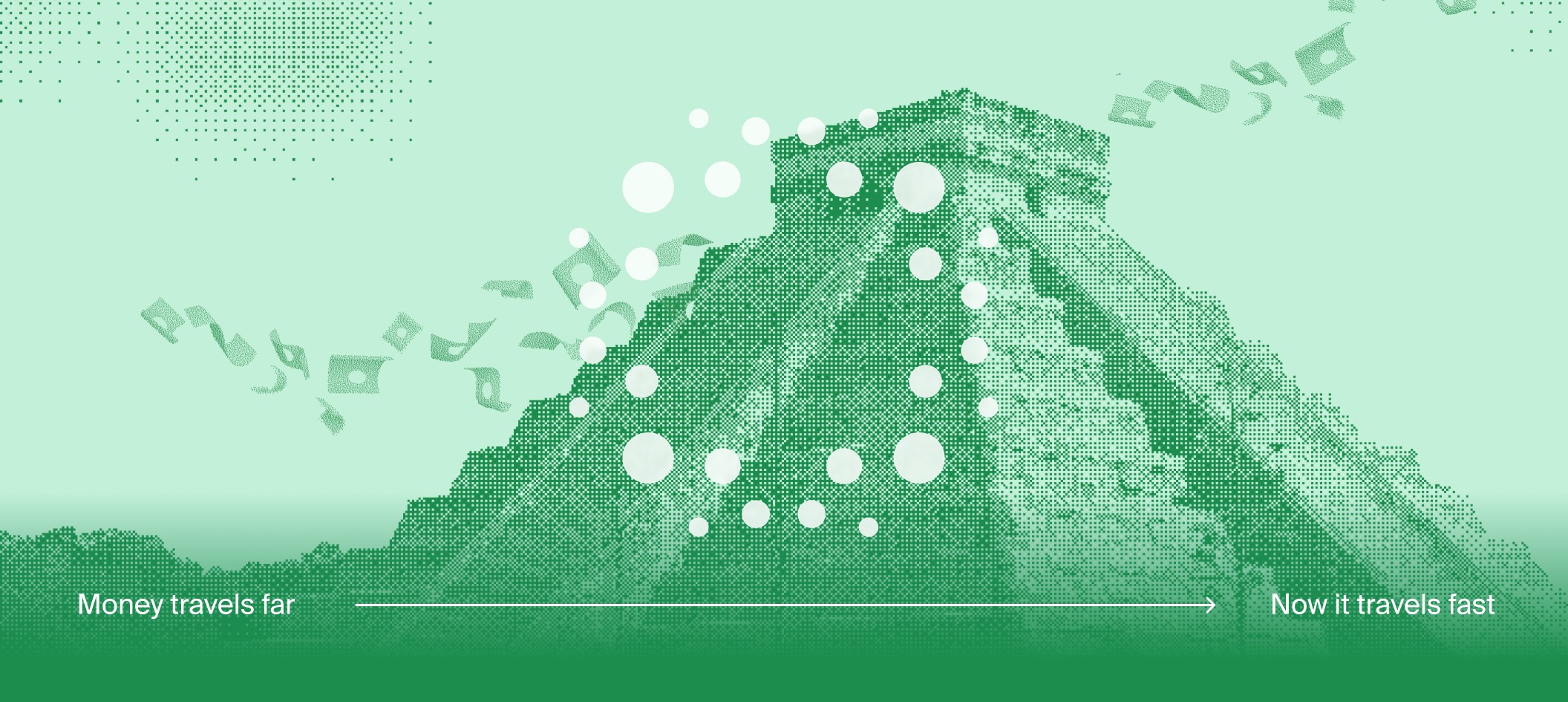
OpenFX exists to remove this tax, to “move money like data across the hardest corridors in the world,” but to understand how we do this, you must first understand why these problems exist in the first place. Let's start with the one that sits at the center, time.
The Hours Money Is Allowed to Move
Foreign exchange is a 24-hour market in the narrow sense that somewhere on earth a currency is always trading. Liquidity availability is a different matter entirely. The trading day is a relay race run between financial centers: Tokyo, then London, then New York, each carrying the market through its own working hours before handing it on to the next. The deepest and cheapest liquidity pools in the few hours when two of those centers are awake at once, above all the afternoon overlap between London and New York.
The G7s benefit from this arrangement. Companies trading dollars against euros, stay liquid across almost the whole of the race. For everyone else, most of the world's currencies, liquidity lives inside a single leg of it.
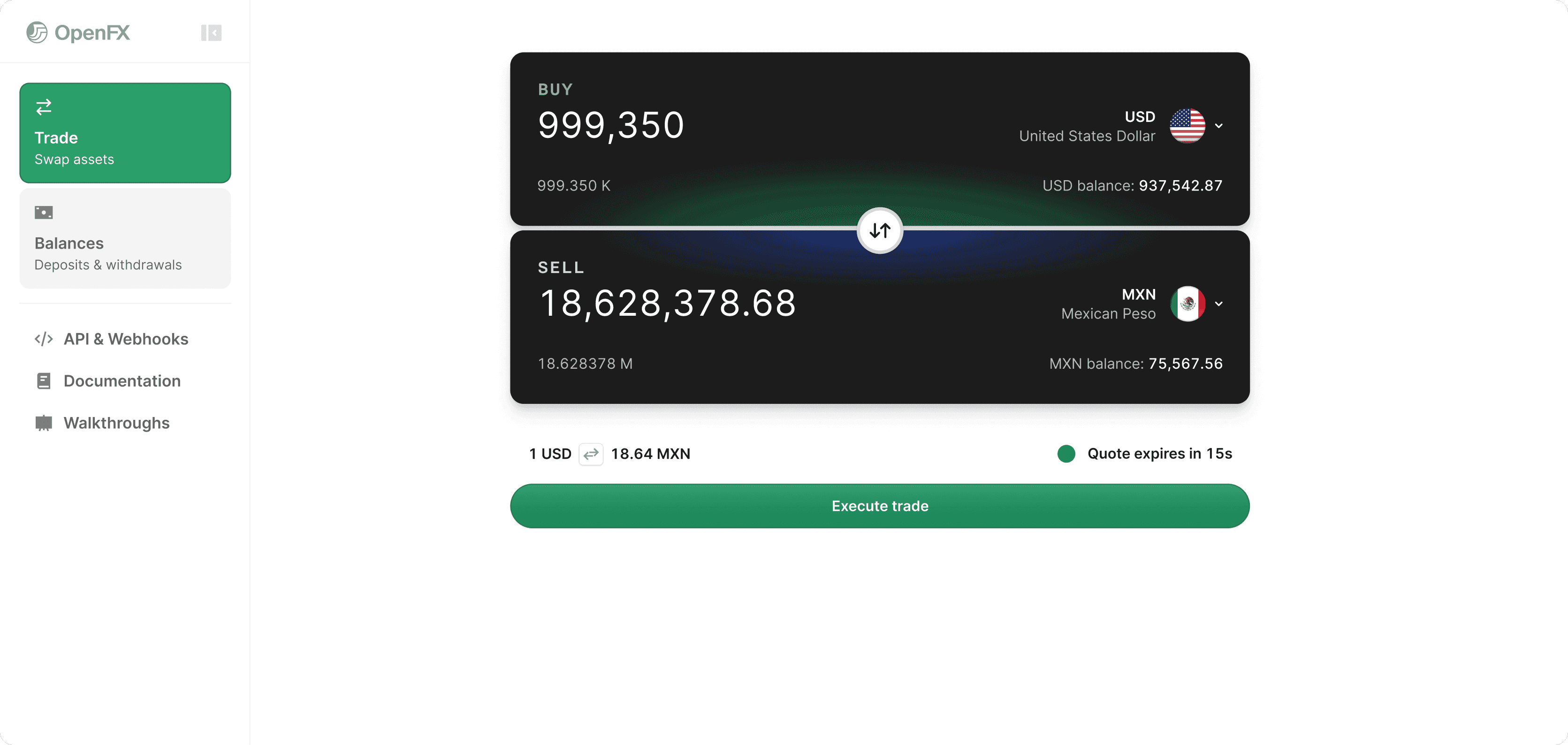
The Mexican peso trades well during North American hours and thins out afterward. The Philippine peso is deepest while Asia is online. Several African currencies have limited windows with little overlap with any of these blocs. The market “never closes,” but it can thin so completely that trading becomes either outrageously costly or essentially impossible.
A payment sent into a thin hour meets wider spreads and less certainty that the price on the screen is the price that will fill, because there are fewer participants to take the other side. The further a currency sits from the G7, the more of its day falls into those thinning hours, and the more its people pay for the accident of when they happen to transact.
A currency that is liquid for only part of the day is also expensive to hedge, because the forward and options markets are thin during the same hours. Where those markets are shallow, protection is priced to match, so the cost of the hedge can become a meaningful fraction of the return it is meant to protect. Firms too small to absorb that cost mostly go without, carrying risk a company trading euros would never think to hold.
If the currency moves against them in the days it takes a currency to clear, that swing comes straight out of the margin. Multiply it across every business too small to hedge, and you have an economy mired in risks potentially so large they may not be willing to engage in business at all.
Structural risk creates economic drag precisely in the parts of the globe where dynamism would be most valuable.
The Days It Isn't
That last section was partially a lie. The market isn’t “always open,” even in the narrow sense discussed. The market does close, on both weekends and holidays.
Everyone’s weekends and everyone’s holidays.
The large settlement systems that move value between banks keep business hours and largely rest on Saturday and Sunday. A payment initiated on Friday afternoon can sit untouched until Monday morning.
This compounds with the time zone delays we discussed earlier, creating vast blocs of the day when predictable settlement is almost impossible, for anyone outside of the G7. A transaction can settle in 60 minutes or three days depending on precisely when the company decides to initiate it.
A business planning around this learns to batch its payments toward the hours when the rails are most likely to be awake, which means its operations end up scheduled around market plumbing rather than its own needs. A firm in Lagos should not have to think about when in the London afternoon it should pay its suppliers. On these rails, it does.
Finding The Right Price
Finally, there is the problem of finding a price.
For thin corridors, which are already illiquid, quoting and execution must be arranged manually, chiefly by people in chat rooms like Telegram.
This process is far less efficient, and far more costly than the electronic order book that allows more liquid currencies to route near instantly.
The routing itself is also fraught. A payment between two currencies with no direct market has to be moved through an intermediary vehicle, almost always the dollar, which means finding banks willing to carry each leg.
The reconciliation that follows the routing is also manual. Every hand the payment passes through takes a fee and results in a delay.
This already clunky chain of systems has been fraying over the decade. The correspondent relationships that allow banks to transact with one another have been in steady retreat since the early 2010s, as the largest banks shed smaller ones in regions they judged too risky to bother with.
Somewhere between a sixth and a fifth of those relationships have already disappeared. Losses have been concentrated in Africa, South Asia, and the Middle East, with remittance access to more than twenty countries effectively closed.
When one of these links breaks, companies in the affected region export less, and the trade does not reroute so much as vanish. Researchers who track these flows have found that the business, and the jobs behind it, simply go away. This is the tax that we described in the opening.
Moving Money Like Data
None of this is a law of nature. Every piece of the tax traces back to a decision about who the system was built to serve, and decisions can be remade. The failures we just walked through are also instructions. Each one says something about what a system built for everyone else would have to be.
Global
The diagnosis leaves one obvious question. If the tax is this visible, why has no one removed it? The answer is a matter of incentives. The return on building fast, cheap rails is largest where the volume is largest, the G7 countries that make up most of the currency flows. The hardest corridors are left to whoever has the risk tolerance to serve them. The few who fit this criteria have no specific reason to optimize for price.
The major financial institutions themselves also make money off of the float, profiting from holding rather than distributing capital. This means that even if they had the appetite to serve exotic corridors robustly, it would likely be at a slower speed than is possible.
Incentives only explain the neglect. The deeper failure is in how these institutions understand the world in the first place. They look at it from the center, a headquarters in some major financial capital, and treat everything beyond that center as peripheral, markets to be served on terms set somewhere else. You cannot build a rail for a corridor you only understand from the outside, and a head office in London or New York understands most of the world from the outside by definition.
This is why OpenFX is built without a center. Rather than a home office with outposts reporting back to it, we organize around the specific needs of specific markets. We are staffed by people who know how money moves in the places they work because they are of those places. This structure corrects the assumption that stranded exotic corridors to begin with, that the world can be served competently from somewhere far away from it.
Fast and Cheap
Being close to a market tells you what to fix. How to fix it is the next question, and the first answer everyone reaches for is stablecoins. This is for good reason, a dollar held as a stablecoin can travel across the world in seconds, on any day and at any hour, without dealing with the correspondent banking network and its delays. They are a real part of the answer, but only a part.
Stablecoins do not remove the complexity of a cross-border payment, they relocate it. The instant on-chain hop is bracketed by everything that still has to happen at the edges: getting local money onto the chain, getting it off again into an account someone can actually use, the currency conversion, the compliance, the local payout. Optimize only the middle, and you have joined a fast segment to slow ends, and the payment as a whole is still slow and still costly.
We have written before about cross-border payments as an iceberg, a small visible transaction floating on a mass of submerged work. Stablecoins clean up the tip. The submerged part, which has a different shape in every country, is where the transaction as a whole is won or lost.
Optimizing each of the stages of that transaction, taking into consideration the specific needs of specific corridors, is what OpenFX is built to do, and the only way you can move speed, everywhere, towards instant.
Automated
Finance tends to speak of automation rhapsodically and mean very little by it.
The right question is not whether a transaction can be automated, but what is slowing it down and whether that particular thing should be removed. Sometimes the obstacle is a bank with no usable API, and the fix is to build the connection that should have been there in the first place. Sometimes the local rails are already quick and the true bottleneck is a regulation, in which case more automation changes nothing, and what the payment needs is judgment placed where it counts.
Automation, for us, is an instrument pointed at whatever the real obstacle happens to be in a given country. It is what replaces the chat rooms and the hand-done reconciliation with API calls. We aim effort at automating areas of high lift, and keeping people in the loop wherever the problem still calls for people.
We want to move money faster through the corridors that have always been hardest to move it through. Everything we build is geared towards making transactions faster, cheaper, more globally aware, and automated in the right ways.
We want to move money the way the internet moves information, so that a payment between two of the world's most difficult currencies becomes as ordinary as one between dollars and euros.
We want to remove the tax burdening most of the world’s economies, and by doing so unleash the kind of growth that will touch the lives of billions of people.
Share article
Read other articles
Stay informed with our latest articles on currency launches, institutional FX trends, and global liquidity.