Why Does FX Close on Weekends?

Harrison Mann
,
Head of Go-to-Market

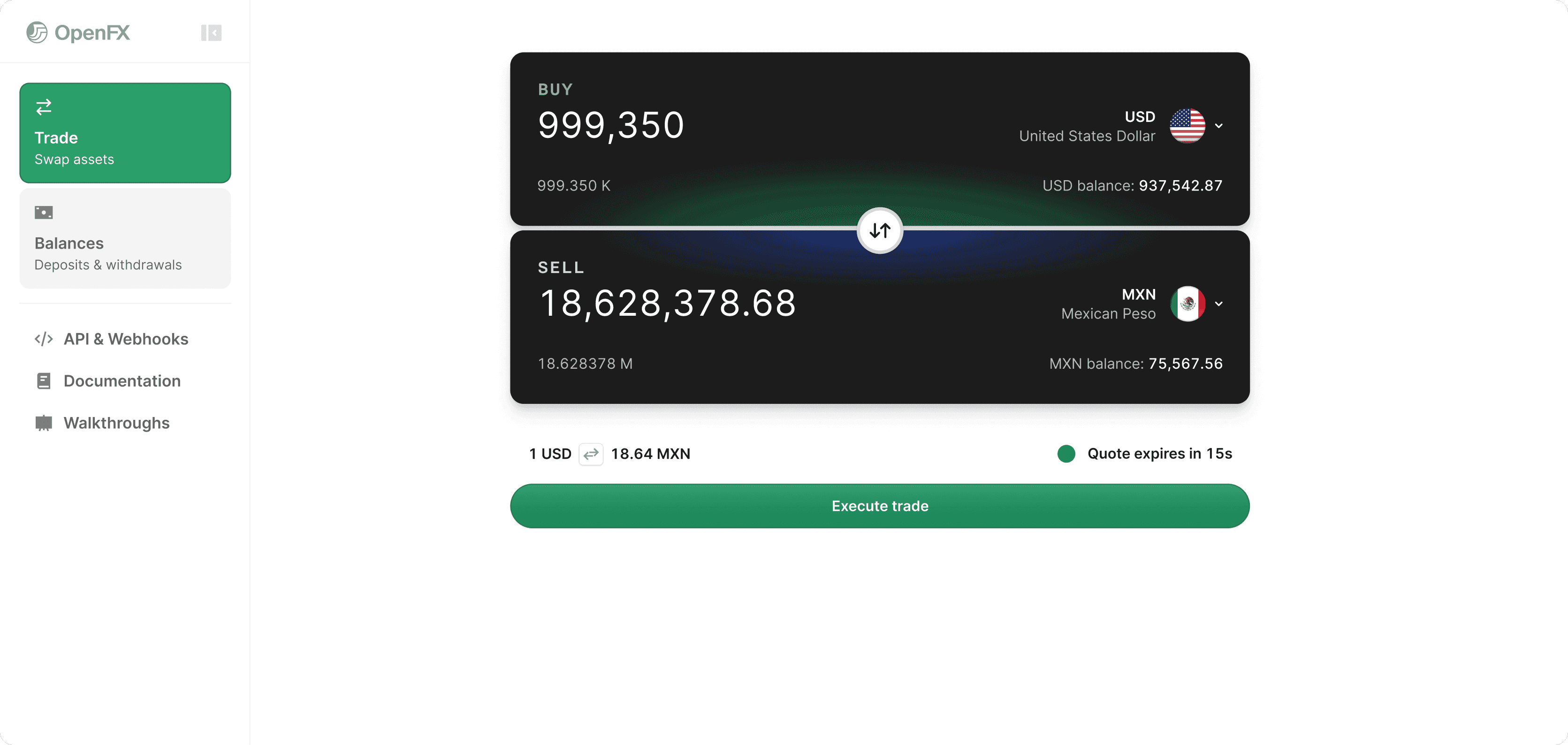
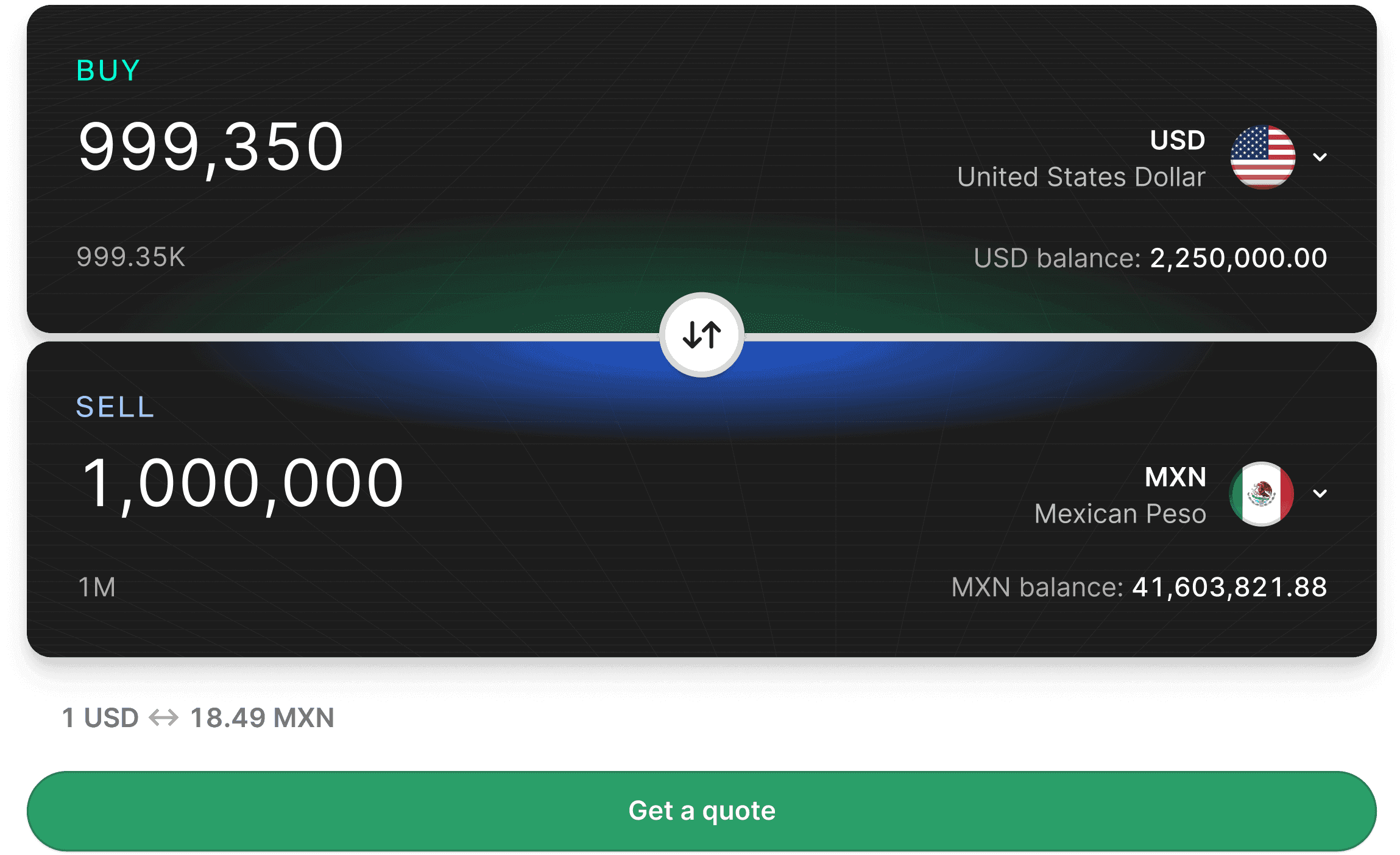
OpenFX moves money on weekends and holidays, reliably and at scale.
This might not seem like such a big deal. But it is.
Let me tell you a story.
It's Saturday evening in São Paulo. Maria Oliveira, CFO of a midsize logistics company, is watching her daughter's futsal match when her phone buzzes. Their largest client in the UAE has just accelerated payment terms on a contract worth $12 million. She needs to convert a substantial position in Mexican pesos to Emirati dirhams by Monday morning Dubai time.
The banks are closed.
This is a scenario that plays out thousands of times a week, people desperately need to move money and they just can’t. The largest and most liquid financial market on Earth closes on Friday afternoon and doesn't reopen until Sunday evening. If you need to move money across currencies during that window, sorry, you're on your own.
Maria starts making calls.
June 26, 1974: Bankhaus Herstatt
To understand why the world's largest market keeps the hours of a suburban branch bank, you need to go back fifty years to a medium-sized German bank that most people have never heard of.
Bankhaus Herstatt was founded in Cologne in 1955. By the early 1970s, it had drifted from conservative private banking into aggressive currency speculation. As is so often the case, these bets went wrong and by June 1974, the bank's foreign exchange losses exceeded its entire equity base.
German regulators did what they had to and decided to shut Herstatt down. They did this at 4:30pm local time on June 26th, the end of the German banking day. Orderly. Responsible. Absolutely the right thing to do, except for one detail: in New York, it was 10:30 in the morning.
Herstatt's counterparties had already delivered their Deutsche marks earlier that day, expecting to receive U.S. dollars in return when American markets opened. These dollars never arrived because the bank ceased to exist between time zones.
What happened next froze the global payment system. Banks stopped making outgoing payments until they were certain they would receive the other side. Interbank lending rates spiked. Credit dried up. Absolute chaos all because of the gambling habits of a single medium-sized bank in Cologne.
An important lesson was learned: in cross-border FX, the gap between when you pay and when you receive is a gap in which you can lose everything.
This became known as Herstatt risk. It took the global financial system twenty-eight years to solve it.
The Fix That Froze the Clock
In 2002, the banking industry launched Continuous Linked Settlement (CLS), a system designed to eliminate Herstatt risk entirely. Instead of settling each leg of a currency trade separately, CLS would settle both sides simultaneously. You would only deliver your currency if and when the other side delivered theirs. Cut out the gap, cut out the risk.
It worked.
CLS now settles over $8 trillion in daily payments across eighteen currencies. It has become, in the words of one industry document, "the unglamorous plumbing" that keeps global finance from seizing up.
But CLS has a dependency. To settle both sides of a trade simultaneously, it needs access to the central bank payment systems of every currency involved. These Real-Time Gross Settlement systems (RTGS) are the pipes that actually move the money between institutions. They're operated by central banks, and central banks keep banker’s hours.
CLS works during a five-hour window each business day when RTGS systems across its eighteen currencies are all operating simultaneously. Outside that window which includes evenings, weekends, and holidays there is no CLS settlement. There is no institutional FX settlement at all, at least not through the infrastructure designed to eliminate principal risk.
Which is how Maria’s team found themselves making phone calls.
Saturday Night, Continued
Maria's treasury analyst is already working through their contact list. Getting the money out over the weekend isn’t impossible, it just requires the right relationships, and a willingness to pay a massive premium.
The first counterparty doesn't pick up, it's Saturday and they’re not working.
The second is at a wedding, he offers to "see what he can do" and call back in an hour.
The third picks up immediately, it’s a smaller firm that specializes in exactly this kind of situation. They're willing to offer a quote, but the spread is 280 basis points, nearly six times what Maria would pay on a Tuesday afternoon. On a $12 million notional transfer, that's an extra $336,000 in execution cost.
"It’s the weekend rate," the trader shrugs, "Take it or leave it."
She takes it. The alternative is missing the Monday deadline and potentially losing the contract entirely.
Slow By Design
The world is run on incentives, and the incentives in cross-border FX are mostly bad.
When your payment spends three days "in transit," that money isn't floating around in the ether, it's sitting in an account somewhere, and whoever controls that account is earning interest on it while you're waiting. This is called float, and it's one of the most reliable revenue streams in banking.
JPMorgan Chase's corporate and investment banking division generates between $1 and $1.5 billion annually from various float sources, including (drum roll), foreign exchange settlement delays.
That’s a lot of money to just give away to improve “market efficiency.”
As one Treasury Department official put it in a 2024 speech: "Some of this cost and delay is deliberately built into the system as a feature, not a bug."
There is nothing technically stopping money from moving on a Sunday, except for the fact that every hour your money spends waiting is an hour someone else is earning interest on it.
The Workarounds
Nature abhors a vacuum, and so does the market.
Stablecoins emerged in part as a patch for exactly the problems we have been describing. USDC doesn't care that central banks are closed for a holiday, Blockchain settlement happens 24/7, regardless of whether anyone in Frankfurt or Tokyo is at their desk.
Crypto exchanges that needed to move fiat over the weekend started routing their transactions through stablecoins because traditional rails simply weren't available when they needed them.
JP Morgan, the grandaddy of all institutionals noticed the shift in the winds, and built tools to take advantage of the change. Their Kinexys platform now offers on-chain settlement in five currencies around the clock, "We are the first in the industry to have the ability to swap dollars for euros in under two minutes, 24/7," said a company representative to industry press, "It's not magic. It's just getting smart about reducing systems-based limitations."
Circle's StableFX also offers institutional foreign exchange on blockchain rails. Checkout.com launched their own stablecoin settlement specifically because, as they put it, crypto exchanges "could start onboarding new large customers over the weekend."
Each of these represents a workaround. Each exists because the core infrastructure was never designed for a world doesn’t sleep.
And none of these are a full solution, because Stablecoins cannot solve liquidity problems on their own.
Back to Maria
The money moves Sunday afternoon São Paulo time. Maria's counterparty executes the peso-to-dollar leg through a correspondent relationship in Mexico City, converts to dirhams through their limited weekend liquidity, and initiates the transfer to Dubai.
Monday morning arrives and the dirhams land. The deadline is met, and her client doesn’t know the difference.
Maria's company absorbed nearly $340,000 in spread and fees to move $12 million over a weekend. She files the expense, flags it for the board, and goes back to watching futsal.
Would Stablecoins have saved her? Not necessarily. While they may have made it easier for her to initiate the transaction, the quality of that transaction would still be highly dependent on the underlying infrastructure driving it.
The settlement speed and that 2.8% spread can only be ameliorated elsewhere. That’s where you need an operator (like, say, OpenFX) that actually understands how to negotiate prices and commitments when the market is taking time off.
Bringing Cross-Border FX into the Modern Era
Let’s be frank, Maria's counterparty isn't wrong, exactly.
Weekend liquidity is scarce, particularly when you’re dealing with emerging market crosses where volumes are especially thin and risks are much higher. Nothing is going to change that in the near-term, but the problem isn't unsolvable. You need:
The right relationships, processes and infrastructure
Global teams that understand the particularities of how Mexican and Emirati payment rails work
A raft of counterparties willing to negotiate on a Saturday evening because they trust it’s worth their while
Compliance capabilities that stay staffed around the clock
It's a hard problem, the kind of hard problem we love.
There are a lot of Marias in the world, moving a lot of money, often under deadline pressure that doesn't respect banking hours. They deserve better than a 2.8% haircut for the crime of needing liquidity on a Saturday.
The world doesn't stop on Friday night. Neither do we.
Share article
Read other articles
Stay informed with our latest articles on currency launches, institutional FX trends, and global liquidity.