Chat Trades: A Brief History of Moving Billions Over Telegram

Harrison Mann
,
Head of Growth

"48/52, 30s"
"mine"
"👍"
That was $50 million, converted from US dollars to British pounds. It happened in a private Telegram room that was probably called something like “The Don’s Office.”
The person who initiated it might have been at their desk, or in the back of a taxi, or waiting for a flight at Heathrow. There is no formal record anyone outside the conversation can access. No timestamp a compliance officer would accept. No execution quality data. No audit trail.
In 2026, a meaningful share of a $9.6 trillion daily FX market still moved this way. It is, to put it gently, kind of insane.
The natural question is how we got here. The answer is a series of “perfectly reasonable” decisions that take us from the telephone to Bloomberg cowboys playing gangsters, all the way to $3.5 billion in fines in what was one of the biggest regulatory bloodbaths in modern history.
The phone call
A long, long time ago FX trading happened over the phone. A dealer in London who needed to sell yen called a dealer in Tokyo, asked for a price, went back and forth for a while and then executed.
The relationship was everything.
There was no order book to check, no screen showing the "real" rate. The price was whatever two professionals agreed on, and whether you got a good one depended entirely on who you knew and how much they liked you.
This illustrates an important structural difference between the FX markets and something like equities. There's no central exchange, currencies trade over the counter, across the globe, and around the clock. In the late 1980s, interbank volume was split roughly 50/50 between direct dealer-to-dealer calls and voice brokers acting as middlemen.
Slow, opaque, and entirely predicated on two guys liking each other slightly more than they wanted to tear out each other’s throat.
The only system fit to shape a market like cross-border FX.
Two markets
Then came the screens.
Reuters launched the electronic trading platform Dealing 2000 in 1992, and quickly earned a monopoly.
EBS followed in September 1993 in an effort to break that monopoly, it was backed by a who's-who of global banking: Barclays, Citi, Deutsche, HSBC, JPMorgan, UBS.
For the first time there were real central limit order books, and something resembling transparent pricing. By 2005, roughly half of interbank FX was trading on screens. A Georgetown paper describes Dealing 2000 as a kind of “advanced telephone,” where dealers "chat in much the same manner as with instant messengers on the internet."
A “chat trade” if you will.
It was an honest-to-goodness revolution, at least for the side of the market that mattered to the major banking institutions.
What emerged were effectively two foreign exchange markets – G7 and everyone else.
Broker-dealers in EUR/USD, USD/JPY, GBP/USD and other highly liquid pairs all received the benefits of electronic trading platforms, but for everyone else who moved money across exotic corridors or through emerging markets, the process remained largely as it was before – guys in suits calling each other on phones to negotiate prices, except now the market was moving against them as they chatted away.
Despite all the changes we’re about to lay out, it’s critical to recognize that even 20-years later the market is still almost as bifurcated, mostly around whether you’re trading exotic pairs.
BIS's own 2025 data shows electronic execution at 59% of FX volume, "virtually unchanged" since 2022. Forty-one percent of a $9.6 trillion daily market still trades through voice (either directly or indirectly), because no electronic platform ever figured out how to serve them efficiently.
Bloomberg's empire
And then Bloomberg absorbed everything.
The terminal had always been a data and analytics platform, but by the early 2000s its chat function became the de facto connective tissue of the institutional finance world. A 2016 account of the Bloomberg chat ecosystem describes a social hierarchy that would feel familiar to anyone who's navigated a high school cafeteria.
You met a new contact and MSG'd them, let them hang out with you a bit – test the waters. If things developed, you would open up an Instant Bloomberg (IB) chat, talk about music and million dollar swaps. Once you decided they were cool enough to hang, you'd create a "recurring" chat room that opened automatically every morning when you logged on. A recurring room was the professional equivalent of granting someone a seat at your lunch table.
At $20,000 a year for a terminal subscription, this was a pretty expensive seat, but you got a whole lot more than just a platform to negotiate quotes on exotic pairs, you got an entire community, one with a culture that reflected a certain kind of hubris that would eventually catch up with its participants.
"50 cable spot?"
For example, when you opened a recurring room on a Bloomberg terminal, you had the opportunity to name it, and these names tell you a lot about what was going on in there: "The Cartel." "The Bandits' Club." "One Team, One Dream."
Millions of dollars flowing through the global financial system from chat rooms that sound like they were named by teenagers playing Grand Theft Auto.
The fall
In June 2013, Bloomberg News reported what these chat room names had been advertising for years. Traders at the world's largest banks were using these private rooms to share confidential client orders, coordinate trading positions, and manipulate the WM/Reuters benchmark rate during its 60-second daily fix window.
An investigation into this eventually touched Citigroup, JPMorgan, Barclays, UBS, RBS, HSBC, and Deutsche Bank. Over $10 billion in fines were issued. Five banks pleaded guilty to US felony charges. Forty employees were suspended or fired.
The chat rooms had been seasoned with jokes about manipulation and references to alcohol, drugs, and women. One HSBC trader, captured in regulatory filings, asked "how can I make free money with no [redacted] heads up." Another wrote, "for compliance purposes…no collusion going on here hahahaha." Real quotes from real traders moving real money through the world's largest financial market.
This wasn’t some anomaly, it was the rational result of a system where your business platform is a glorified social network, and your capacity to excel depends largely on whether the guy on the other side of the text thinks you’re funny.
The relationship was everything.
The reform that wasn't
The industry responded to all of this with the FX Global Code of Conduct, published in 2017 after a BIS-led working group spent two years on it. Principles-based. Voluntary. No legal force.
Adoption was, by Euromoney's account, "slower than expected." JPMorgan and Citigroup representatives acknowledged they did not anticipate significant operational changes.
Which left the industry in about the same place it started. A scandal that exposed systemic abuse across the world's largest banks, a king’s ransom worth of fines, criminal pleas, and a multi-year international reform effort resulted in a voluntary code that the biggest players said wouldn't change much.
What did change was that banks cracked down on Bloomberg chat. JPMorgan, Goldman, and RBS banned multi-firm rooms. Compliance monitoring intensified on every internal messaging platform. From that point on, every word on a bank-controlled system was now subject to review.
So traders did what traders do and found a workaround: WhatsApp. Then Telegram. Then Signal.
The reckoning
In December 2021, the SEC and CFTC fined JPMorgan $200 million. Not for manipulation or fraud, but for failing to retain business communications conducted on personal devices. Employees at every level, including senior executives, had been conducting business on WhatsApp from 2018 through 2021, and the firm couldn't produce records when subpoenaed.
That was the opening shot.
Nine months later: fifteen broker-dealers get fined $1.1 billion: Goldman, Bank of America, Citigroup, Morgan Stanley, UBS. Then $549 million more, including Wells Fargo and BNP Paribas. Then $393 million across 26 additional firms. Then *Schwab, Blackstone, KKR.* And on and on and on it went.
By early 2025, the SEC had charged over 100 organizations. Penalties when you include the regulatory actions of CFTC and FINRA exceeded $3.5 billion. The SEC described the mind-boggling penalties as ensuring the fines could not just be seen as as a, "cost of doing business." In March 2026, a federal judge ordered the SEC to release the data behind its calculations, because frankly those are pretty big fines.
And here's the thing: nothing criminal was happening in the messages themselves. Nobody was rigging benchmarks, no Bandits' Club 2.0. The firms were fined $3.5 billion because they simply could not produce an audit trail for conversations in which business was conducted. They weren't breaking the law on WhatsApp, they were just doing their jobs in a place the law couldn't see.
Which brings us to today, still moving billions by chat, just slightly more aware that we probably shouldn't be.
What comes next
The thing about the equities market is that it didn't ask traders whether they were ready for a transition.
When US exchanges decimalized in 2001, the minimum spread a market maker could pocket compressed overnight from 6.25 cents to a penny. Traditional market-making couldn't survive on that margin. Algorithms could. High-frequency trading in the U.S. went from less than 10% of equity volume in the early 2000s to 73% by the mid-2010s. The old way of doing things became uncompetitive essentially overnight.
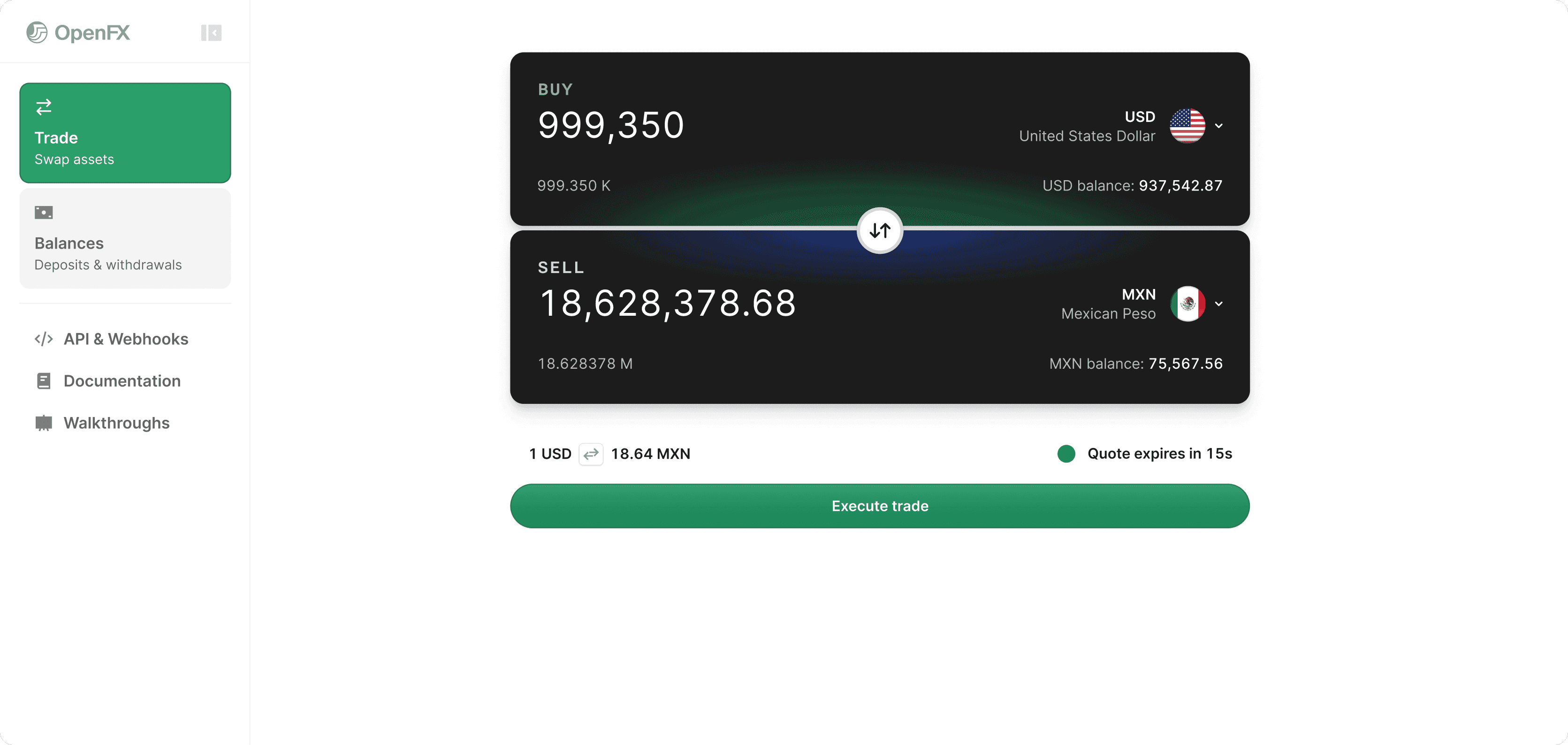
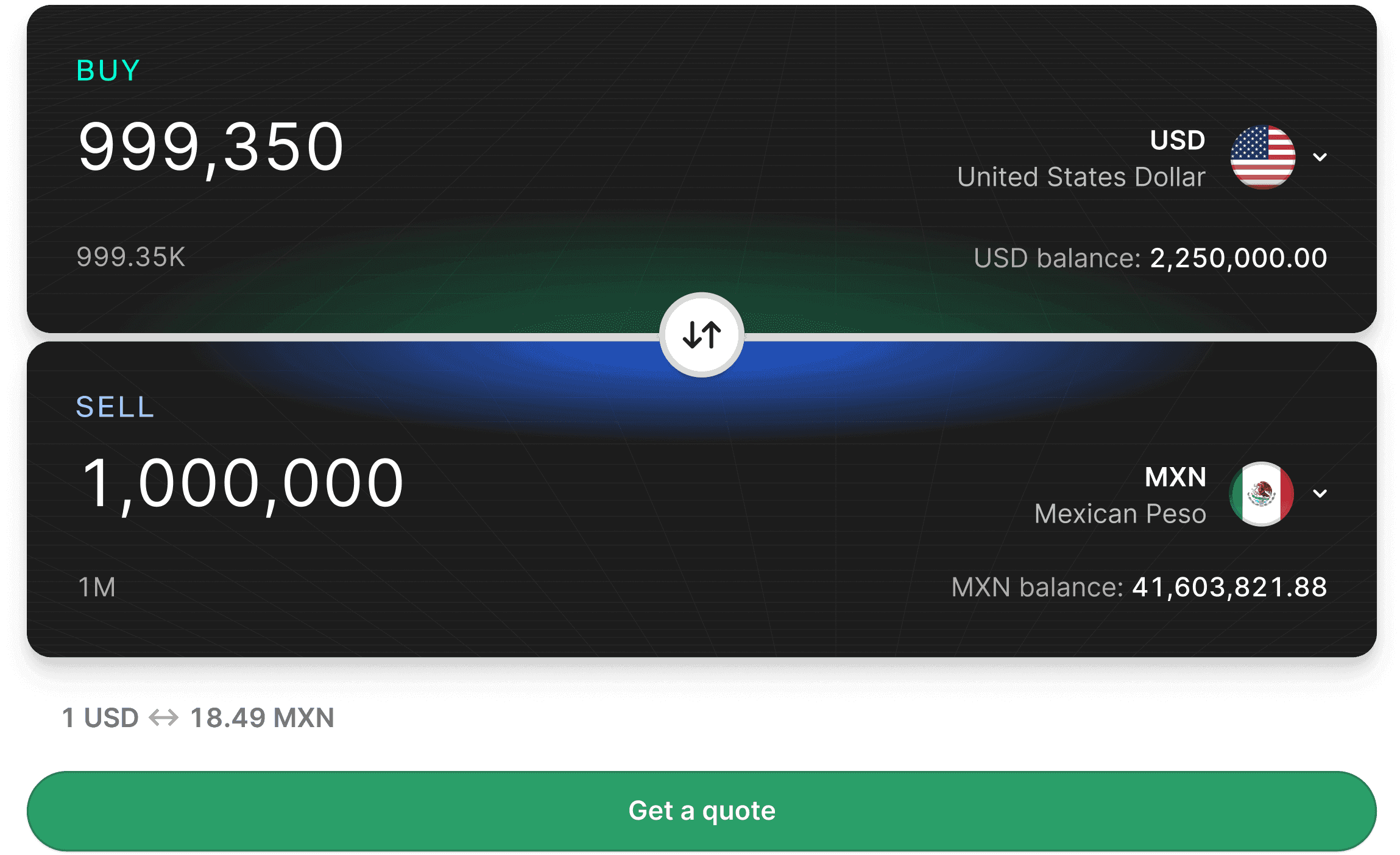
Something similar is arriving in FX, though the shape is different. Stablecoin settlement that bypasses the old correspondent banking networks is compressing the price of moving money across borders. At the same time, API-driven execution is eating the lunch of analog traders. Soon enough, LLM-orchestrated treasury systems that can do what a dealer on Telegram does but while leaving regulatory friendly audit trails might be responsible for a large portion of FX transactions moving across the globe.
Electronic alternatives for illiquid corridors and large trades are coming for everyone.
This won't happen tomorrow. Exotic corridors are still notoriously difficult to service, and will need human judgment for a while yet. The relationship remains everything, but the justifications driving chat trades are narrowing, and $3.5 billion in fines suggests the regulators aren't interested in waiting.
In the meantime, our friend from the opening is still standing in the airport. Still moving $50 million with three texts and a thumbs-up emoji.
At least for now.
Share article
Read other articles
Stay informed with our latest articles on currency launches, institutional FX trends, and global liquidity.