Understanding The Hows And Whys of Embedded FX

Harrison Mann
,
Head of Growth

Today, anyone who moves money is forced to engage with sometimes dozens of providers for liquidity, banking, compliance and every other piece of the FX iceberg.
Most of these relationships are manual affairs, with treasurers devoting enormous amounts of time towards managing people rather than money.
In the last few years, there has been a push towards something different, a dream of a world where FX is as fungible as SaaS and as automated as an API.
FX as a utility, embedded in your stack and available whenever you need it.
But like most dreams, this one is a bit fuzzy in the light of morning. As more ink is spilled about automation in the space, what constitutes Embedded FX has gotten wrapped up in conversations around agentic systems and LLMs, which while incredibly interesting, has muddied what we see as the key argument: consolidation and automation can improve most of what treasurers do today.
So lets make that argument.
Do it yourself
One hundred years ago, if your factory needed power, you built a generator. As in: You bought a steam engine, hired someone to run it, and maintained a ledger where you tracked how much coal you had left to burn.
It’s how you kept the lights on (pause for applause).
Then, in the late 1800s, the electric grid arrived when Thomas Edison opened up a power plant called Pearl Street Station. It wasn’t especially massive, only able to provide DC current to a small neighborhood in Manhattan, but it set off a cascade of events that would lead a few decades later to the end of self-service power.
Why build and manage your own generators, when you can just plug into the grid and pay a metered fee?
Nicholas Carr relates this story in his book, The Big Switch: The power grid and the infrastructure it enabled didn’t just change the way a few factories operated, but reshaped the arc of industrial progress across the world. Just as a factory is a collection of machines placed in proximity for efficiency, a power system is the same but with generators and transformers.
Work, water, electricity and everything else it seemed could be made ambient, available to all at the flip of a switch just as long as you had the infrastructure to “plug in.”
FX has spent the last century in a state not too dissimilar to those early factories. Every business that's needed to move money across a border must build an on-site generator: relationships with banks, bespoke access to liquidity, a cool name for the WhatsApps thread where they talk to their broker.
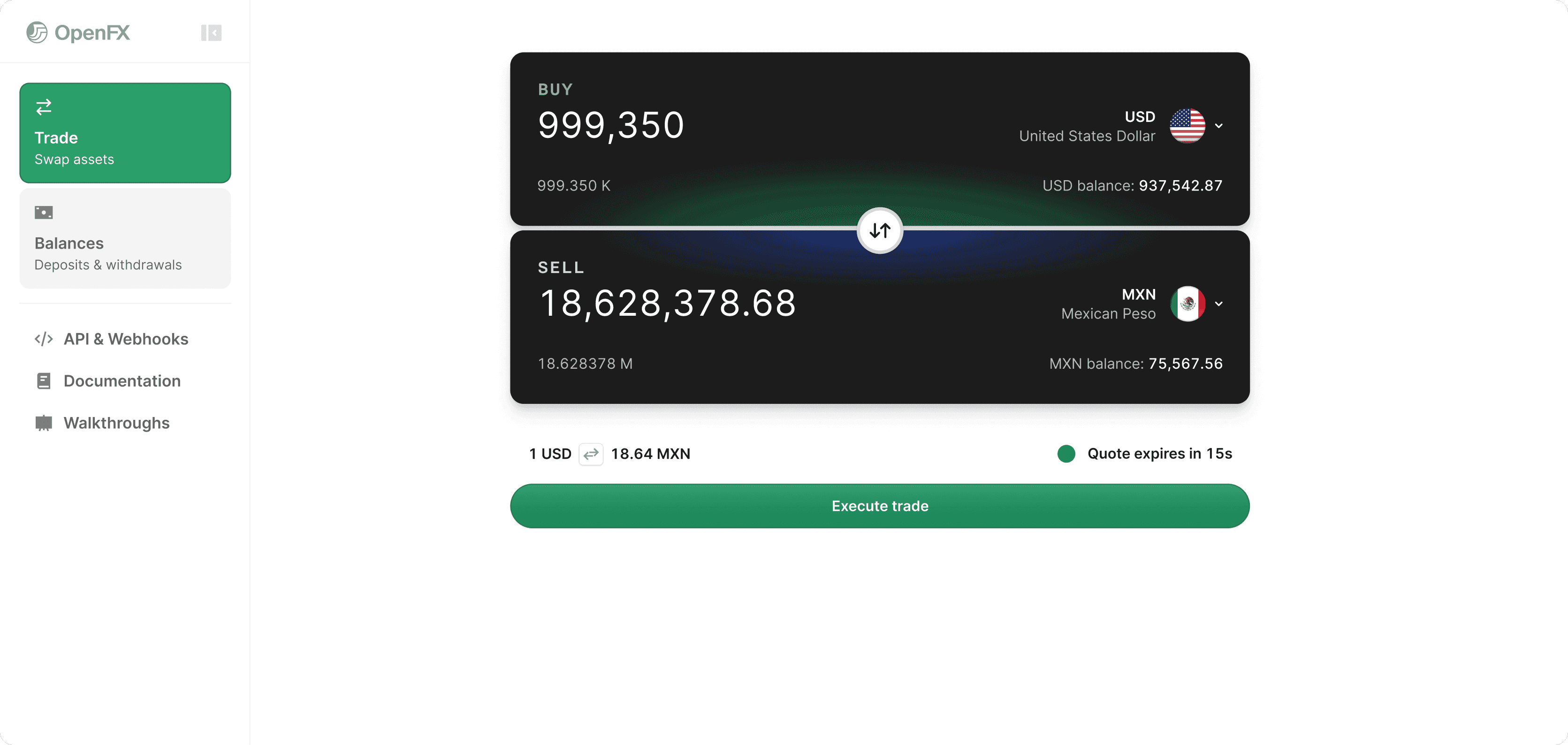
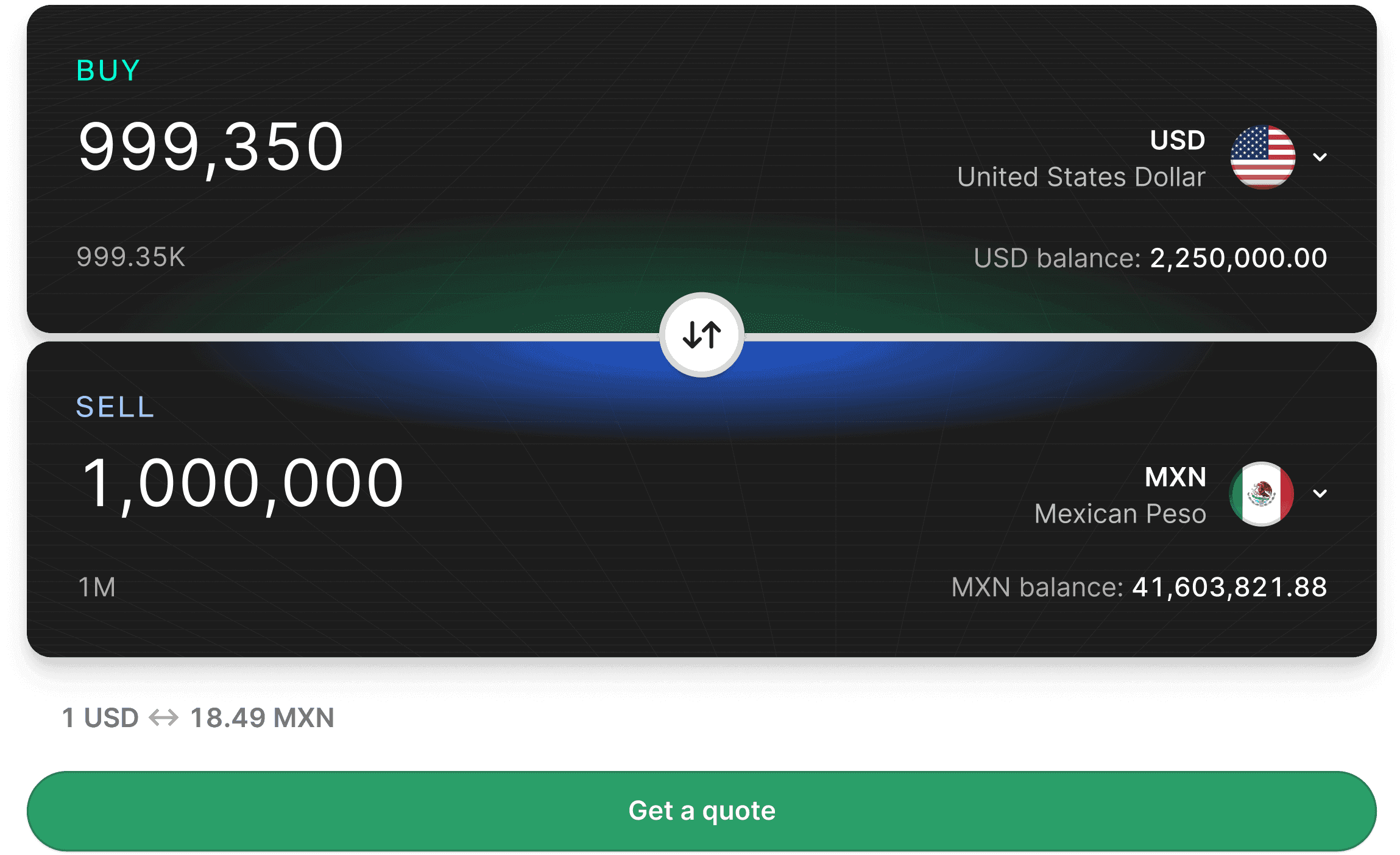
Embedded FX, we contend, is the moment these businesses move over to the grid. Imagine a a world where an end-to-end payment fit together like a factory floor: An API gets you a quote and executes the trade, another allows you to track the payment in real-time, a multi-currency account endpoint lets you land the money in multiple countries without worrying about maintaining the underlying bank relationships.
All of this is managed through a single platform that you plug into your existing business.
The Problems Embedded FX Solves
Embedded FX isn’t meant to “automate treasury” in an abstract sense, it’s designed to improve efficiency across a set of rote tasks:
Execution
Settlement confirmation
Reconciliation
With the goal of freeing you from the need to focus your attention on systems outside of the scope of your core business.
A factory foreman should not spend half her day worrying about whether her generator is about the fail, and you shouldn’t spend hours a month on the phone with your bank.
At the same time, the transition from traditional to embedded FX doesn’t have to be all-or-nothing. These APIs are designed to be modular, as your business scales, you can build in the level of automation the suits you.
That’s the ideal state, and something we’ve found often gets lost in the conversation around “autonomous treasury,” automation isn’t the core good, the core good is getting things done.
Great Grids Don’t Come Free
The embedded finance market was worth around $148 billion in 2025, tracking toward roughly $197 billion in 2026 at something like 31% annual growth. These are healthy numbers for a burgeoning industry, but still pale in comparison to the economics of cross-border payments overall.
It’s also worth taking another look at Nicholas Carr’s book, which moves on from the electrical grid to land on cloud computing. The tale he tells isn’t wholly triumphal, there is a warning that sits at the center of any story about consolidating capacity:
When you no longer build the machinery, it becomes much harder to tell when it's broken.
So keep watch for these two things as you move towards automation:
Does your provider offer rate transparency? The longer people operate on an ambient “grid” system, the less likely they are to shop around. Find out if the rates you get are retrievable and auditable after the fact. Better still if you can see the rate live.
We’ve all experienced power outages, and know how disruptive they can be. Embedded FX systems also have uptime. Ask what happens if a payment doesn’t land as expected. Is there a person or process that picks the thread back up, or do you have to work hard to manually resolve issues?
The move towards a power grid model in FX is exciting and confusing, we’re happy to help walk you through it.
Share article
Read other articles
Stay informed with our latest articles on currency launches, institutional FX trends, and global liquidity.