How Rails Fall Apart in Crisis: The Role of Stablecoin Liquidity

Harrison Mann
,
Head of Growth
Part 2: Introduction
A Filipino nurse working in Riyadh sends $200 home every month. The transfer costs her between $10 and $13 in fees and takes three to five business days to arrive. Her family in Leyte, who spend nearly all of what she sends on food and school fees plans around this delay.
This is normal, what the cross-border payment system costs when it's working properly. When it stops working, the question isn't whether a stablecoin exists - it's whether anyone has built stablecoin liquidity deep enough to move her $200 at a fair rate.
She is one of 2.1 million overseas Filipino workers deployed worldwide. In 2024, they sent home a record $38.34 billion, about 8.3% of Philippine GDP.
The top source countries for these remittances are:
The United States
Saudi Arabia
The UAE
Qatar
Kuwait
Several of these countries sit in parts of the world prone to prolonged periods of geopolitical and macroeconomic disruption, which we discussed at length in our previous article. The Filipino diaspora is uniquely vulnerable to the fallout of these disruptions.
The providers serving these workers, the banks and money transfer operators in these regions, chiefly rely on traditional correspondent banking rails, and as a result, they are also vulnerable when crisis strikes.
If a currency devalues or an airspace closes, whether it’s the nurse moving $200 or a PSP trying to move $200M – settlements can stop entirely or become massively more expensive. In the nurse’s case, this can leave her family who counts on that money in the lurch.
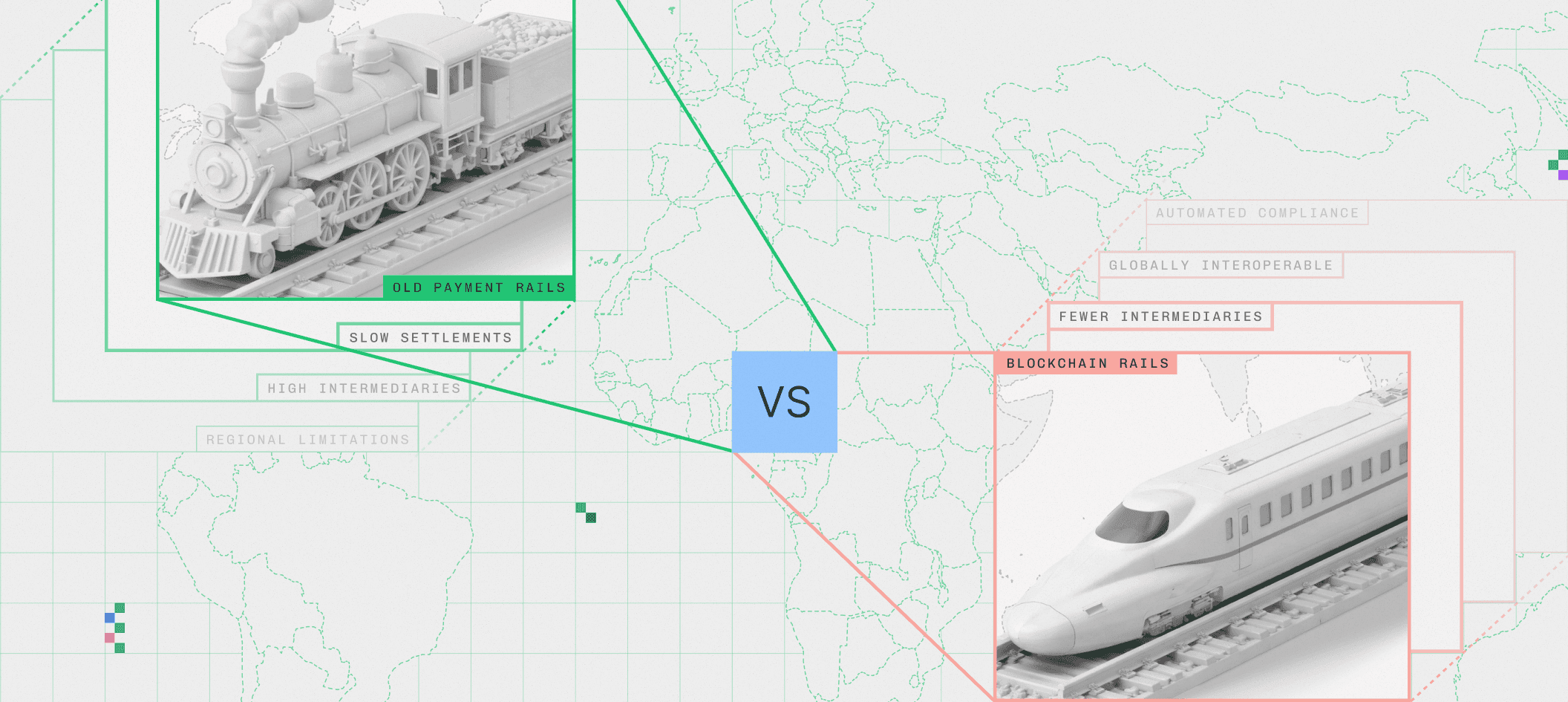
This problem is well known, and many solutions have been floated to ameliorate it. In the case of the Philippines, they responded by building entirely new rails.
GCash and USDC
In March 2025, GCash, the country's dominant mobile wallet with around 100 million users, integrated USDC, Circle's dollar-pegged stablecoin, directly into its platform. Not as a trading feature, but as a way to receive money inside the same app that Filipino families already use to pay electric bills and buy rice. Three months later, Coins.ph, the largest crypto exchange in the Philippines, graduated its peso-pegged stablecoin PHPC from the central bank's regulatory sandbox, and cleared it for use in remittances.
Coins.ph then opened stablecoin corridors to Hong Kong and Australia, two cities with large OFW populations. Partnerships with remittance providers like BC Remit and Remitly brought fees down from 10–11% to around 1% on certain routes, with settlement in minutes.
If these rails were available to our nurse in Riyadh (they aren’t, read on), that would be the difference between $22 lost to fees each month and $2. Over a year, that’s $240 back in her family's hands. The savings would be even greater during periods of geopolitical crisis when spreads tend to widen. By bypassing traditional correspondent banking networks, these transactions would also be more resilient to the sorts of disruptions that we’ve previously discussed.
It all sounds so easy, stablecoins save the day, but as we’ve written before, end-to-end delivery is far bigger than the blockchain.
Bigger Than Blockchain: Liquidity Is the Real Build
The stablecoin transfer itself, the blockchain leg that moves dollars from one wallet to another, costs a fraction of a cent and settles in seconds, but this is just the tip of a massive iceberg, getting money to wallets is far easier than getting money to bank accounts.
The hard part of what the Philippines did was everything underneath. Building institutional-grade stablecoin liquidity in USDT/PHP and USDC/PHP so that conversions can happen reliably and at meaningful scales. Navigating the BSP's VASP licensing framework and sandbox process so the operation has legal standing. Integrating with GCash so that a stablecoin arriving from abroad seamlessly becomes pesos in an account that works in a barangay.
Below even this is a network of banking relationships that let fiat move in and out of the system at both ends, along with a host of other infrastructural systems that we’ve discussed at length elsewhere.
OFW workers sending money from Hong Kong and Australia benefit from all of this effort, but what about our nurse in Riyadh?
The Limits of Technology
Saudi Arabia has no crypto regulatory framework.
Public cryptocurrency use is effectively prohibited. For our nurse, the receiving end of her corridor, the Philippine side, has well developed domestic rails and a regulatory framework that would allow her family to receive the transfer. The sending end, where she actually lives and earns, has none of that.
For that reason, her $200 would still have to move through the same correspondent banking chain it always has, with the same frailties we’ve discussed.
Nothing has changed.
This gap underpins a structural vulnerability of cross-border FX that technology alone cannot tackle. A corridor has two ends. Coins.ph can't simply open a remittance channel in Riyadh the way it opened one in Hong Kong or Sydney. Licensing in each new jurisdiction costs millions of dollars and requires local regulatory buy-in. In countries where that regulator hasn't decided what stablecoins are, that work can't begin.
Less than 5% of inbound Philippine remittances currently travel on crypto rails. The US-to-Philippines corridor still averages 4.42% on a $200 transfer. The 1% fees mentioned above exist on specific routes where the full stack has been built, on others costs are still high.
The work that brought fees down on the Hong Kong and Australia corridors was not blockchain work. Instead it required high quality operations, complex infrastructure, and regulatory clarity. This same work must be repeated in every jurisdiction where an OFW deposits a paycheck and needs to send part of it home. There is no shortcut.
This Philippine example shows us a part of what a less fragile FX market could look like, but it also exposes all the work that remains to see those gains globally.
Until then, our nurse in Riyadh is still waiting.
Share article
Read other articles
Stay informed with our latest articles on currency launches, institutional FX trends, and global liquidity.