February 10, 2026

Understanding FX and Cross-Border Payments in Hong Kong (Updated: 2026)

OpenFX logo

OpenFX

Stylized image of stacks of Hong Kong Dollars.

Hong Kong is one of the world’s most open trading economies and a leading global financial hub. In 2024, the territory shipped about US $639.41 billion of goods and imported US $697.90 billion. The economy relies heavily on re‑exports and financial services. Its FX market is marked by modern domestic rails, a rigid currency regime, and evolving regulatory frameworks around digital assets.

Globally, it maintains a long-standing status as a premier International Financial Centre (IFC) , consistently ranked in the top-three. This excellence is built on three pillars: a trusted common law regime, a straightforward taxation system, and the constitutionally protected free flows of capital.

Hong Kong acts as the “Dominant Gateway” for Mainland China, providing a stable, neutral connector for capital flows. It is the primary “airlock” facilitating capital movement between Mainland China and the rest of the world.

While it has been a powerful engine for growth in the region, recent economic headwinds are presenting novel challenges.

A Market In Flux

Hong Kong uses a linked exchange rate system: the Hong Kong Monetary Authority (HKMA) pledges to buy U.S. dollars from banks at HK $7.75 and sell them at HK $7.85, keeping the Hong Kong dollar tightly pegged to the greenback. This currency board arrangement stabilizes the HKD but limits monetary policy options.

On the domestic side, the territory has built sophisticated payment infrastructure. The Faster Payment System (FPS), launched in 2018, connects banks and stored‑value facilities (SVFs) in real time and supports payments in both HKD and renminbi. By the end of 2023, the number of FPS registrations had climbed to 13.6 million, average daily real‑time HKD transactions reached 1.25 million, and daily transaction value averaged HK $9 billion.

This regional efficiency belies cross‑border transactions that largely remain slow and expensive: B2B payments still rely on SWIFT, CHATS (the HKD RTGS system) and correspondent banks. This is despite some regional efforts like FPS x PromptPay (that allows rapid cross-border payments with Thailand).

Hong Kong’s regulatory landscape also continues to evolve. In May 2025 the Legislative Council passed a Stablecoin Issuer Licensing Bill. Effective August 1 2025, the new regime requires fiat‑referenced stablecoin (FRS) issuers to obtain an HKMA licence, maintain 100% high‑quality liquid asset reserves, redeem tokens at par within one business day, segregate client funds, and implement robust AML controls. The bill positions Hong Kong as a regulated bridge between traditional finance and the digital asset economy.

All of this sits alongside an economy that faces significant headwinds. According to the Asian Development Outlook (ADO) 2025, GDP growth slowed from 3.2% in 2023 to 2.5% in 2024 and is expected to soften further to 2.3% in 2025, before edging up to 2.5% in 2026. Inflation dipped to 1.7% in 2024 but is projected to rise to 1.9% in 2025 and 2.0% in 2026. These modest growth rates, coupled with high trade dependence and geopolitical uncertainty, underscore the need for efficient cross‑border payment rails.

Understanding FX flows in Hong Kong means understanding all of these interlinking systems. It helps to start with a high-level snapshot, and then look at each major system in more detail.

Hong Kong at a Glance

Population: Approximately 7.396 million people as of mid-2025, with 100% urbanization and a median age of 47.4 years.

Economic Output: The nation's nominal GDP stood at roughly $407 billion in 2024.

Trade Orientation: Trade is immense, with exports (181.73% of GDP) and imports (177.67% of GDP) dwarfing the domestic economy.

Remittances: Inflows are relatively small, totaling $462.45 million in 2024 (about 0.1% of GDP).

Digital Economy: As of 2024, FPS registrations hit 15.8 million (more than double the population), driving 1.65 million daily HKD transactions.

Ubiquitous Payments: The Octopus card is held by 98% of residents aged 15–64. In 2023, 79% of consumers used a mobile wallet, which accounted for 32% of e-commerce and 27% of POS payments.

Financial Hub: Hong Kong's role as a financial gateway is clear, attracting net FDI inflows equal to 28.75% of GDP in 2024 (approx. $117 billion).

The Linked Exchange Rate: Cornerstone of Hong Kong Finance

The cornerstone of Hong Kong's entire financial and economic structure is the Linked Exchange Rate System (LERS), established on 17 October 1983. LERS is not a conventional fixed-rate peg subject to discretionary intervention, instead it is a rules-based Currency Board system.

The system is built around two key features:

  • Full Backing of the Monetary Base: The Hong Kong Monetary Authority (HKMA) is legally required to ensure the entire Monetary Base (MB) is 100% backed by US dollar foreign exchange reserves. The MB comprises currency in circulation (banknotes and coins) and the Aggregate Balance held by banks at the HKMA. Historically, this backing has been greater than 100%, providing the HKMA with immense firepower to defend the Link.

  • Note-Issuing Mechanism: The HKMA authorizes three commercial banks (The Hongkong and Shanghai Banking Corporation, Standard Chartered Bank, and Bank of China) to issue banknotes. However, these banks can only issue new Hong Kong dollars after they deposit an equivalent value of US dollars with the HKMA at the fixed rate of approximately $7.80.

This currency board arrangement maintains the exchange rate within a narrow, pre-defined "Convertibility Zone" of HK $7.75 to HK $7.85 per US dollar.

This band is defined by two "Convertibility Undertakings" (CUs) that the HKMA provides to all licensed banks.

  • Strong-Side CU: The HKMA commits to sell HKD (and buy USD) on request from banks at $7.75.

  • Weak-Side CU: The HKMA commits to buy HKD (and sell USD) on request from banks at $7.85.

Illustrating LERs

HKMA doesn’t directly intervene to maintain this balance, it relies on a self-correcting Automatic Adjustment Mechanism powered by its Aggregate Balance (AB). You can think of AB as the total cash float that banks maintain with the HKMA, the total level of interbank liquidity. LERs maintains stability by automatically expanding or contracting this AB.

Let's look at two plausible scenarios:

Scenario 1: The HKD gets "too strong" (Capital Inflow)

  • The Problem: A ton of money is flowing into Hong Kong (maybe for a big IPO). Everyone is buying HKD, pushing its price to the "strong-side" limit of $7.75

  • The Trigger: Banks see a risk-free profit. They sell their USD to the HKMA at $7.75$, because the HKMA must buy it at that price (its "Strong-Side" promise).

  • The Mechanism: To pay for those USD, the HKMA issues new HKD and deposits it into the banks' accounts.

  • The Result: The Aggregate Balance (the cash float) gets bigger.

  • The Fix: Suddenly, there's a surplus of HKD cash in the system. Just like any other product, when there's too much of it, its price drops. The "price" of cash is the interest rate (known as HIBOR).

    • With so much cash available, HKD interest rates automatically fall.

    • Now, global investors see that HKD assets are paying lower interest than USD assets. They sell their low-yielding HKD to buy higher-yielding USD.

    • This new outflow of money automatically pushes the exchange rate away from the $7.75 strong side, back toward the middle. No active "decision" was needed.

Scenario 2: The HKD gets "too weak" (Capital Outflow)

  • The Problem: Money is fleeing Hong Kong (maybe a global panic). Everyone is selling HKD to buy "safe" USD, pushing the price to the "weak-side" limit of $7.85.

  • The Trigger: Banks need USD to meet demand. They go to the HKMA and buy USD at $7.85, because the HKMA must sell it at that price (its "Weak-Side" promise).

  • The Mechanism: The banks pay for this USD using their HKD. The HKMA takes this HKD and essentially removes it from the system.

  • The Result: The Aggregate Balance (the cash float) shrinks.

  • The Fix: Suddenly, HKD cash is scarce. When something is scarce, its price goes up.

    • With less cash available, HKD interest rates automatically rise.

    • Now, global investors see that holding HKD assets is more attractive, as they pay higher interest than USD assets.

    • This new inflow of money (or reduced outflow) automatically pushes the exchange rate away from the $7.85 weak side.

While this system creates significant, self-correcting stability for the Hong Kong dollar, it also subordinates the region’s domestic monetary policy to the United States. HIBOR must closely track the U.S. Federal Funds rate to avoid opening up arbitrage opportunities. This has had the side-effect in 2024-2025 of forcing Hong Kong to “import” the United State’s persistently high interest rates, driving property values down and suppressing domestic demand.

Faster Payment System and Cross-Border Expansions

Launched by the HKMA in September 2018, the Faster Payment System (FPS) is a 24/7 real-time retail payment system. It seamlessly connects all licensed banks and all Stored Value Facility (SVF) e-wallets onto a single platform, supporting instant, low-cost P2P and P2M payments in both HKD and RMB, with transfers addressable using a mobile number, email, or FPS ID.

FPS is seen as a profound success:

  • Adoption: By the end of 2024, FPS recorded 15.8 million registrations, more than double the territory's population, indicating multiple accounts per user.

  • Volume: The average daily number of transactions grew by 33% in 2024 compared to the previous year.

  • Key Drivers: While P2P transfers are popular, a key driver for its growth is its use for government bill payments, merchant payments, and, crucially, as the primary method for instantaneously topping up SVF e-wallets (like AlipayHK or Octopus) from bank accounts.

Cross-Border Expansion

The HKMA is leveraging the success of FPS as a springboard for new, more modern cross-border payment rails, bypassing the correspondent banking system for retail payments.

Two key linkages are now active:

Thailand (FPS x PromptPay): Launched in December 2023, this is a direct linkage between Hong Kong's FPS and Thailand's national "PromptPay" system, allowing for cross-border QR payments between the two jurisdictions.

Mainland China ("Payment Connect"): Launched on 22 June 2025. It directly links Hong Kong's FPS with the Mainland's Internet Banking Payment System (IBPS).

Outside of these exceptions, at least for the time being, most other FX flows must move through traditional rails.

Regulatory Expansion (VASP and Stablecoin Ordinance)

Hong Kong is deliberately building a highly regulated, "walled garden" for digital assets, designed to attract institutional capital while protecting retail investors.

The VASP Regime (SFC)

The System: The Securities and Futures Commission (SFC) administers a comprehensive licensing regime for Virtual Asset Service Providers (VASPs), including exchanges. As of June 2025, there are 11 "Licensed virtual asset trading platforms" (VATPs), such as OSL and HashKey.

Expansion: Following its "A-S-P-I-R-E" roadmap, the SFC is expanding this regime. In 2025, it is consulting on new licensing requirements for VA Over-the-Counter (OTC) trading services and VA custodian services. This move aims to create a fully regulated, end-to-end ecosystem for institutional-grade digital assets.

The Stablecoin Ordinance (HKMA)

The Law: A new, landmark licensing regime for fiat-referenced stablecoin issuers was passed on May 21, 2025, and took effect on August 1, 2025.

Requirements: Any entity issuing a stablecoin in Hong Kong, or issuing an HKD-referenced stablecoin anywhere, must be licensed by the HKMA. This requires robust stabilization and redemption mechanisms, clear redemption policies, and, crucially, 100% backing by high-quality, liquid reserve assets. A sandbox for potential issuers is already active.

The "Retail Restriction": The most critical policy detail is that the HKMA and SFC have explicitly stated that stablecoins issued under this new license will only be available to Professional Investors. Hong Kong retail investors will not be permitted to trade these regulated stablecoins (or, by extension, global stablecoins like USDC or USDT) on Hong Kong's licensed exchanges.

This is a deliberate, "high bar" strategy. The HKMA's August 2025 joint statement with the SFC warning against market hype confirms this "prudent" approach. Hong Kong is not trying to be a speculative, wide-open crypto hub. It seeks to attract the world's largest stablecoin issuers and institutional capital, while simultaneously protecting its retail public from the market's volatility.

FX Tailwinds and Stormclouds

This new environment presents both powerful tailwinds and significant lingering challenges for Hong Kong businesses.

Tailwinds

  • Financial hub & capital flows: Hong Kong’s deep capital markets and relatively liberal legal frameworks continue to attract global investment. Net FDI inflows reached 28.75% of GDP in 2024. The city’s large banking sector and international connectivity provide ample liquidity for major currency pairs.

  • High adoption of digital payments: Domestic payment rails like FPS and Octopus are widely adopted, and mobile wallets already account for 27% of POS payments and 32% of e‑commerce payments. Consumers are accustomed to instant, low‑cost payments, raising expectations for similar cross‑border experiences.

  • Regulatory clarity for digital assets: The stablecoin licensing framework and open‑banking initiatives signal a pro‑innovation stance, providing clear rules on reserves, redemption and licensing. Hong Kong aims to attract institutional players and fintechs building cross‑border crypto‑enabled solutions.

  • Proximity to mainland China: Hong Kong acts as an intermediary for renminbi cross‑border flows, with FPS supporting RMB transactions and schemes like the Wealth Management Connect facilitating cross‑boundary payments. Its role in the Greater Bay Area (GBA) provides opportunities for cross‑border e‑commerce and investment flows.

Stormclouds

  • Cross‑border friction: Despite domestic efficiency, cross‑border payments remain slow and costly. Large-value transfers rely on CHATS and SWIFT, with multiple intermediaries and manual documentation (e.g., invoices, purpose codes).

  • Currency board constraints: The HKD peg means monetary policy is tied to U.S. rates. Rapid U.S. tightening can increase local funding costs and trigger capital outflows, straining liquidity. Conversely, large inflows can push the HKD to the strong side of the band, requiring the HKMA to buy U.S. dollars and shrink the monetary base.

  • Regulatory complexity: While the new FX law simplifies some rules, businesses still face multiple licensing regimes. Relying on CHATS and FPS requires separate bank accounts and KYC/AML procedures. The stablecoin regime imposes high capital requirements (HK$25 million) and full reserve backing, potentially limiting the number of entrants.

  • Demographic headwinds: Hong Kong has an aging population (median age 47.4 years), which may slow digital adoption and keep demand for cash high.

OpenFX Rationale

Hong Kong presents a common paradox: instant and seamless domestic rails, cumbersome and expensive cross-border flows. Despite and perhaps because of innovations like FPS x PromptPay, ****increasing cross-border efficiency in places like Thailand, we see significant opportunities in the city.

  • The massive trade flows between Hong Kong and its partners often require multiple FX legs (e.g., HKD -> USD -> target currency). OpenFX can provide deep, competitively priced liquidity in HKD and cross-currency pairs, cutting these costly "USD hops" and reducing settlement times.

  • Additionally, with new regulatory clarity for digital assets, we see growing opportunities for innovative fintechs and an increased appetite for novel solutions to the problem of cross-border payments.

Macroeconomics

Indicator
2023 (actual)
2024 (estimate)
2025 (forecast)
2026 (forecast)
GDP growth (real, %)
3.2
2.5
2.3
2.5
Inflation (CPI, %)
2.1
1.7
1.9
2.0
Fiscal balance (% of GDP)
–0.9
–2.0
–1.8 (est.)
–1.5 (est.)
Public debt (% of GDP)
Current account balance (% of GDP)
9.2
9.2
8.5 (est.)
8.0 (est.)

Trade Partners

Partner
Exports (US$ B)
Share of exports
Partner
Imports (US$ B)
Share of imports
China
329
57%
China
261
40%
United States
34
6.05%
Other Asia, n.e.s.
67
10.3%
India
21
3.77%
Singapore
44
6.79%
United Arab Emirates
15.5
2.70%
Japan
34
5.19%
Vietnam
14.4
2.50%
Korea
28
4.40%
Japan
10.7
1.87%
United States
26
4.0%
Thailand
10.3
1.79%
Malaysia
19.1
2.93%
Netherlands
9.9
1.72%
Switzerland
18.3
2.80%
Macao SAR
9.65
1.67%
United Kingdom
17.6
2.69%
Vietnam
17.1
2.61%
Total exports
575
100%
Total imports
654
100%

Source: Trading Economy

Hong Kong is one of the world’s most open trading economies and a leading global financial hub. In 2024, the territory shipped about US $639.41 billion of goods and imported US $697.90 billion. The economy relies heavily on re‑exports and financial services. Its FX market is marked by modern domestic rails, a rigid currency regime, and evolving regulatory frameworks around digital assets.

Globally, it maintains a long-standing status as a premier International Financial Centre (IFC) , consistently ranked in the top-three. This excellence is built on three pillars: a trusted common law regime, a straightforward taxation system, and the constitutionally protected free flows of capital.

Hong Kong acts as the “Dominant Gateway” for Mainland China, providing a stable, neutral connector for capital flows. It is the primary “airlock” facilitating capital movement between Mainland China and the rest of the world.

While it has been a powerful engine for growth in the region, recent economic headwinds are presenting novel challenges.

A Market In Flux

Hong Kong uses a linked exchange rate system: the Hong Kong Monetary Authority (HKMA) pledges to buy U.S. dollars from banks at HK $7.75 and sell them at HK $7.85, keeping the Hong Kong dollar tightly pegged to the greenback. This currency board arrangement stabilizes the HKD but limits monetary policy options.

On the domestic side, the territory has built sophisticated payment infrastructure. The Faster Payment System (FPS), launched in 2018, connects banks and stored‑value facilities (SVFs) in real time and supports payments in both HKD and renminbi. By the end of 2023, the number of FPS registrations had climbed to 13.6 million, average daily real‑time HKD transactions reached 1.25 million, and daily transaction value averaged HK $9 billion.

This regional efficiency belies cross‑border transactions that largely remain slow and expensive: B2B payments still rely on SWIFT, CHATS (the HKD RTGS system) and correspondent banks. This is despite some regional efforts like FPS x PromptPay (that allows rapid cross-border payments with Thailand).

Hong Kong’s regulatory landscape also continues to evolve. In May 2025 the Legislative Council passed a Stablecoin Issuer Licensing Bill. Effective August 1 2025, the new regime requires fiat‑referenced stablecoin (FRS) issuers to obtain an HKMA licence, maintain 100% high‑quality liquid asset reserves, redeem tokens at par within one business day, segregate client funds, and implement robust AML controls. The bill positions Hong Kong as a regulated bridge between traditional finance and the digital asset economy.

All of this sits alongside an economy that faces significant headwinds. According to the Asian Development Outlook (ADO) 2025, GDP growth slowed from 3.2% in 2023 to 2.5% in 2024 and is expected to soften further to 2.3% in 2025, before edging up to 2.5% in 2026. Inflation dipped to 1.7% in 2024 but is projected to rise to 1.9% in 2025 and 2.0% in 2026. These modest growth rates, coupled with high trade dependence and geopolitical uncertainty, underscore the need for efficient cross‑border payment rails.

Understanding FX flows in Hong Kong means understanding all of these interlinking systems. It helps to start with a high-level snapshot, and then look at each major system in more detail.

Hong Kong at a Glance

Population: Approximately 7.396 million people as of mid-2025, with 100% urbanization and a median age of 47.4 years.

Economic Output: The nation's nominal GDP stood at roughly $407 billion in 2024.

Trade Orientation: Trade is immense, with exports (181.73% of GDP) and imports (177.67% of GDP) dwarfing the domestic economy.

Remittances: Inflows are relatively small, totaling $462.45 million in 2024 (about 0.1% of GDP).

Digital Economy: As of 2024, FPS registrations hit 15.8 million (more than double the population), driving 1.65 million daily HKD transactions.

Ubiquitous Payments: The Octopus card is held by 98% of residents aged 15–64. In 2023, 79% of consumers used a mobile wallet, which accounted for 32% of e-commerce and 27% of POS payments.

Financial Hub: Hong Kong's role as a financial gateway is clear, attracting net FDI inflows equal to 28.75% of GDP in 2024 (approx. $117 billion).

The Linked Exchange Rate: Cornerstone of Hong Kong Finance

The cornerstone of Hong Kong's entire financial and economic structure is the Linked Exchange Rate System (LERS), established on 17 October 1983. LERS is not a conventional fixed-rate peg subject to discretionary intervention, instead it is a rules-based Currency Board system.

The system is built around two key features:

  • Full Backing of the Monetary Base: The Hong Kong Monetary Authority (HKMA) is legally required to ensure the entire Monetary Base (MB) is 100% backed by US dollar foreign exchange reserves. The MB comprises currency in circulation (banknotes and coins) and the Aggregate Balance held by banks at the HKMA. Historically, this backing has been greater than 100%, providing the HKMA with immense firepower to defend the Link.

  • Note-Issuing Mechanism: The HKMA authorizes three commercial banks (The Hongkong and Shanghai Banking Corporation, Standard Chartered Bank, and Bank of China) to issue banknotes. However, these banks can only issue new Hong Kong dollars after they deposit an equivalent value of US dollars with the HKMA at the fixed rate of approximately $7.80.

This currency board arrangement maintains the exchange rate within a narrow, pre-defined "Convertibility Zone" of HK $7.75 to HK $7.85 per US dollar.

This band is defined by two "Convertibility Undertakings" (CUs) that the HKMA provides to all licensed banks.

  • Strong-Side CU: The HKMA commits to sell HKD (and buy USD) on request from banks at $7.75.

  • Weak-Side CU: The HKMA commits to buy HKD (and sell USD) on request from banks at $7.85.

Illustrating LERs

HKMA doesn’t directly intervene to maintain this balance, it relies on a self-correcting Automatic Adjustment Mechanism powered by its Aggregate Balance (AB). You can think of AB as the total cash float that banks maintain with the HKMA, the total level of interbank liquidity. LERs maintains stability by automatically expanding or contracting this AB.

Let's look at two plausible scenarios:

Scenario 1: The HKD gets "too strong" (Capital Inflow)

  • The Problem: A ton of money is flowing into Hong Kong (maybe for a big IPO). Everyone is buying HKD, pushing its price to the "strong-side" limit of $7.75

  • The Trigger: Banks see a risk-free profit. They sell their USD to the HKMA at $7.75$, because the HKMA must buy it at that price (its "Strong-Side" promise).

  • The Mechanism: To pay for those USD, the HKMA issues new HKD and deposits it into the banks' accounts.

  • The Result: The Aggregate Balance (the cash float) gets bigger.

  • The Fix: Suddenly, there's a surplus of HKD cash in the system. Just like any other product, when there's too much of it, its price drops. The "price" of cash is the interest rate (known as HIBOR).

    • With so much cash available, HKD interest rates automatically fall.

    • Now, global investors see that HKD assets are paying lower interest than USD assets. They sell their low-yielding HKD to buy higher-yielding USD.

    • This new outflow of money automatically pushes the exchange rate away from the $7.75 strong side, back toward the middle. No active "decision" was needed.

Scenario 2: The HKD gets "too weak" (Capital Outflow)

  • The Problem: Money is fleeing Hong Kong (maybe a global panic). Everyone is selling HKD to buy "safe" USD, pushing the price to the "weak-side" limit of $7.85.

  • The Trigger: Banks need USD to meet demand. They go to the HKMA and buy USD at $7.85, because the HKMA must sell it at that price (its "Weak-Side" promise).

  • The Mechanism: The banks pay for this USD using their HKD. The HKMA takes this HKD and essentially removes it from the system.

  • The Result: The Aggregate Balance (the cash float) shrinks.

  • The Fix: Suddenly, HKD cash is scarce. When something is scarce, its price goes up.

    • With less cash available, HKD interest rates automatically rise.

    • Now, global investors see that holding HKD assets is more attractive, as they pay higher interest than USD assets.

    • This new inflow of money (or reduced outflow) automatically pushes the exchange rate away from the $7.85 weak side.

While this system creates significant, self-correcting stability for the Hong Kong dollar, it also subordinates the region’s domestic monetary policy to the United States. HIBOR must closely track the U.S. Federal Funds rate to avoid opening up arbitrage opportunities. This has had the side-effect in 2024-2025 of forcing Hong Kong to “import” the United State’s persistently high interest rates, driving property values down and suppressing domestic demand.

Faster Payment System and Cross-Border Expansions

Launched by the HKMA in September 2018, the Faster Payment System (FPS) is a 24/7 real-time retail payment system. It seamlessly connects all licensed banks and all Stored Value Facility (SVF) e-wallets onto a single platform, supporting instant, low-cost P2P and P2M payments in both HKD and RMB, with transfers addressable using a mobile number, email, or FPS ID.

FPS is seen as a profound success:

  • Adoption: By the end of 2024, FPS recorded 15.8 million registrations, more than double the territory's population, indicating multiple accounts per user.

  • Volume: The average daily number of transactions grew by 33% in 2024 compared to the previous year.

  • Key Drivers: While P2P transfers are popular, a key driver for its growth is its use for government bill payments, merchant payments, and, crucially, as the primary method for instantaneously topping up SVF e-wallets (like AlipayHK or Octopus) from bank accounts.

Cross-Border Expansion

The HKMA is leveraging the success of FPS as a springboard for new, more modern cross-border payment rails, bypassing the correspondent banking system for retail payments.

Two key linkages are now active:

Thailand (FPS x PromptPay): Launched in December 2023, this is a direct linkage between Hong Kong's FPS and Thailand's national "PromptPay" system, allowing for cross-border QR payments between the two jurisdictions.

Mainland China ("Payment Connect"): Launched on 22 June 2025. It directly links Hong Kong's FPS with the Mainland's Internet Banking Payment System (IBPS).

Outside of these exceptions, at least for the time being, most other FX flows must move through traditional rails.

Regulatory Expansion (VASP and Stablecoin Ordinance)

Hong Kong is deliberately building a highly regulated, "walled garden" for digital assets, designed to attract institutional capital while protecting retail investors.

The VASP Regime (SFC)

The System: The Securities and Futures Commission (SFC) administers a comprehensive licensing regime for Virtual Asset Service Providers (VASPs), including exchanges. As of June 2025, there are 11 "Licensed virtual asset trading platforms" (VATPs), such as OSL and HashKey.

Expansion: Following its "A-S-P-I-R-E" roadmap, the SFC is expanding this regime. In 2025, it is consulting on new licensing requirements for VA Over-the-Counter (OTC) trading services and VA custodian services. This move aims to create a fully regulated, end-to-end ecosystem for institutional-grade digital assets.

The Stablecoin Ordinance (HKMA)

The Law: A new, landmark licensing regime for fiat-referenced stablecoin issuers was passed on May 21, 2025, and took effect on August 1, 2025.

Requirements: Any entity issuing a stablecoin in Hong Kong, or issuing an HKD-referenced stablecoin anywhere, must be licensed by the HKMA. This requires robust stabilization and redemption mechanisms, clear redemption policies, and, crucially, 100% backing by high-quality, liquid reserve assets. A sandbox for potential issuers is already active.

The "Retail Restriction": The most critical policy detail is that the HKMA and SFC have explicitly stated that stablecoins issued under this new license will only be available to Professional Investors. Hong Kong retail investors will not be permitted to trade these regulated stablecoins (or, by extension, global stablecoins like USDC or USDT) on Hong Kong's licensed exchanges.

This is a deliberate, "high bar" strategy. The HKMA's August 2025 joint statement with the SFC warning against market hype confirms this "prudent" approach. Hong Kong is not trying to be a speculative, wide-open crypto hub. It seeks to attract the world's largest stablecoin issuers and institutional capital, while simultaneously protecting its retail public from the market's volatility.

FX Tailwinds and Stormclouds

This new environment presents both powerful tailwinds and significant lingering challenges for Hong Kong businesses.

Tailwinds

  • Financial hub & capital flows: Hong Kong’s deep capital markets and relatively liberal legal frameworks continue to attract global investment. Net FDI inflows reached 28.75% of GDP in 2024. The city’s large banking sector and international connectivity provide ample liquidity for major currency pairs.

  • High adoption of digital payments: Domestic payment rails like FPS and Octopus are widely adopted, and mobile wallets already account for 27% of POS payments and 32% of e‑commerce payments. Consumers are accustomed to instant, low‑cost payments, raising expectations for similar cross‑border experiences.

  • Regulatory clarity for digital assets: The stablecoin licensing framework and open‑banking initiatives signal a pro‑innovation stance, providing clear rules on reserves, redemption and licensing. Hong Kong aims to attract institutional players and fintechs building cross‑border crypto‑enabled solutions.

  • Proximity to mainland China: Hong Kong acts as an intermediary for renminbi cross‑border flows, with FPS supporting RMB transactions and schemes like the Wealth Management Connect facilitating cross‑boundary payments. Its role in the Greater Bay Area (GBA) provides opportunities for cross‑border e‑commerce and investment flows.

Stormclouds

  • Cross‑border friction: Despite domestic efficiency, cross‑border payments remain slow and costly. Large-value transfers rely on CHATS and SWIFT, with multiple intermediaries and manual documentation (e.g., invoices, purpose codes).

  • Currency board constraints: The HKD peg means monetary policy is tied to U.S. rates. Rapid U.S. tightening can increase local funding costs and trigger capital outflows, straining liquidity. Conversely, large inflows can push the HKD to the strong side of the band, requiring the HKMA to buy U.S. dollars and shrink the monetary base.

  • Regulatory complexity: While the new FX law simplifies some rules, businesses still face multiple licensing regimes. Relying on CHATS and FPS requires separate bank accounts and KYC/AML procedures. The stablecoin regime imposes high capital requirements (HK$25 million) and full reserve backing, potentially limiting the number of entrants.

  • Demographic headwinds: Hong Kong has an aging population (median age 47.4 years), which may slow digital adoption and keep demand for cash high.

OpenFX Rationale

Hong Kong presents a common paradox: instant and seamless domestic rails, cumbersome and expensive cross-border flows. Despite and perhaps because of innovations like FPS x PromptPay, ****increasing cross-border efficiency in places like Thailand, we see significant opportunities in the city.

  • The massive trade flows between Hong Kong and its partners often require multiple FX legs (e.g., HKD -> USD -> target currency). OpenFX can provide deep, competitively priced liquidity in HKD and cross-currency pairs, cutting these costly "USD hops" and reducing settlement times.

  • Additionally, with new regulatory clarity for digital assets, we see growing opportunities for innovative fintechs and an increased appetite for novel solutions to the problem of cross-border payments.

Macroeconomics

Indicator
2023 (actual)
2024 (estimate)
2025 (forecast)
2026 (forecast)
GDP growth (real, %)
3.2
2.5
2.3
2.5
Inflation (CPI, %)
2.1
1.7
1.9
2.0
Fiscal balance (% of GDP)
–0.9
–2.0
–1.8 (est.)
–1.5 (est.)
Public debt (% of GDP)
Current account balance (% of GDP)
9.2
9.2
8.5 (est.)
8.0 (est.)

Trade Partners

Partner
Exports (US$ B)
Share of exports
Partner
Imports (US$ B)
Share of imports
China
329
57%
China
261
40%
United States
34
6.05%
Other Asia, n.e.s.
67
10.3%
India
21
3.77%
Singapore
44
6.79%
United Arab Emirates
15.5
2.70%
Japan
34
5.19%
Vietnam
14.4
2.50%
Korea
28
4.40%
Japan
10.7
1.87%
United States
26
4.0%
Thailand
10.3
1.79%
Malaysia
19.1
2.93%
Netherlands
9.9
1.72%
Switzerland
18.3
2.80%
Macao SAR
9.65
1.67%
United Kingdom
17.6
2.69%
Vietnam
17.1
2.61%
Total exports
575
100%
Total imports
654
100%

Source: Trading Economy

Hong Kong is one of the world’s most open trading economies and a leading global financial hub. In 2024, the territory shipped about US $639.41 billion of goods and imported US $697.90 billion. The economy relies heavily on re‑exports and financial services. Its FX market is marked by modern domestic rails, a rigid currency regime, and evolving regulatory frameworks around digital assets.

Globally, it maintains a long-standing status as a premier International Financial Centre (IFC) , consistently ranked in the top-three. This excellence is built on three pillars: a trusted common law regime, a straightforward taxation system, and the constitutionally protected free flows of capital.

Hong Kong acts as the “Dominant Gateway” for Mainland China, providing a stable, neutral connector for capital flows. It is the primary “airlock” facilitating capital movement between Mainland China and the rest of the world.

While it has been a powerful engine for growth in the region, recent economic headwinds are presenting novel challenges.

A Market In Flux

Hong Kong uses a linked exchange rate system: the Hong Kong Monetary Authority (HKMA) pledges to buy U.S. dollars from banks at HK $7.75 and sell them at HK $7.85, keeping the Hong Kong dollar tightly pegged to the greenback. This currency board arrangement stabilizes the HKD but limits monetary policy options.

On the domestic side, the territory has built sophisticated payment infrastructure. The Faster Payment System (FPS), launched in 2018, connects banks and stored‑value facilities (SVFs) in real time and supports payments in both HKD and renminbi. By the end of 2023, the number of FPS registrations had climbed to 13.6 million, average daily real‑time HKD transactions reached 1.25 million, and daily transaction value averaged HK $9 billion.

This regional efficiency belies cross‑border transactions that largely remain slow and expensive: B2B payments still rely on SWIFT, CHATS (the HKD RTGS system) and correspondent banks. This is despite some regional efforts like FPS x PromptPay (that allows rapid cross-border payments with Thailand).

Hong Kong’s regulatory landscape also continues to evolve. In May 2025 the Legislative Council passed a Stablecoin Issuer Licensing Bill. Effective August 1 2025, the new regime requires fiat‑referenced stablecoin (FRS) issuers to obtain an HKMA licence, maintain 100% high‑quality liquid asset reserves, redeem tokens at par within one business day, segregate client funds, and implement robust AML controls. The bill positions Hong Kong as a regulated bridge between traditional finance and the digital asset economy.

All of this sits alongside an economy that faces significant headwinds. According to the Asian Development Outlook (ADO) 2025, GDP growth slowed from 3.2% in 2023 to 2.5% in 2024 and is expected to soften further to 2.3% in 2025, before edging up to 2.5% in 2026. Inflation dipped to 1.7% in 2024 but is projected to rise to 1.9% in 2025 and 2.0% in 2026. These modest growth rates, coupled with high trade dependence and geopolitical uncertainty, underscore the need for efficient cross‑border payment rails.

Understanding FX flows in Hong Kong means understanding all of these interlinking systems. It helps to start with a high-level snapshot, and then look at each major system in more detail.

Hong Kong at a Glance

Population: Approximately 7.396 million people as of mid-2025, with 100% urbanization and a median age of 47.4 years.

Economic Output: The nation's nominal GDP stood at roughly $407 billion in 2024.

Trade Orientation: Trade is immense, with exports (181.73% of GDP) and imports (177.67% of GDP) dwarfing the domestic economy.

Remittances: Inflows are relatively small, totaling $462.45 million in 2024 (about 0.1% of GDP).

Digital Economy: As of 2024, FPS registrations hit 15.8 million (more than double the population), driving 1.65 million daily HKD transactions.

Ubiquitous Payments: The Octopus card is held by 98% of residents aged 15–64. In 2023, 79% of consumers used a mobile wallet, which accounted for 32% of e-commerce and 27% of POS payments.

Financial Hub: Hong Kong's role as a financial gateway is clear, attracting net FDI inflows equal to 28.75% of GDP in 2024 (approx. $117 billion).

The Linked Exchange Rate: Cornerstone of Hong Kong Finance

The cornerstone of Hong Kong's entire financial and economic structure is the Linked Exchange Rate System (LERS), established on 17 October 1983. LERS is not a conventional fixed-rate peg subject to discretionary intervention, instead it is a rules-based Currency Board system.

The system is built around two key features:

  • Full Backing of the Monetary Base: The Hong Kong Monetary Authority (HKMA) is legally required to ensure the entire Monetary Base (MB) is 100% backed by US dollar foreign exchange reserves. The MB comprises currency in circulation (banknotes and coins) and the Aggregate Balance held by banks at the HKMA. Historically, this backing has been greater than 100%, providing the HKMA with immense firepower to defend the Link.

  • Note-Issuing Mechanism: The HKMA authorizes three commercial banks (The Hongkong and Shanghai Banking Corporation, Standard Chartered Bank, and Bank of China) to issue banknotes. However, these banks can only issue new Hong Kong dollars after they deposit an equivalent value of US dollars with the HKMA at the fixed rate of approximately $7.80.

This currency board arrangement maintains the exchange rate within a narrow, pre-defined "Convertibility Zone" of HK $7.75 to HK $7.85 per US dollar.

This band is defined by two "Convertibility Undertakings" (CUs) that the HKMA provides to all licensed banks.

  • Strong-Side CU: The HKMA commits to sell HKD (and buy USD) on request from banks at $7.75.

  • Weak-Side CU: The HKMA commits to buy HKD (and sell USD) on request from banks at $7.85.

Illustrating LERs

HKMA doesn’t directly intervene to maintain this balance, it relies on a self-correcting Automatic Adjustment Mechanism powered by its Aggregate Balance (AB). You can think of AB as the total cash float that banks maintain with the HKMA, the total level of interbank liquidity. LERs maintains stability by automatically expanding or contracting this AB.

Let's look at two plausible scenarios:

Scenario 1: The HKD gets "too strong" (Capital Inflow)

  • The Problem: A ton of money is flowing into Hong Kong (maybe for a big IPO). Everyone is buying HKD, pushing its price to the "strong-side" limit of $7.75

  • The Trigger: Banks see a risk-free profit. They sell their USD to the HKMA at $7.75$, because the HKMA must buy it at that price (its "Strong-Side" promise).

  • The Mechanism: To pay for those USD, the HKMA issues new HKD and deposits it into the banks' accounts.

  • The Result: The Aggregate Balance (the cash float) gets bigger.

  • The Fix: Suddenly, there's a surplus of HKD cash in the system. Just like any other product, when there's too much of it, its price drops. The "price" of cash is the interest rate (known as HIBOR).

    • With so much cash available, HKD interest rates automatically fall.

    • Now, global investors see that HKD assets are paying lower interest than USD assets. They sell their low-yielding HKD to buy higher-yielding USD.

    • This new outflow of money automatically pushes the exchange rate away from the $7.75 strong side, back toward the middle. No active "decision" was needed.

Scenario 2: The HKD gets "too weak" (Capital Outflow)

  • The Problem: Money is fleeing Hong Kong (maybe a global panic). Everyone is selling HKD to buy "safe" USD, pushing the price to the "weak-side" limit of $7.85.

  • The Trigger: Banks need USD to meet demand. They go to the HKMA and buy USD at $7.85, because the HKMA must sell it at that price (its "Weak-Side" promise).

  • The Mechanism: The banks pay for this USD using their HKD. The HKMA takes this HKD and essentially removes it from the system.

  • The Result: The Aggregate Balance (the cash float) shrinks.

  • The Fix: Suddenly, HKD cash is scarce. When something is scarce, its price goes up.

    • With less cash available, HKD interest rates automatically rise.

    • Now, global investors see that holding HKD assets is more attractive, as they pay higher interest than USD assets.

    • This new inflow of money (or reduced outflow) automatically pushes the exchange rate away from the $7.85 weak side.

While this system creates significant, self-correcting stability for the Hong Kong dollar, it also subordinates the region’s domestic monetary policy to the United States. HIBOR must closely track the U.S. Federal Funds rate to avoid opening up arbitrage opportunities. This has had the side-effect in 2024-2025 of forcing Hong Kong to “import” the United State’s persistently high interest rates, driving property values down and suppressing domestic demand.

Faster Payment System and Cross-Border Expansions

Launched by the HKMA in September 2018, the Faster Payment System (FPS) is a 24/7 real-time retail payment system. It seamlessly connects all licensed banks and all Stored Value Facility (SVF) e-wallets onto a single platform, supporting instant, low-cost P2P and P2M payments in both HKD and RMB, with transfers addressable using a mobile number, email, or FPS ID.

FPS is seen as a profound success:

  • Adoption: By the end of 2024, FPS recorded 15.8 million registrations, more than double the territory's population, indicating multiple accounts per user.

  • Volume: The average daily number of transactions grew by 33% in 2024 compared to the previous year.

  • Key Drivers: While P2P transfers are popular, a key driver for its growth is its use for government bill payments, merchant payments, and, crucially, as the primary method for instantaneously topping up SVF e-wallets (like AlipayHK or Octopus) from bank accounts.

Cross-Border Expansion

The HKMA is leveraging the success of FPS as a springboard for new, more modern cross-border payment rails, bypassing the correspondent banking system for retail payments.

Two key linkages are now active:

Thailand (FPS x PromptPay): Launched in December 2023, this is a direct linkage between Hong Kong's FPS and Thailand's national "PromptPay" system, allowing for cross-border QR payments between the two jurisdictions.

Mainland China ("Payment Connect"): Launched on 22 June 2025. It directly links Hong Kong's FPS with the Mainland's Internet Banking Payment System (IBPS).

Outside of these exceptions, at least for the time being, most other FX flows must move through traditional rails.

Regulatory Expansion (VASP and Stablecoin Ordinance)

Hong Kong is deliberately building a highly regulated, "walled garden" for digital assets, designed to attract institutional capital while protecting retail investors.

The VASP Regime (SFC)

The System: The Securities and Futures Commission (SFC) administers a comprehensive licensing regime for Virtual Asset Service Providers (VASPs), including exchanges. As of June 2025, there are 11 "Licensed virtual asset trading platforms" (VATPs), such as OSL and HashKey.

Expansion: Following its "A-S-P-I-R-E" roadmap, the SFC is expanding this regime. In 2025, it is consulting on new licensing requirements for VA Over-the-Counter (OTC) trading services and VA custodian services. This move aims to create a fully regulated, end-to-end ecosystem for institutional-grade digital assets.

The Stablecoin Ordinance (HKMA)

The Law: A new, landmark licensing regime for fiat-referenced stablecoin issuers was passed on May 21, 2025, and took effect on August 1, 2025.

Requirements: Any entity issuing a stablecoin in Hong Kong, or issuing an HKD-referenced stablecoin anywhere, must be licensed by the HKMA. This requires robust stabilization and redemption mechanisms, clear redemption policies, and, crucially, 100% backing by high-quality, liquid reserve assets. A sandbox for potential issuers is already active.

The "Retail Restriction": The most critical policy detail is that the HKMA and SFC have explicitly stated that stablecoins issued under this new license will only be available to Professional Investors. Hong Kong retail investors will not be permitted to trade these regulated stablecoins (or, by extension, global stablecoins like USDC or USDT) on Hong Kong's licensed exchanges.

This is a deliberate, "high bar" strategy. The HKMA's August 2025 joint statement with the SFC warning against market hype confirms this "prudent" approach. Hong Kong is not trying to be a speculative, wide-open crypto hub. It seeks to attract the world's largest stablecoin issuers and institutional capital, while simultaneously protecting its retail public from the market's volatility.

FX Tailwinds and Stormclouds

This new environment presents both powerful tailwinds and significant lingering challenges for Hong Kong businesses.

Tailwinds

  • Financial hub & capital flows: Hong Kong’s deep capital markets and relatively liberal legal frameworks continue to attract global investment. Net FDI inflows reached 28.75% of GDP in 2024. The city’s large banking sector and international connectivity provide ample liquidity for major currency pairs.

  • High adoption of digital payments: Domestic payment rails like FPS and Octopus are widely adopted, and mobile wallets already account for 27% of POS payments and 32% of e‑commerce payments. Consumers are accustomed to instant, low‑cost payments, raising expectations for similar cross‑border experiences.

  • Regulatory clarity for digital assets: The stablecoin licensing framework and open‑banking initiatives signal a pro‑innovation stance, providing clear rules on reserves, redemption and licensing. Hong Kong aims to attract institutional players and fintechs building cross‑border crypto‑enabled solutions.

  • Proximity to mainland China: Hong Kong acts as an intermediary for renminbi cross‑border flows, with FPS supporting RMB transactions and schemes like the Wealth Management Connect facilitating cross‑boundary payments. Its role in the Greater Bay Area (GBA) provides opportunities for cross‑border e‑commerce and investment flows.

Stormclouds

  • Cross‑border friction: Despite domestic efficiency, cross‑border payments remain slow and costly. Large-value transfers rely on CHATS and SWIFT, with multiple intermediaries and manual documentation (e.g., invoices, purpose codes).

  • Currency board constraints: The HKD peg means monetary policy is tied to U.S. rates. Rapid U.S. tightening can increase local funding costs and trigger capital outflows, straining liquidity. Conversely, large inflows can push the HKD to the strong side of the band, requiring the HKMA to buy U.S. dollars and shrink the monetary base.

  • Regulatory complexity: While the new FX law simplifies some rules, businesses still face multiple licensing regimes. Relying on CHATS and FPS requires separate bank accounts and KYC/AML procedures. The stablecoin regime imposes high capital requirements (HK$25 million) and full reserve backing, potentially limiting the number of entrants.

  • Demographic headwinds: Hong Kong has an aging population (median age 47.4 years), which may slow digital adoption and keep demand for cash high.

OpenFX Rationale

Hong Kong presents a common paradox: instant and seamless domestic rails, cumbersome and expensive cross-border flows. Despite and perhaps because of innovations like FPS x PromptPay, ****increasing cross-border efficiency in places like Thailand, we see significant opportunities in the city.

  • The massive trade flows between Hong Kong and its partners often require multiple FX legs (e.g., HKD -> USD -> target currency). OpenFX can provide deep, competitively priced liquidity in HKD and cross-currency pairs, cutting these costly "USD hops" and reducing settlement times.

  • Additionally, with new regulatory clarity for digital assets, we see growing opportunities for innovative fintechs and an increased appetite for novel solutions to the problem of cross-border payments.

Macroeconomics

Indicator
2023 (actual)
2024 (estimate)
2025 (forecast)
2026 (forecast)
GDP growth (real, %)
3.2
2.5
2.3
2.5
Inflation (CPI, %)
2.1
1.7
1.9
2.0
Fiscal balance (% of GDP)
–0.9
–2.0
–1.8 (est.)
–1.5 (est.)
Public debt (% of GDP)
Current account balance (% of GDP)
9.2
9.2
8.5 (est.)
8.0 (est.)

Trade Partners

Partner
Exports (US$ B)
Share of exports
Partner
Imports (US$ B)
Share of imports
China
329
57%
China
261
40%
United States
34
6.05%
Other Asia, n.e.s.
67
10.3%
India
21
3.77%
Singapore
44
6.79%
United Arab Emirates
15.5
2.70%
Japan
34
5.19%
Vietnam
14.4
2.50%
Korea
28
4.40%
Japan
10.7
1.87%
United States
26
4.0%
Thailand
10.3
1.79%
Malaysia
19.1
2.93%
Netherlands
9.9
1.72%
Switzerland
18.3
2.80%
Macao SAR
9.65
1.67%
United Kingdom
17.6
2.69%
Vietnam
17.1
2.61%
Total exports
575
100%
Total imports
654
100%

Source: Trading Economy

FAQs

How is the Hong Kong dollar kept stable?

Through the Linked Exchange Rate System (LERS). The HKMA commits to buy USD at HK $7.75 and sell USD at HK $7.85, fully backing the monetary base with USD reserves. Interest rates (HIBOR) adjust automatically via the Aggregate Balance to pull HKD back inside the 7.75–7.85 band.

Why does Hong Kong "import" U.S. interest rates?

Because the LERS pegs the HKD to the USD, Hong Kong's interest rates must move in lockstep with U.S. interest rates. If they didn't, investors could make risk-free money by borrowing in the cheaper currency and lending in the more expensive one. This means when the U.S. Federal Reserve raises rates, Hong Kong is forced to follow, even if it doesn't suit the local economy.

What is the Faster Payment System (FPS)?

FPS is Hong Kong's 24/7, real-time domestic payment system. It connects all banks and e-wallets (like Octopus or AlipayHK), allowing people to send money (in HKD or RMB) instantly using just a mobile number, email address, or QR code.

Why are cross-border payments so slow if FPS is so fast?

This is Hong Kong's main paradox. FPS is for domestic payments only. Most large-value international B2B payments still rely on the old, slow, and expensive global systems: SWIFT messages, CHATS (the high-value system), and correspondent banks, which involve multiple steps and intermediaries.

What’s changing with cross-border retail payments?

Two new linkages have been established: FPS × PromptPay (Thailand) for cross-border QR payments, and Payment Connect (HK FPS -> Mainland IBPS) launched June 22, 2025, enabling instant HK–Mainland remittances by mobile/account number. Corporate payments still largely run on legacy rails.

What is Hong Kong's new stablecoin law?

As of August 1, 2025, Hong Kong requires all fiat-referenced stablecoin issuers to be licensed by the HKMA. To get a license, they must back their tokens 100% with high-quality liquid assets, maintain segregated client funds, and offer redemption at par within one business day.

Can regular people in Hong Kong buy these new regulated stablecoins?

No. This is the most critical part of the new law. The HKMA and SFC have explicitly stated that these new licensed stablecoins will only be available to Professional Investors. Retail investors are not permitted to buy or trade them on Hong Kong's licensed exchanges.

FAQs

How is the Hong Kong dollar kept stable?

Through the Linked Exchange Rate System (LERS). The HKMA commits to buy USD at HK $7.75 and sell USD at HK $7.85, fully backing the monetary base with USD reserves. Interest rates (HIBOR) adjust automatically via the Aggregate Balance to pull HKD back inside the 7.75–7.85 band.

Why does Hong Kong "import" U.S. interest rates?

Because the LERS pegs the HKD to the USD, Hong Kong's interest rates must move in lockstep with U.S. interest rates. If they didn't, investors could make risk-free money by borrowing in the cheaper currency and lending in the more expensive one. This means when the U.S. Federal Reserve raises rates, Hong Kong is forced to follow, even if it doesn't suit the local economy.

What is the Faster Payment System (FPS)?

FPS is Hong Kong's 24/7, real-time domestic payment system. It connects all banks and e-wallets (like Octopus or AlipayHK), allowing people to send money (in HKD or RMB) instantly using just a mobile number, email address, or QR code.

Why are cross-border payments so slow if FPS is so fast?

This is Hong Kong's main paradox. FPS is for domestic payments only. Most large-value international B2B payments still rely on the old, slow, and expensive global systems: SWIFT messages, CHATS (the high-value system), and correspondent banks, which involve multiple steps and intermediaries.

What’s changing with cross-border retail payments?

Two new linkages have been established: FPS × PromptPay (Thailand) for cross-border QR payments, and Payment Connect (HK FPS -> Mainland IBPS) launched June 22, 2025, enabling instant HK–Mainland remittances by mobile/account number. Corporate payments still largely run on legacy rails.

What is Hong Kong's new stablecoin law?

As of August 1, 2025, Hong Kong requires all fiat-referenced stablecoin issuers to be licensed by the HKMA. To get a license, they must back their tokens 100% with high-quality liquid assets, maintain segregated client funds, and offer redemption at par within one business day.

Can regular people in Hong Kong buy these new regulated stablecoins?

No. This is the most critical part of the new law. The HKMA and SFC have explicitly stated that these new licensed stablecoins will only be available to Professional Investors. Retail investors are not permitted to buy or trade them on Hong Kong's licensed exchanges.

FAQs

How is the Hong Kong dollar kept stable?

Through the Linked Exchange Rate System (LERS). The HKMA commits to buy USD at HK $7.75 and sell USD at HK $7.85, fully backing the monetary base with USD reserves. Interest rates (HIBOR) adjust automatically via the Aggregate Balance to pull HKD back inside the 7.75–7.85 band.

Why does Hong Kong "import" U.S. interest rates?

Because the LERS pegs the HKD to the USD, Hong Kong's interest rates must move in lockstep with U.S. interest rates. If they didn't, investors could make risk-free money by borrowing in the cheaper currency and lending in the more expensive one. This means when the U.S. Federal Reserve raises rates, Hong Kong is forced to follow, even if it doesn't suit the local economy.

What is the Faster Payment System (FPS)?

FPS is Hong Kong's 24/7, real-time domestic payment system. It connects all banks and e-wallets (like Octopus or AlipayHK), allowing people to send money (in HKD or RMB) instantly using just a mobile number, email address, or QR code.

Why are cross-border payments so slow if FPS is so fast?

This is Hong Kong's main paradox. FPS is for domestic payments only. Most large-value international B2B payments still rely on the old, slow, and expensive global systems: SWIFT messages, CHATS (the high-value system), and correspondent banks, which involve multiple steps and intermediaries.

What’s changing with cross-border retail payments?

Two new linkages have been established: FPS × PromptPay (Thailand) for cross-border QR payments, and Payment Connect (HK FPS -> Mainland IBPS) launched June 22, 2025, enabling instant HK–Mainland remittances by mobile/account number. Corporate payments still largely run on legacy rails.

What is Hong Kong's new stablecoin law?

As of August 1, 2025, Hong Kong requires all fiat-referenced stablecoin issuers to be licensed by the HKMA. To get a license, they must back their tokens 100% with high-quality liquid assets, maintain segregated client funds, and offer redemption at par within one business day.

Can regular people in Hong Kong buy these new regulated stablecoins?

No. This is the most critical part of the new law. The HKMA and SFC have explicitly stated that these new licensed stablecoins will only be available to Professional Investors. Retail investors are not permitted to buy or trade them on Hong Kong's licensed exchanges.

Share article

FX liquidity available 24/7

Settle multiple times a day. Withdraw in under 60 mins.

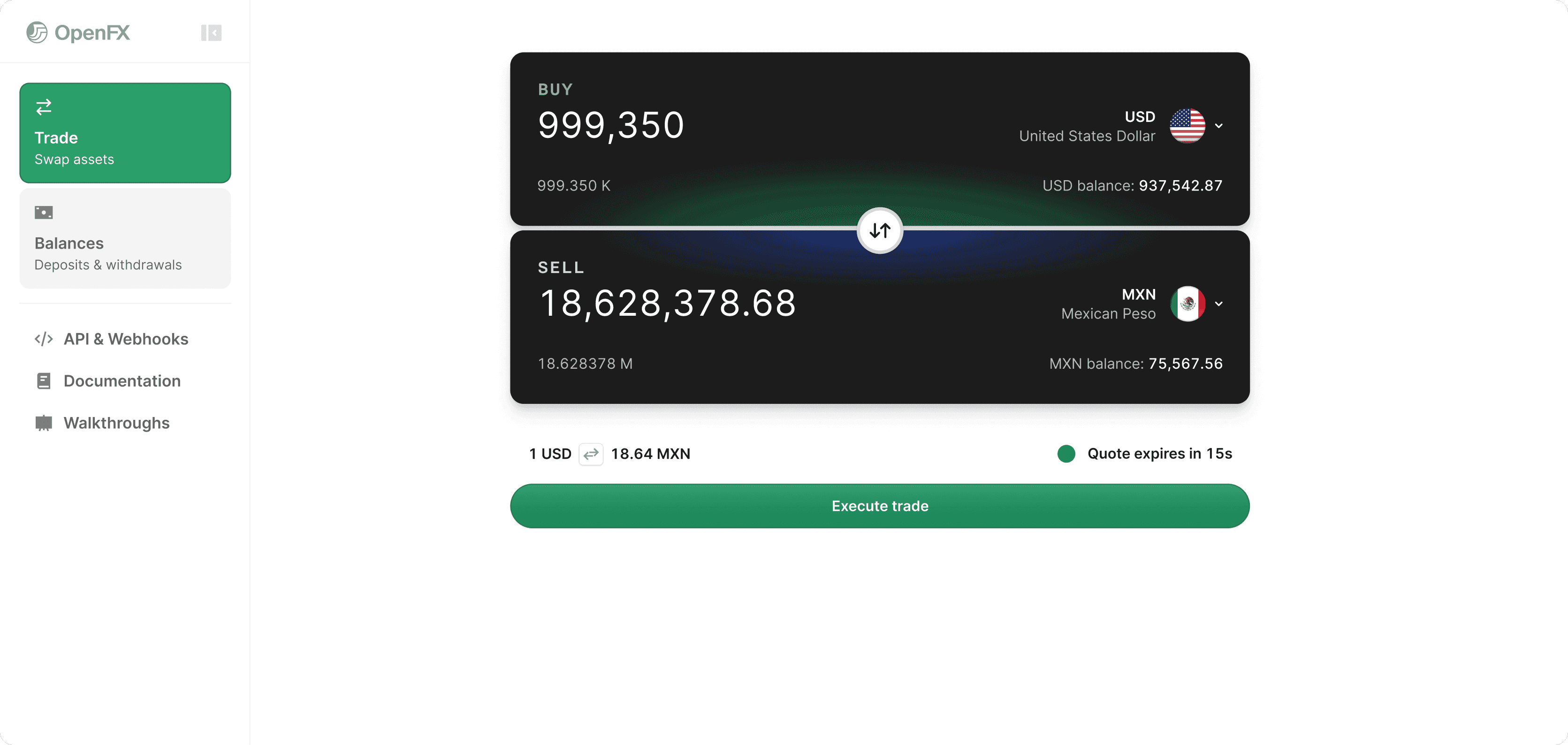
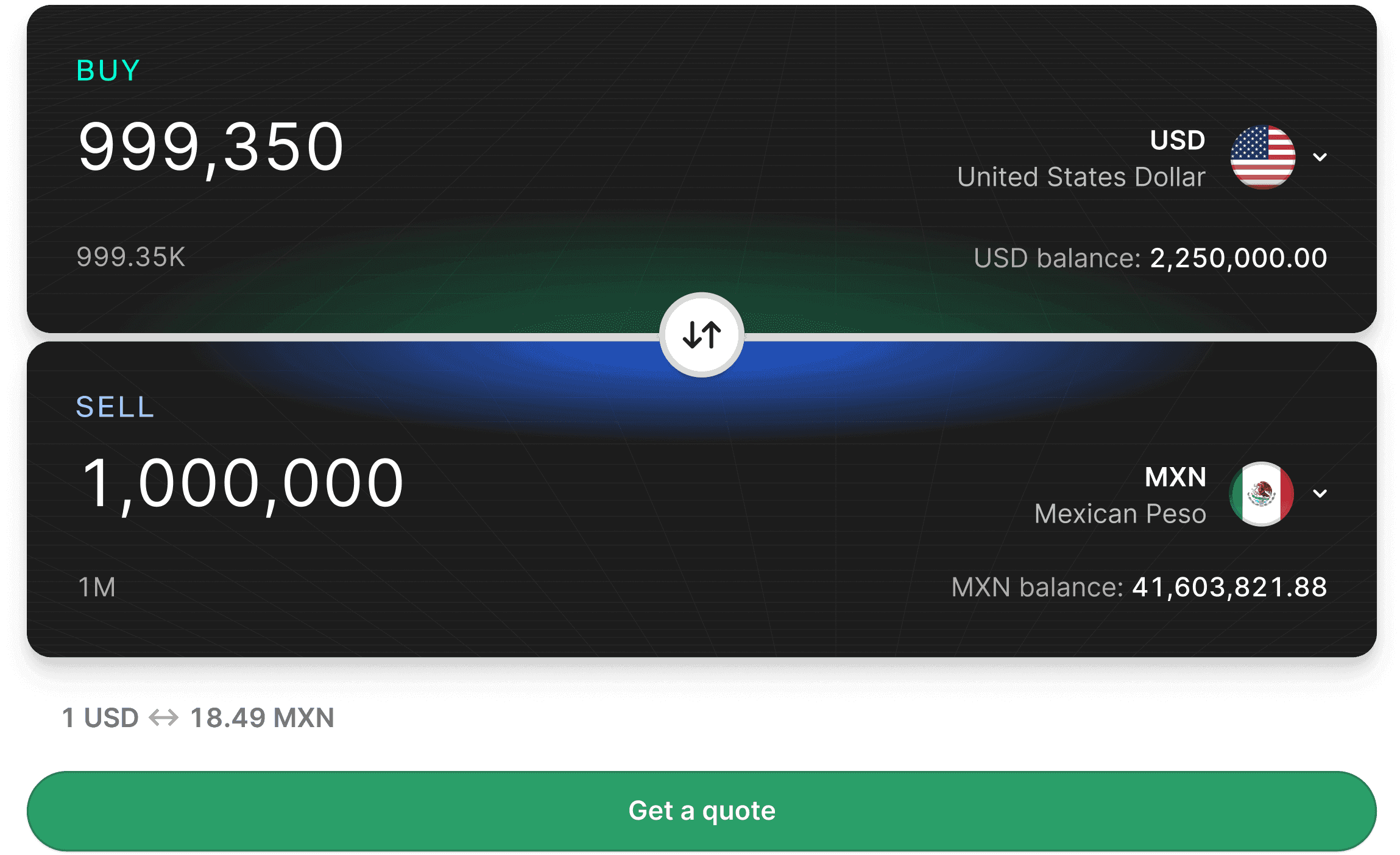
OpenFX trading interface.

FX liquidity available 24/7

Settle multiple times a day. Withdraw in under 60 mins.

OpenFX trading interface.

FX liquidity available 24/7

Settle multiple times a day. Withdraw in under 60 mins.

OpenFX trading interface.

Ask AI about OpenFX

Global network

Teams operating across North America, Europe, Middle East, and Asia

Operating Hours

We never close. Our platform and
support teams are available 24/7/365

Write to us

Red Envelope Delta, Inc, NMLS ID No. 2680829
All rights reserved, © OpenFX 2026.

Ask AI about OpenFX

Global network

Teams operating across North America, Europe, Middle East, and Asia

Operating Hours

We never close. Our platform and support teams are available 24/7/365

Write to us

Red Envelope Delta, Inc, NMLS ID No. 2680829
All rights reserved, © OpenFX 2026.

Ask AI about OpenFX

Global network

Teams operating across North America, Europe, Middle East, and Asia

Operating Hours

We never close. Our platform
and support teams are available 24/7/365

Write to us

Red Envelope Delta, Inc, NMLS ID No. 2680829
All rights reserved, © OpenFX 2026.