Anatomy of a Cross-Border Payment: The Traditional Model

Harrison Mann
,
Head of Growth
A cross-border payment is any type of financial transaction that happens between two parties located in different countries. For obvious reasons, they often include currency conversions.
Common types of cross-border payments include international money orders or other types of remittance methods, electronic funds transfers, wire transfers and credit card transactions.
How a cross-border payment works
Let’s say you’re trying to send $10,000 to India, which uses the Indian Rupee (INR). Based on when I’m writing this, sometime in March of 2026, that monetary amount represents about INR 929,666.
Hold that for later. Here’s what happens next.
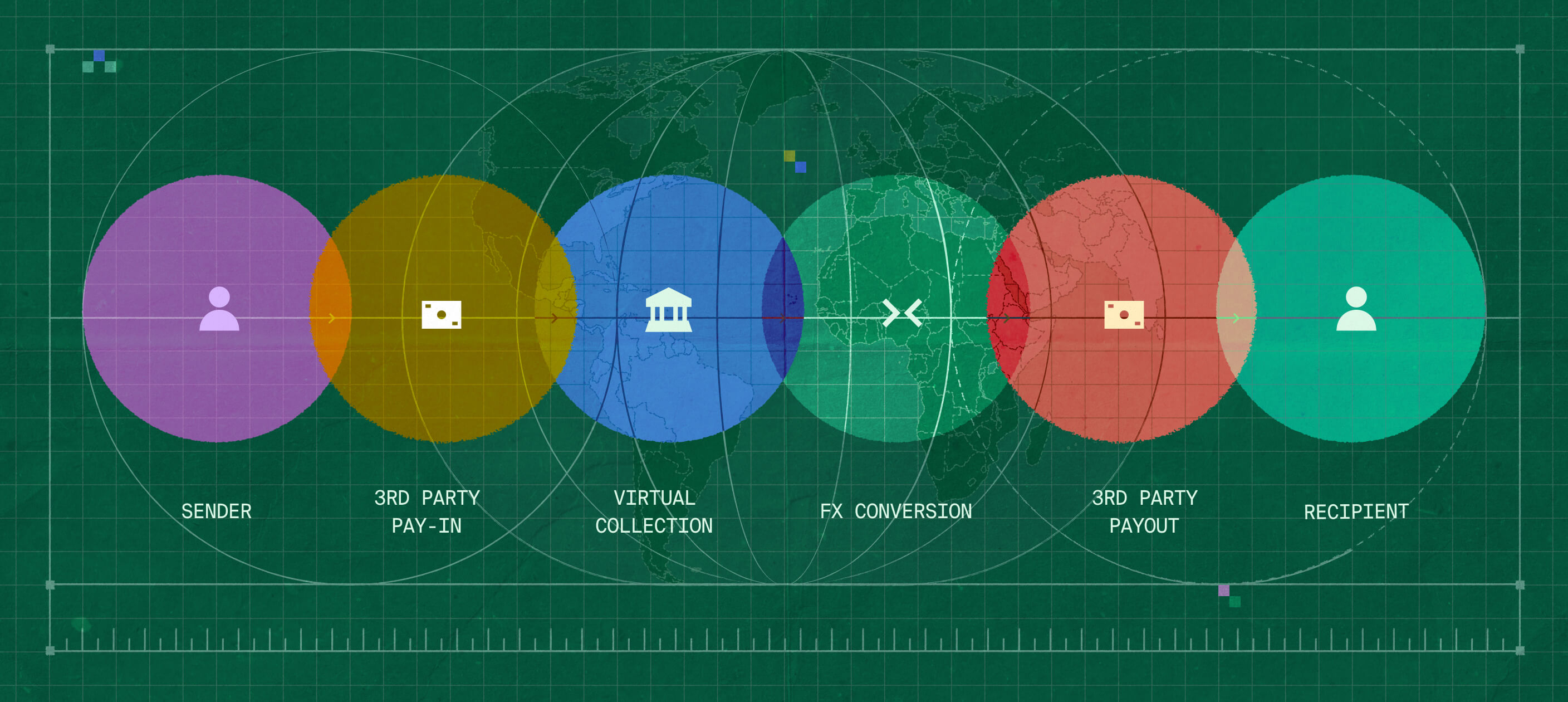
You initiate the transfer
A payment processor takes the funds for appropriate routing
The transfer goes through compliance to avoid fraud
The currency gets converted
Your recipient’s bank receives the payment
There is another fraud screening process
Your recipient receives the funds.
Let me put this plainly. If a critical international supplier suddenly calls and says they need payment within the next 24 hours before shipping, and you’re relying on those products to meet your own delivery dates, you’re going to miss those deadlines.
That is a seven-step process in the best-case scenario. That means there are five steps between you and your recipient. Some gatekeepers take a fee. Others just increase the length of time between transaction initiation and reception. Meanwhile, the difference in value between US dollars and Indian rupees is constantly changing.
The cost of inefficiency
How much money did your recipient receive by the time it got to Delhi, through those seven symbolic gates?
Let’s pretend the exchange rate stayed exactly the same (impossible), and the remittance fee was the lowest possible: 10%. Your recipient received $9000, or INR 836,700.
That’s an entire grand that vanished within a week. For an individual, that represents almost three months’ rent in Delhi.
It merits mention that the example provided is the most optimistic outcome for exotic corridors.
Cross-border payments are historically complicated. Any value exchange is basically a trust interaction, and in the case of moving money, banks usually stand in as the arbiters of trust for a sender and recipient. If two different domestic banks have to deal with each other, the arbiter of trust moves up to a given country’s central bank, which oversees the transaction.
Sadly, banks between different countries don’t have a central bank to oversee the transactions taking place between different sovereign states. What thus happens is that cross border payments pass through correspondent banks.
In some cases, the process is simple—for example, if you’re changing currency from USD to EUR. Plenty of correspondent banks are equipped to manage an exchange in the major western countries, so while you’ll still be charged fees, they’ll be nominal, and you can expect the exchange to happen within the standard three to five business days.
But when you begin to drift into the currencies of emerging markets, things get murky. This is generally thought to be because the differences between our financial systems are too great, their economies too volatile, and regulations in such countries may be constantly evolving.
More to the point, emerging markets may not always have robust local banking infrastructure, so it’s harder for traditional banks to execute payments in local currency. This creates greater dependence on correspondent banks, which increase the length of settlement times as well as fees. (Read our piece on correspondent banks. It’s exhaustive on this point.)
Correspondent banks stand in as arbiters of trust between one foreign bank and another. If one correspondent bank cannot directly connect two banks, a chain of correspondent banks is created, and that chain lengthens in exotic corridors. Every correspondent bank added to the chain takes a fee and adds a delay.
Beyond this, the conversion of “hard currency” (like USD or EUR) to a local exotic currency also exposes senders to exchange rates less favorable than the market rate.
The best way I’ve heard to describe this process is that money doesn’t actually get “transferred” across borders, especially when you’re dealing with exotic corridors. Rather, it settles between the hands of different international banks. As it passes from hand to hand, value disappears between the cracks.
Stablecoins have emerged as the industry's answer - but a fast blockchain transfer is only the tip of the iceberg. We unpack what really sits beneath a cross-border payment in The Iceberg Model.
The problems that individuals face when trying to move money across the globe, are only magnified when you are dealing with the institutional-scale transfers that move economies.
We built OpenFX from the ground up to manage those complexities.
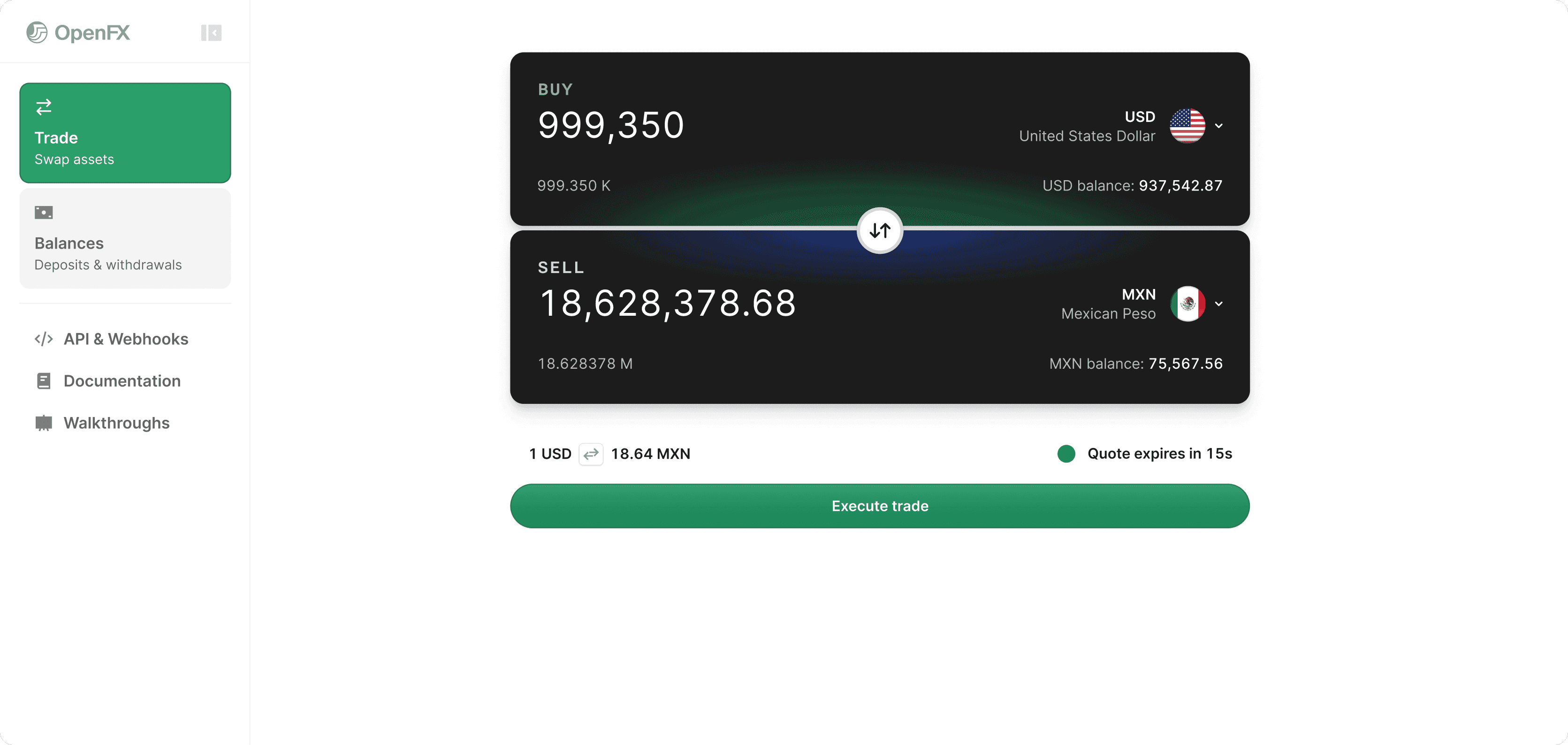
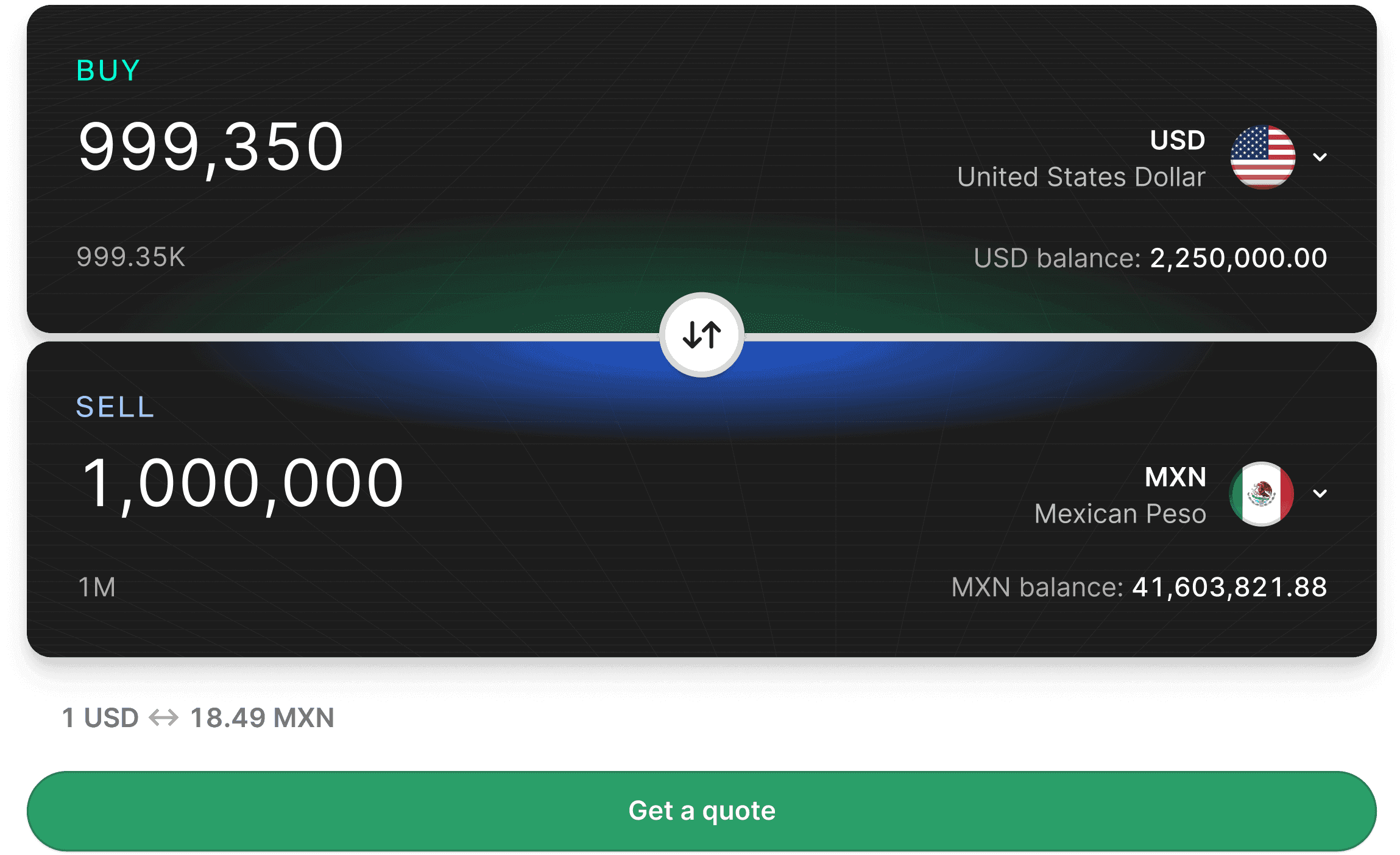
We have deep liquidity and robust infrastructure, so that when our clients transfer 100M from USD to MXN (or any of the other currencies we support), they often see full settlement in less than an hour, and save 90%+ of the transaction costs they would have had to pay if they relied on traditional rails.
Our goal is to transform the way that everyone moves money around the world, not just build tools for the biggest economies.
Share article
Read other articles
Stay informed with our latest articles on currency launches, institutional FX trends, and global liquidity.