Banking, Fragmentation and What Happens After A Cross-Border Conversion

Harrison Mann
,
Head of Growth

Banking and Embedded FX
Your PSP operates in Latin America. You serve small businesses in Mexico, Colombia and Brazil.
You have spent an enormous amount of time understanding the region, and have hired a deep bench of talent to support it. Your app looks great. People love your service. You found a liquidity provider that can get your transactions where they need to be quickly and reliably.
Everything is in excellent shape.
You queue up a trade, a $3M clip between a client in the United States and a firm they've contracted out to in Brazil. It’s the same payroll transaction you run monthly. You get a quote, initiate the trade and get an estimated settlement time of about 60 minutes.
Good.
Twelve hours later, you get off the phone with your bank in Brazil and swear that you're never going to do this again.
After The Trade
Let's rewind a few hours and see what happened:
9AM: Your operations team tried to login into the portal for the small bank that holds your reais, but it's down again. You wish you had a better bank, but no one else wanted to take the business of a payments provider. Now you're going to need to call them up.
12PM: As it turns out, despite the fact that this is the fourth, identical transaction you've made from this same client, the bank has decided to flag it for enhanced review because of its size. They're going to need to speak to your compliance team, and request a stack of additional documentation. They regret any trouble this might cause you.
4PM: You scrape together the paperwork and send it off, you've had banking issues many times before across many different corridors, your team is prepared. The portal is still down though, so by the time you hear back from Brazil, it's nearly the end of their day. You try to get in contact with the person who assured you that they could close this out, but they've already gone home.
5PM: Meanwhile, your team lets you know that another bank, this one in Colombia, sent over a settlement file as a CSV. It covers a months worth of transactions, but the format doesn't match the last one because apparently someone decided to update their export template without telling you. Your finance team has to walk through it line-by-line, matching against the internal ledger.
7PM: You remember that you still need to check on a $5M transfer from Mexico, they batch twice a week so theoretically the payment should be landing tomorrow. Theoretically.
9PM: Brazil gets back to you just as your own day is about to end, they managed to clear the compliance flag and they're happy to let you know that your money will settle sometime tomorrow morning.
By Design
This story plays out all the time, everywhere. It's something that comes up whenever we talk to people at conferences, something that comes up when we talk to our own customers. It's why we've been so obsessed with banking recently.
No matter how fast your settlement speeds, or how reliable your liquidity, if the client is forced to wrangle four relationships before they ever see their funds, the rest doesn't matter.
It's easy to blame the corporate banks here, but it isn't really their fault. These banking systems are operating rationally, according to a set of rules that have nothing to do with you or your business. They are not designed to deal with a customer that has operations in dozens of countries, and whose payment needs are so specific.
The rules they use have largely been inherited from the broader correspondent banking system, and we've spoken at length about how broken that is, and how its maladies have infected almost every other portion of the cross-border payment ecosystem.
Banking is also only one place where this class of problems arise, every part of the FX iceberg sees similar inefficiencies, and they're all grounded in the same underlying tragedy -- fragmentation.
Embedded FX
Before AWS, every company that wanted to run an internet business had to buy and manage its own servers. AWS turned the cloud into a service, and a generation of companies got to spend their time focused on building products.
Right now, every fintech that needs to move money cross-border is forced to spend months or years establishing dozens of individual relationships with banks and regulatory bodies. Once established, an enormous amount of time is spent each month managing those relationships. Some product managers are likely spending more time dealing with customer service than trying to ensure that their own customers are well served.
Embedded FX will do for product managers at these fintechs what AWS did for engineers at startups, turn something complex into a service they can plug into, allowing them to spend their attention on what really matters, building product.
Modern rails for a modern world – seamless, API-driven and built for the people in the places who need them.
As our next step in this process, keep an eye on our Multi-Currency Account waitlist. The first phase is full, but we are opening up another phase starting soon.
Banking and Embedded FX
Your PSP operates in Latin America. You serve small businesses in Mexico, Colombia and Brazil.
You have spent an enormous amount of time understanding the region, and have hired a deep bench of talent to support it. Your app looks great. People love your service. You found a liquidity provider that can get your transactions where they need to be quickly and reliably.
Everything is in excellent shape.
You queue up a trade, a $3M clip between a client in the United States and a firm they've contracted out to in Brazil. It’s the same payroll transaction you run monthly. You get a quote, initiate the trade and get an estimated settlement time of about 60 minutes.
Good.
Twelve hours later, you get off the phone with your bank in Brazil and swear that you're never going to do this again.
After The Trade
Let's rewind a few hours and see what happened:
9AM: Your operations team tried to login into the portal for the small bank that holds your reais, but it's down again. You wish you had a better bank, but no one else wanted to take the business of a payments provider. Now you're going to need to call them up.
12PM: As it turns out, despite the fact that this is the fourth, identical transaction you've made from this same client, the bank has decided to flag it for enhanced review because of its size. They're going to need to speak to your compliance team, and request a stack of additional documentation. They regret any trouble this might cause you.
4PM: You scrape together the paperwork and send it off, you've had banking issues many times before across many different corridors, your team is prepared. The portal is still down though, so by the time you hear back from Brazil, it's nearly the end of their day. You try to get in contact with the person who assured you that they could close this out, but they've already gone home.
5PM: Meanwhile, your team lets you know that another bank, this one in Colombia, sent over a settlement file as a CSV. It covers a months worth of transactions, but the format doesn't match the last one because apparently someone decided to update their export template without telling you. Your finance team has to walk through it line-by-line, matching against the internal ledger.
7PM: You remember that you still need to check on a $5M transfer from Mexico, they batch twice a week so theoretically the payment should be landing tomorrow. Theoretically.
9PM: Brazil gets back to you just as your own day is about to end, they managed to clear the compliance flag and they're happy to let you know that your money will settle sometime tomorrow morning.
By Design
This story plays out all the time, everywhere. It's something that comes up whenever we talk to people at conferences, something that comes up when we talk to our own customers. It's why we've been so obsessed with banking recently.
No matter how fast your settlement speeds, or how reliable your liquidity, if the client is forced to wrangle four relationships before they ever see their funds, the rest doesn't matter.
It's easy to blame the corporate banks here, but it isn't really their fault. These banking systems are operating rationally, according to a set of rules that have nothing to do with you or your business. They are not designed to deal with a customer that has operations in dozens of countries, and whose payment needs are so specific.
The rules they use have largely been inherited from the broader correspondent banking system, and we've spoken at length about how broken that is, and how its maladies have infected almost every other portion of the cross-border payment ecosystem.
Banking is also only one place where this class of problems arise, every part of the FX iceberg sees similar inefficiencies, and they're all grounded in the same underlying tragedy -- fragmentation.
Embedded FX
Before AWS, every company that wanted to run an internet business had to buy and manage its own servers. AWS turned the cloud into a service, and a generation of companies got to spend their time focused on building products.
Right now, every fintech that needs to move money cross-border is forced to spend months or years establishing dozens of individual relationships with banks and regulatory bodies. Once established, an enormous amount of time is spent each month managing those relationships. Some product managers are likely spending more time dealing with customer service than trying to ensure that their own customers are well served.
Embedded FX will do for product managers at these fintechs what AWS did for engineers at startups, turn something complex into a service they can plug into, allowing them to spend their attention on what really matters, building product.
Modern rails for a modern world – seamless, API-driven and built for the people in the places who need them.
As our next step in this process, keep an eye on our Multi-Currency Account waitlist. The first phase is full, but we are opening up another phase starting soon.
Share article
Read other articles
Stay informed with our latest articles on currency launches, institutional FX trends, and global liquidity.






FX liquidity available 24/7
Settle multiple times a day. Withdraw in under 60 mins.

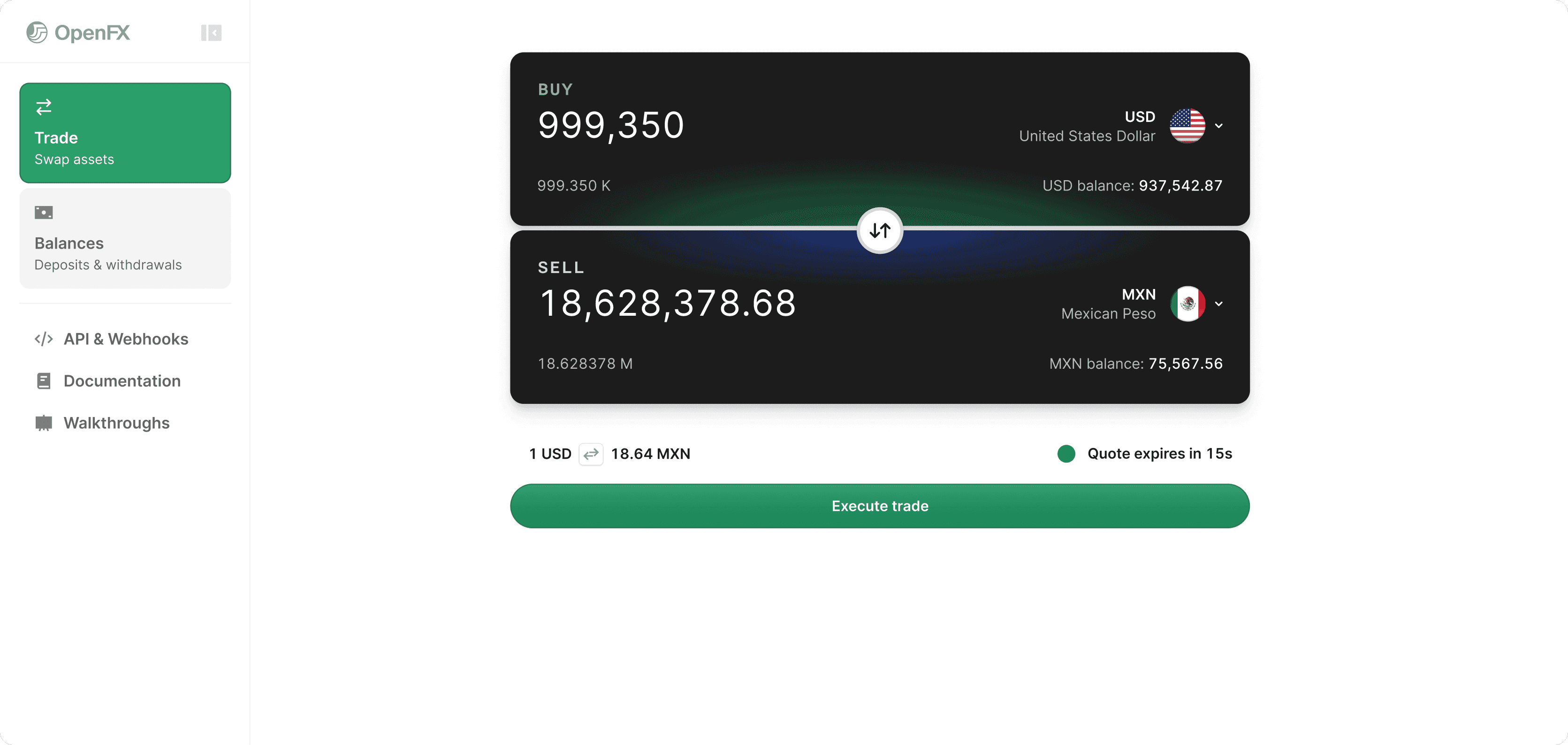
FX liquidity available 24/7
Settle multiple times a day. Withdraw in under 60 mins.
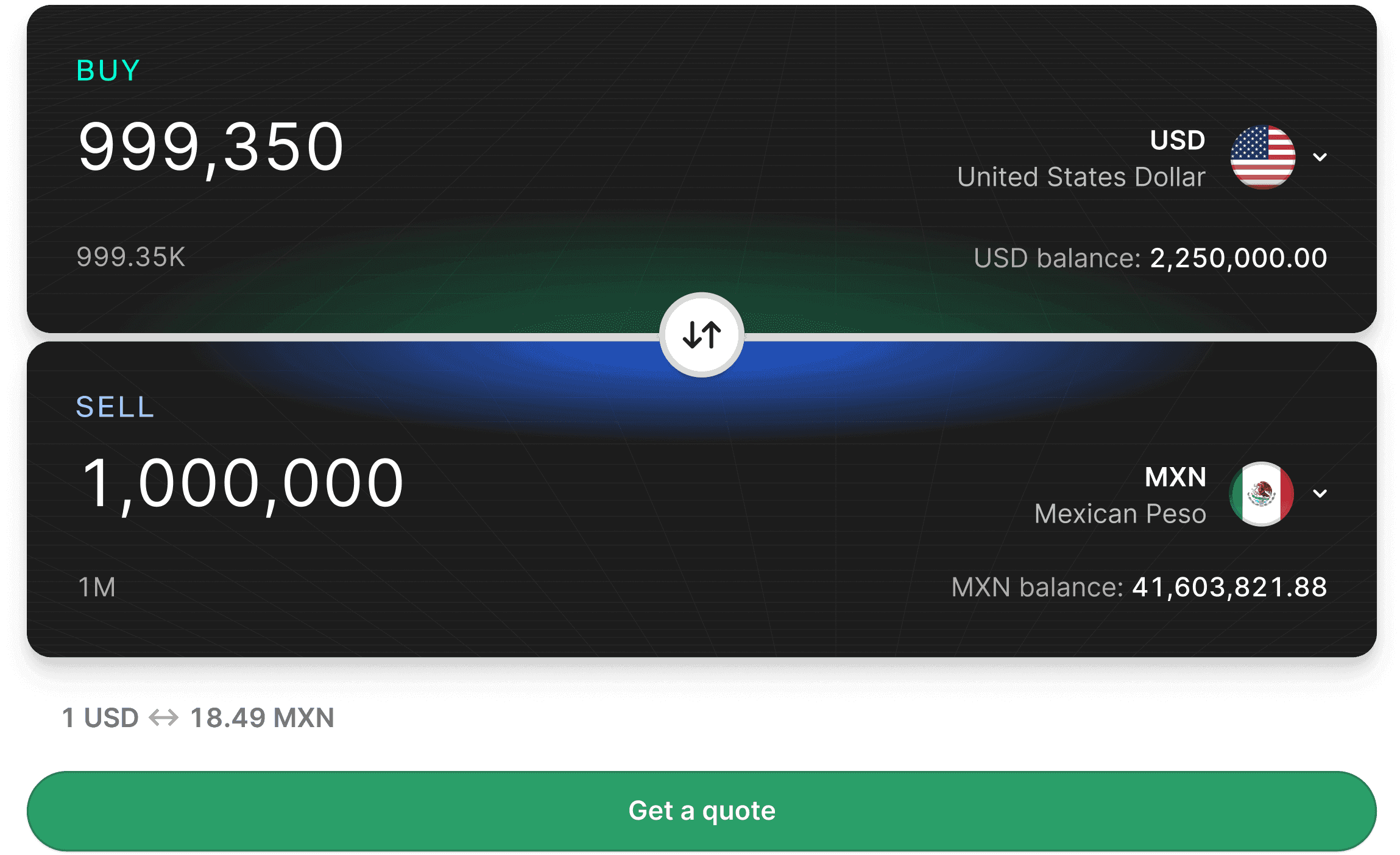
FX liquidity available 24/7
Settle multiple times a day. Withdraw in under 60 mins.

Making money move as
freely as data
Ask AI about OpenFX
Global network
Teams operating across North America, Latin America, Europe, the Middle East, and Asia.
Operating Hours
We never close. Our platform and
support teams are available 24/7/365.
Get in touch
Red Envelope Delta, Inc, NMLS ID No. 2680829
All rights reserved, © OpenFX 2026.
Making money move as
freely as data
Ask AI about OpenFX
Global network
Teams operating across North America, Latin America, Europe, the Middle East, and Asia.
Operating Hours
We never close. Our platform and support teams are available 24/7/365
Get in touch
Red Envelope Delta, Inc, NMLS ID No. 2680829
All rights reserved, © OpenFX 2026.
Making money move as
freely as data
Ask AI about OpenFX
Global network
Teams operating across North America, Latin America, Europe, the Middle East, and Asia.
Operating Hours
We never close. Our platform
and support teams are available 24/7/365
Get in touch
Red Envelope Delta, Inc, NMLS ID No. 2680829
All rights reserved, © OpenFX 2026.