What You Need to Know About Payment Service Providers (PSPs)

Harrison Mann
,
Head of Go-to-Market

The times we’re living in necessitate a fluid economy, and to that end a smoother capacity for merchants to enter the market. That’s where PSPs, or payment service providers, come in.
PSPs enable people to accept payments electronically. Their additional functions, ways of operating and fees vary, depending on what you’re trying to do:
Maybe you recently started a business and you need a service to help you collect money from customers.
Or maybe you went to dinner and forgot your wallet, and now you need to use a company like Venmo or Zelle to pay them back the friend who covered you.
How PSPs work
When a person makes a transaction, a few things need to happen before the money arrives at the recipient’s bank account.
A payment gateway must be triggered. This enables a payment to be taken from the account.
A payment processor then processes the card transaction.
The acquiring bank, or merchant service provider, either receives the authorized funds on the merchant’s behalf, or describes why the payment wasn’t received, for example, a lack of funds.
PSPs have two superpowers: They act as a payment gateway and a payment processor, performing all the compliance exercises necessary to support the transaction. They also maintain direct relationships with acquiring banks.
For a long time, this position put PSPs in a pretty good spot, the service they performed was important, and margins were good. So good that a bunch of other providers decided to join in. Now there are lots of PSPs, and competition has become increasingly fierce.
A couple of things happened as a result: Overall, fees have gone down for customers. Settlement times have, too. Whereas they used to take the standard three to five banking days, now they are “near instant”: Somebody pays a merchant, and the merchant sees that money in their accounts, just like that.
This is great for us, but not so great if you’re a PSP.
The settlement fallacy
Money isn’t backed up with gold bars anymore; banks aren’t sitting on piles of cash or ingots. Money has become information on screens and entries in ledgers. It takes time to reconcile those ledgers, and banks are fastiduous creatures.
PSPs can’t do anything about any of that, but they still want to offer “instant settlement.” How do they accomplish this?
PSPs actually have one more, albeit dwindling, superpower: liquidity. To make themselves more competitive against one another, they solve the problem of money moving slowly by advancing the money to recipients with their own cash.
This was a reasonable bet to take once upon a time, when profit margins for their services were high, but it was never going to be a long-term solution. In order to offer the speed their customers expect, the PSPs must take on increasingly large amounts of risk. In corridors where settlement times are long, the amount of risk increases accordingly.
Real-time payments then, at least in this context, are a kind of magician’s trick.
But reality is rapidly catching up. True real-time settlement systems are increasingly available across the globe, as more and more countries create domestic infrastructure to support their economies. In 2023, real-time payments grew 42% year over year, hitting 266 billion transactions; projections for 2028 are at 575 billion transactions. So now PSPs must compete both with each other and with high-quality domestic payment rails, further compressing fees.
The combination of these factors has led to intense competitive pressure. They are fighting each other, fighting the countries they operate in, and fighting customers increasing expectations.
The situation, in other words, has become existential. As long as PSPs need to pre-fund their services with their own money, it’s nearly impossible for them to keep up with the march of time.
But it doesn’t have to be like this.
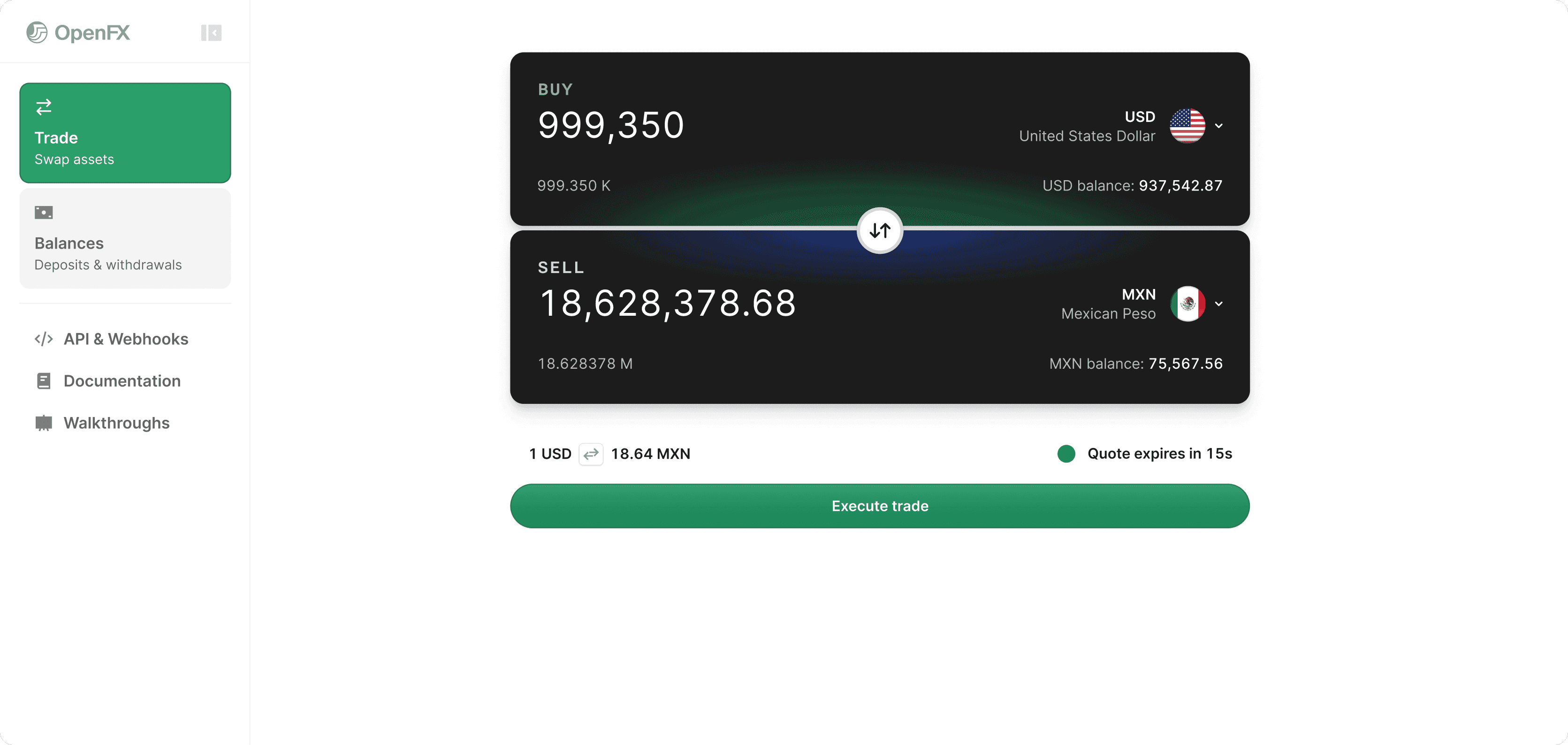
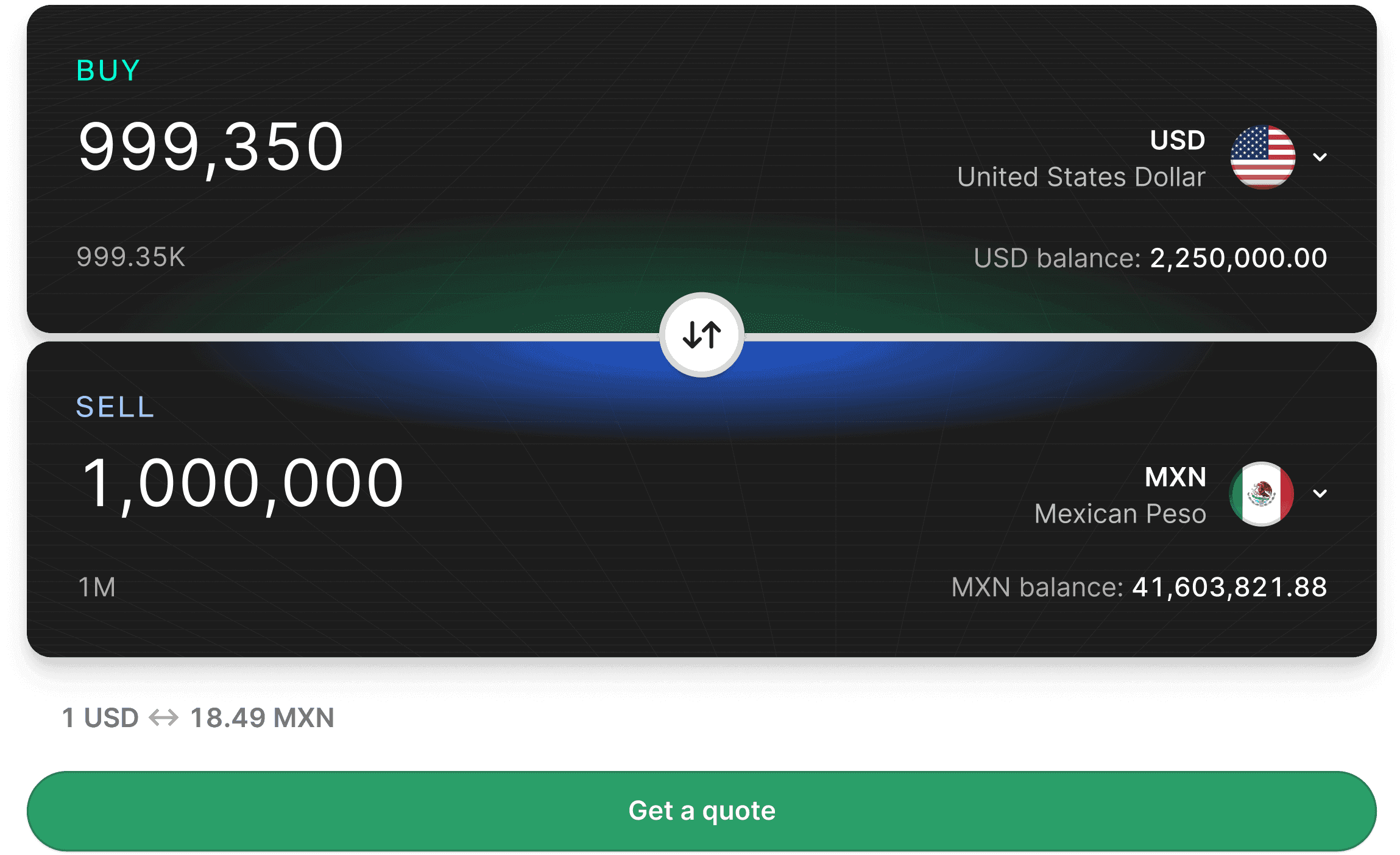
OpenFX nests within the PSP workflow to remove risk by solving the problem of pre-funding while maintaining settlement speeds. To do that, we pull transactions off banking rails and onto blockchain rails. This means money can both move and convert faster, often settling in minutes, and skip over the correspondent banking leg entirely.
For PSPs, this means greatly reduced risk across the board, and far greater effiency. They can focus on the problem they truly solve, and leave the rest to a provider they can trust.
Share article
Read other articles
Stay informed with our latest articles on currency launches, institutional FX trends, and global liquidity.