Instant Settlement is Rarely Instant and Here Is Why

Harrison Mann
,
Head of Growth

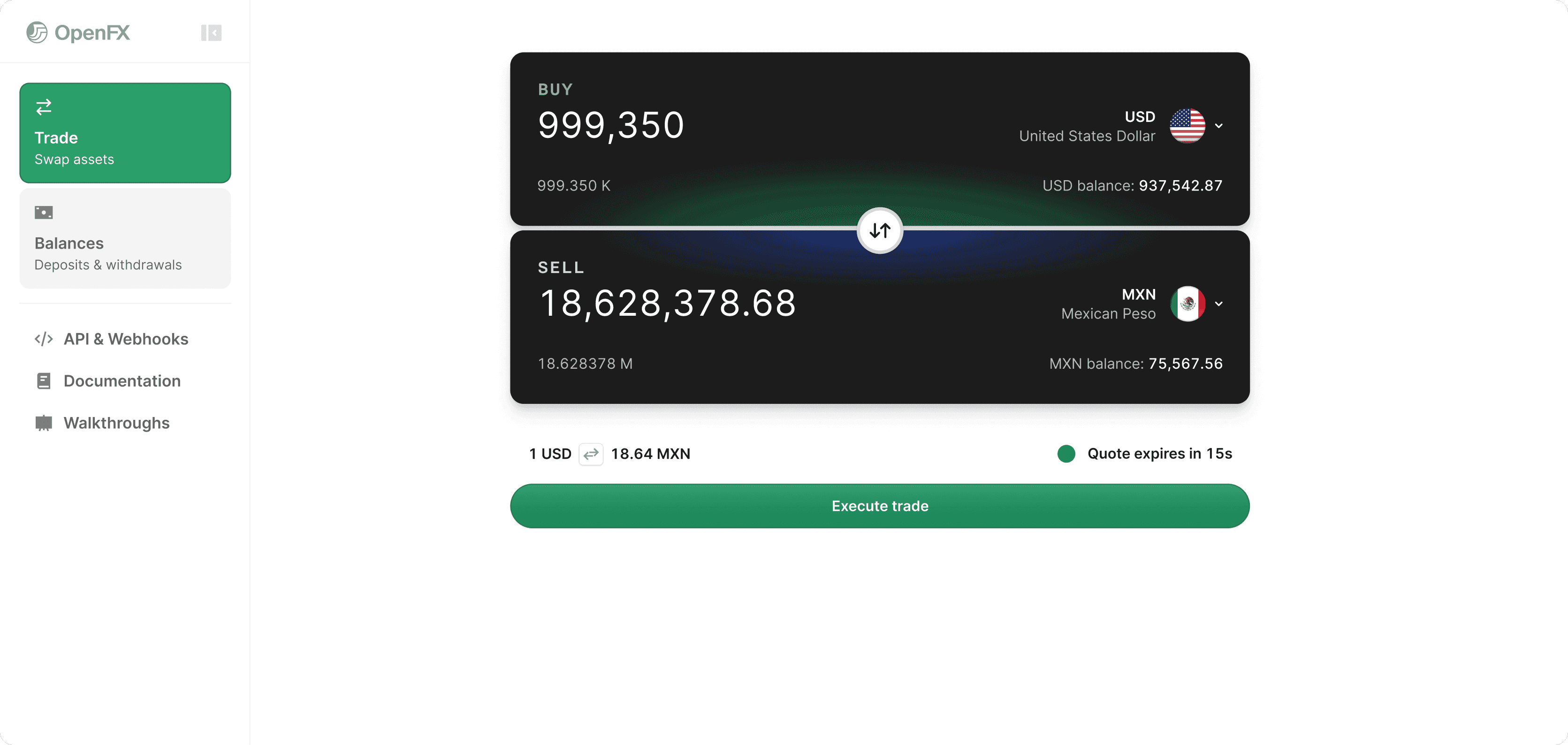
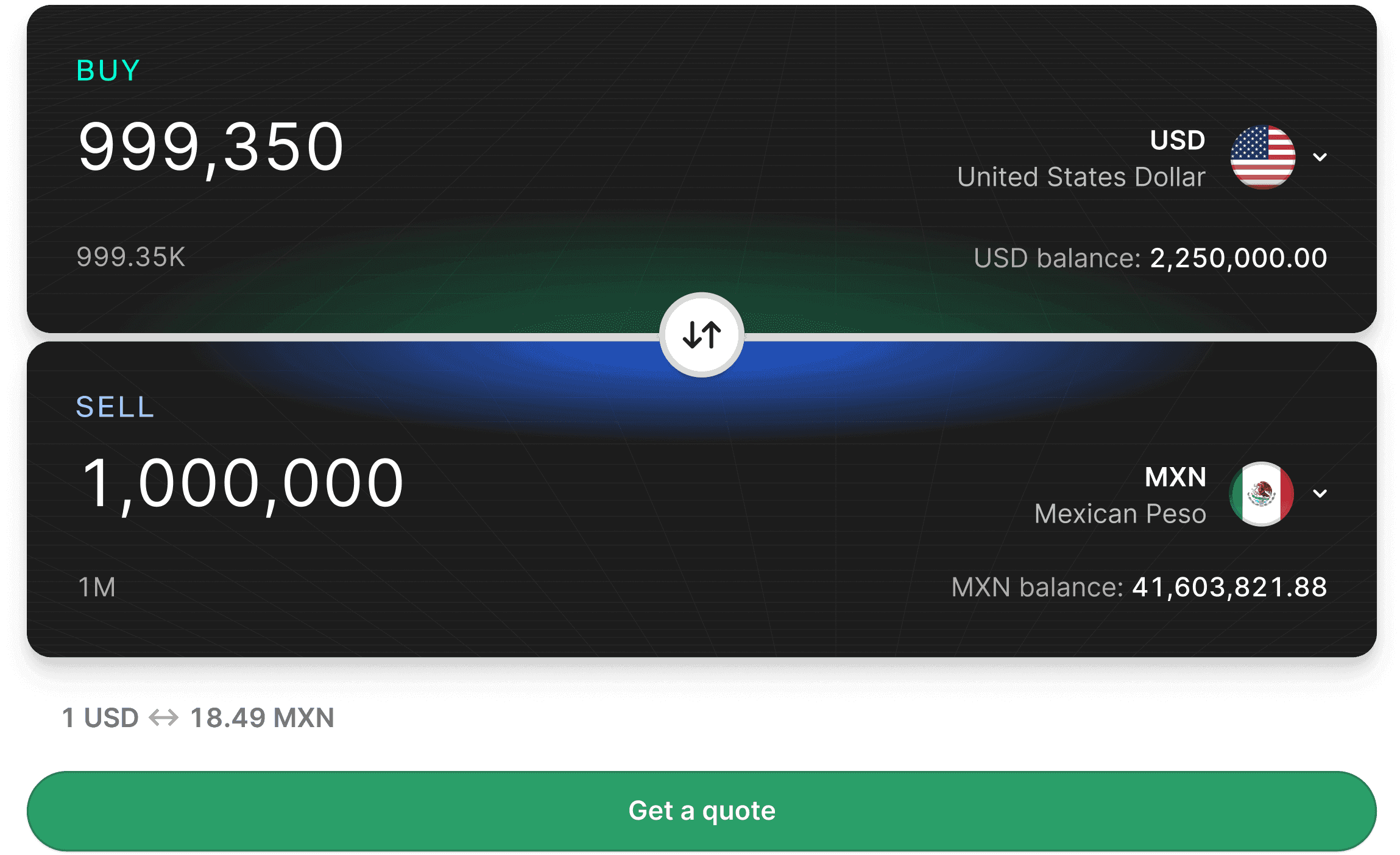
Two clients need fifty million dollars to get from Mexico City to Dubai by close of business on Tuesday. Two different stablecoin providers take on the jobs, both use USDC, and both quote their customers "near-instant settlement."
The first delivers the transaction in eighteen minutes. Everyone claps.
The second doesn't, because "instant" only means instant when you have the operational capacity to support it.
Today's story is about what happens when you don't.
Mexico City, about 9:47 AM
SPEI is Mexico's real-time settlement system, and it's pretty great. Pesos clear domestically in seconds for both transactions, but that is where our two provider's paths diverge.
Unlike Provider A, Provider B doesn't have a direct SPEI connection. They use a third-party on-ramp, so rather than the pesos arriving near instantly, their money must first travel by manual wire into a pooled account.
This account is managed by an associate named Daniela who lives in Guadalajara. She handles these transactions all day long, and processes them in batches. She gets the request from Provider B early enough, but has to handle eleven other transfers this morning.
As she works her way through them, the fifty million sits in queue behind a $200K remittance from Monterrey and a $3.2 million trade payable from Querétaro. When Daniela finally gets around to it, she passes the transaction onto the conversion desk, flagged for enhanced due diligence. Anything above $10 million gets the same treatment.
The conversion desk takes their margin: ten to fifteen basis points, somewhere around $60,000 lost because Provider B lacked the right infrastructure in Mexico City.
Four hours pass before the money can move on, meanwhile transaction A was gone before Daniela finished brewing her morning coffee.
Caught up in compliance
A $50 million transfer between Mexico and the UAE has to be screened against two regulatory regimes: CNBV on the Mexican side, CBUAE on the Emirati side. They have to check for beneficial ownership and fraud patterns, standard stuff to prevent money laundering or worse. Provider A's compliance system handles both regulators in a single automated pass, no human intervention required.
Provider B's compliance vendor covers Mexico well enough, but its UAE screening runs through a third-party database with a four-hour delay. The system flags the transaction, nothing is actually wrong, 95% of alerts on these systems are false positives, but $50 million from a first-time counterparty across an exotic corridor looks potentially suspicious.
Analyst Priya gets the alert. She pulls the counterparty docs, and drafts an enhanced due diligence memo. She needs sign-off from her supervisor in London, but by the time the memo is ready it's past 9 PM there. He's gone home.
While she waits, Provider B's transaction sits paused and the clock keeps ticking.
Sign-off arrives the next morning at 9 AM London time. It's 2 AM Wednesday in Mexico City before the money can finally move on-chain.
Provider A's money has been in Dubai since Tuesday morning.
Wallet to wallet
Getting the money from the Mexican wallet to the Emirati wallet is easy enough for both Providers. It takes about 5 seconds, every time.
This is often what providers mean when they say "instant," they fail to acknowledge the parts of the transaction that aren't controlled by the blockchain, and this failure is why so many supposedly "instant" transactions end up the situation Provider B finds themselves in.
The liquidity problem
The USDC has arrived in the UAE, now it needs to become AED 183.6 million.
There is no MXN/AED market. The pair doesn't trade, which is why the money went through USDC in the first place, but stablecoins only get you as far as dollars. Converting those dollars into dirhams requires dirham liquidity, and when you're trying to move $50 million that's not easy to find. You need to have well established relationships with brokers willing to take your clip.
As you might have predicted, Provider A does and that's why their transaction is already delivered.
Provider B doesn't, their system routes the order to a liquidity aggregator, where we meet trader Karim. Ten million fills fine. He can make twenty million work at a slightly wider spread. $50 million is going to be a problem, it's a meaningful share of available AED, Provider B is a good client so he'll make it work but it'll be pricey.
Karim could pause the order and wait for the Asian session to bring more depth online, but the client wanted same-day delivery and it's already late. He keeps going.
This costs the client forty-two basis points and three additional hours, a couple hundred thousand dollars more because their pool wasn't deep enough to absorb the order without moving the market.
Around 3:47 PM Gulf Standard Time
The dirhams finally land in Provider B's UAE operations account. There is only one more step, they need to settle the funds through UAEFTS.
Too bad UAEFTS closed at 2:00 PM, a little less than two hours ago.
UAEFTS runs for a six hour window from Saturday to Thursday. In Mexico City that window falls between 10 PM and 4 AM. Nobody on Provider B's team was timing the settlement leg around these delays, and because of that, they received this message from Operations manager Fatima, "Funds are in-country. Settlement will complete tomorrow morning."
The dirhams finally settle at 8:04 AM Thursday morning. Total time from the original SPEI entry: roughly thirty-six hours, just under thirty-six hours since transaction A arrived.
Operations and infrastructure
Both transactions were technically moving across the same rails, both used the blockchain, and yet Provider B incurred a couple hundred thousand dollars in extra fees, and about a day and a half in additional settlement time.
None of the people in this story did anything wrong. Each of them did their job, jobs that added hours of time.
The real difference between the two transactions is infrastructural: a direct SPEI connection that didn't require Daniela's batch queue, a compliance engine that didn't need Priya's memo, pre-funded AED pools that didn't need Karim to source liquidity on demand, and the operational knowledge to time a settlement around UAEFTS.
This is not an especially complicated transaction, which is why understanding how easily it can fall apart is so important.
The transaction is only the tip of the iceberg, the reliability and quality of that transaction is determined almost entirely by everything that sits beneath – operational acumen and high quality infrastructure.
Share article
Read other articles
Stay informed with our latest articles on currency launches, institutional FX trends, and global liquidity.