OpenFX Reaches Another TPV Milestone: $60B In Less Than Two Years

Prabhakar Reddy
,
Founder & CEO
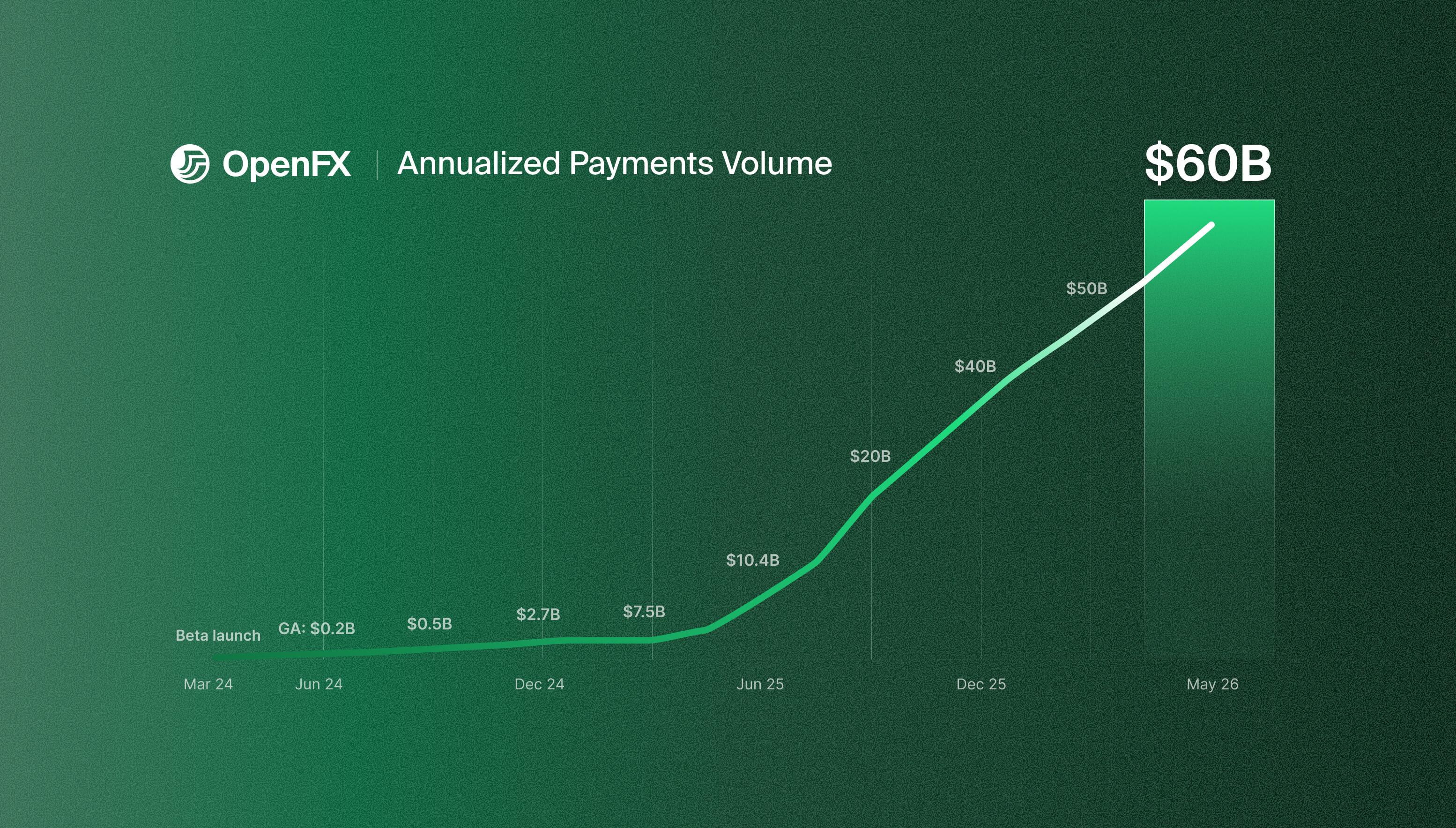
We blew past $60 billion in annualized TPV this month, exceeding our already aggressive projections.
The fact that we've arrived here in less than two years, in one of the most competitive industries on the planet is worth celebrating by itself, but more interesting I think is not the growth, but where that growth is coming from.
Over a third of our volume now originates in Latin America: Mexico, Colombia, Argentina, Brazil.
Colombia alone has become our fastest-growing corridor.
These are not simple places to operate, institutional players know this, that's why they've spent two decades abandoning them rather than innovating.
Correspondent banking relationships across emerging markets have been shrinking for years. Global banks in Latin America have faced de-risking pressures so extreme that in many parts of the Caribbean there is only a single correspondent bank remaining.
The economics of serving these corridors don't work for institutions who have built their revenue models around float income and pre-funded nostro accounts. So they leave.
We are growing precisely where they are retreating.
When we started OpenFX, we made a decision about what kind of company we wanted to build. We could have focused on G7 corridors where high-quality infrastructure already exists, and try to create a business on the back of shrinking spreads. Most of our competitors did exactly that.
We decided instead to tackle a problem that we believe is not only more profitable, but more likely to touch the lives of the billions of people who need to move money the most. We wanted to build the infrastructure for the rest of the world.
That meant accepting a harder path. Each market we enter requires its own compliance frameworks, banking relationships, and unique local knowledge. The regulatory surface area multiplies with every corridor you add.
It also meant building end-to-end capability, not wrappers over existing rails. Stablecoins are a part of that, but only a small part. What determines whether money actually lands in someone's account is everything else: on and off-ramping, liquidity sourcing, APIs and automated infrastructure to support reliability.
Our results speak for themselves, and we plan on replicating our model across other parts of the world where major institutions have failed to keep up with the dynamism of local markets.
This is just the beginning.
Share article
Read other articles
Stay informed with our latest articles on currency launches, institutional FX trends, and global liquidity.