February 10, 2026

Understanding FX Liquidity and Volatility

Harrison Mann, Head of Growth of OpenFX

Harrison Mann,

Head of Growth

Stylized image of the OpenFX logo over a green background.

As of April 2025, global FX turnover surged to a record of $9.6 trillion per day, up 28% since 2022.

The U.K. and the U.S. accounted for a full 57% of global turnover, followed by Singapore (12%) and Hong Kong (7%).

Meanwhile, the total daily turnover of the Nigerian Naira was only $500M.

How much more expensive is it to trade the latter than the former? To understand that, you need to understand how liquidity works in the FX market.

Liquidity is the ability to buy or sell currency quickly, at a price close to what you expect, without moving the market against yourself. When liquidity is deep, there are tons of buyers and sellers ready to transact. Spreads are tight. Your million-dollar currency conversion happens smoothly at something close to the mid-market rate. You barely feel it.

When liquidity is shallow—worse, when it vanishes—everything gets harder and more expensive. Spreads widen, prices lose clarity. Your order might not even fill. And if you really need to move money? You’re going to pay a premium that would make a loan shark blush.

This matters because liquidity isn't constant. It ebbs and flows based on trading hours, market participants, and critically, market conditions. When stress hits the system, liquidity can disappear faster than wi-fi in a thunderstorm.

Picture this: You’ve had a great night out in the city, and you just walked out of a bar where you can hear your friends, still laughing behind you as they ring up. Public transport is closed. So you call a private car.

The car shows up in five minutes. It costs $12 to get across town. No problem. You’re home in no time.

Imagine that same scenario after a natural disaster. A snowstorm has knocked power out across half the city. You’re trying to get home as fast as you can, but public transport isn’t working, so you call a car.

This time, that same car service shows up 20 minutes late after several cancellations. Instead of paying $12 for a short trip, you’re paying $40 because the emergency situation has triggered surge pricing. It takes half an hour to get home; part of you wonders whether you should’ve just gotten out halfway and walked.

That's basically what happens when liquidity evaporates.

What creates (and destroys) liquidity

In normal times, liquidity comes from market makers—banks, trading firms, and other institutions that stand ready to buy and sell currencies. They’re motivated by the bid-ask spread, the tiny profit margin on each trade. The more competitive the market, the more market makers, the tighter the spreads, the deeper the liquidity.

Major currency pairs like EUR/USD or USD/JPY have massive liquidity because everyone trades them. Trillions of dollars flow through these pairs daily. There are always counterparties ready to transact.

Exotic pairs—think Turkish lira, Argentine peso, Nigerian naira—are a different animal. Trading volumes are lower and fewer market makers participate. Spreads are wider, even in calm conditions. And when stress hits, the market makers providing liquidity often step back entirely. They don’t want the risk and can’t price the uncertainty. So they pull their quotes and disappear.

Geopolitical shocks are liquidity killers. They can crater liquidity in minutes.

Let’s look at Turkey. In periods of political uncertainty or the central bank makes unexpected moves, the Turkish lira can see wild swings. One moment you’re looking at a quote of 28.5 lira to the dollar. Fifteen minutes later, after some alarming news breaks, market makers pull back and the spread blows out. You might see a 27.8 bid and 29.3 offered—a spread so wide you could drive a truck through it. If you need to convert a million dollars into lira right now, your CFO will wake up with trauma sweats for the rest of her natural life.

Or consider what happens during a natural disaster that disrupts a country’s infrastructure. Communications go down, banks close, payment systems freeze. Even if you want to transact in that currency, the mechanics of settlement become a nightmare. Liquidity doesn’t just get expensive; it could disappear for days.

Macroeconomic stress creates similar dynamics. When a country’s inflation spirals or there’s a debt crisis, the FX market for that currency becomes treacherous. Liquidity fragments and official rates diverge from black market rates.

Settlement becomes uncertain. A straightforward currency conversion becomes high-stakes musical chairs.

Moving in slow motion

Here’s where things get worse in traditional cross-border payment: Settlement delays.

When you initiate a currency conversion and cross-border payment through traditional banking rails, you’re typically looking at T+2 or T+3 settlement before the transaction actually completes.

During those days, you’re exposed. If you locked in a rate, you’ve got counterparty risk. If you didn’t lock in a rate, you’ve got market risk. Either way, your capital is in limbo and you can’t deploy it.

In a crisis, this gets more tenuous. You need to move money out of or into an emerging market currency. You initiate the transaction on Monday afternoon. Settlement is Thursday. But Tuesday night, the country’s central bank makes an emergency announcement. By Wednesday morning, the exchange rate has jumped 8% overnight. Capital controls get announced Wednesday afternoon. Thursday arrives and … who knows if settlement will even happen?

The slow-motion nature of traditional systems means you’re exposed to liquidity risk and market risk for days at a time, precisely when those risks are highest. Working capital gets trapped in the pipes when you need flexibility most.

All this assumes you’re trading during banking hours. If stress hits over a weekend, or after the close of business in key financial centers, you’re stuck waiting for Monday morning while the world burns.

Change the rails, cut the exposure

You can’t prepare for liquidity under stress using the tools that work in calm conditions.

What you can do is select infrastructure that doesn’t multiply the problem.

OpenFX tackles strained liquidity by eliminating exposure. By enabling near-instant settlement through a combination of traditional finance relationships and modern blockchain rails, transactions that took days can complete in seconds or minutes. The multi-day window of vulnerability seals shut.

When you can move money in real-time, most stress-induced liquidity problems become more manageable. You’re not betting on what the market will look like in three days; you’re transacting now, at now’s rate, and settlement happens before the coffee gets cold. Capital isn’t trapped in transit, so you can address changing conditions instead of being frozen in place.

The always-on nature of the infrastructure matters too. Crises don’t wait for banking hours. They happen at 11 PM on a Saturday, or during that gap between Asian markets closing and European markets opening. Real-time settlement means you move when you need to, not when the correspondent banking network decides to wake up.

Markets will always have stress. Geopolitical shocks will keep happening. Exotic currencies will remain exotic, with all the liquidity challenges that entails. But the settlement delays, the trapped working capital, the multi-day exposure windows—those aren't inherent features of cross-border payments. They’re features of legacy infrastructure.

As of April 2025, global FX turnover surged to a record of $9.6 trillion per day, up 28% since 2022.

The U.K. and the U.S. accounted for a full 57% of global turnover, followed by Singapore (12%) and Hong Kong (7%).

Meanwhile, the total daily turnover of the Nigerian Naira was only $500M.

How much more expensive is it to trade the latter than the former? To understand that, you need to understand how liquidity works in the FX market.

Liquidity is the ability to buy or sell currency quickly, at a price close to what you expect, without moving the market against yourself. When liquidity is deep, there are tons of buyers and sellers ready to transact. Spreads are tight. Your million-dollar currency conversion happens smoothly at something close to the mid-market rate. You barely feel it.

When liquidity is shallow—worse, when it vanishes—everything gets harder and more expensive. Spreads widen, prices lose clarity. Your order might not even fill. And if you really need to move money? You’re going to pay a premium that would make a loan shark blush.

This matters because liquidity isn't constant. It ebbs and flows based on trading hours, market participants, and critically, market conditions. When stress hits the system, liquidity can disappear faster than wi-fi in a thunderstorm.

Picture this: You’ve had a great night out in the city, and you just walked out of a bar where you can hear your friends, still laughing behind you as they ring up. Public transport is closed. So you call a private car.

The car shows up in five minutes. It costs $12 to get across town. No problem. You’re home in no time.

Imagine that same scenario after a natural disaster. A snowstorm has knocked power out across half the city. You’re trying to get home as fast as you can, but public transport isn’t working, so you call a car.

This time, that same car service shows up 20 minutes late after several cancellations. Instead of paying $12 for a short trip, you’re paying $40 because the emergency situation has triggered surge pricing. It takes half an hour to get home; part of you wonders whether you should’ve just gotten out halfway and walked.

That's basically what happens when liquidity evaporates.

What creates (and destroys) liquidity

In normal times, liquidity comes from market makers—banks, trading firms, and other institutions that stand ready to buy and sell currencies. They’re motivated by the bid-ask spread, the tiny profit margin on each trade. The more competitive the market, the more market makers, the tighter the spreads, the deeper the liquidity.

Major currency pairs like EUR/USD or USD/JPY have massive liquidity because everyone trades them. Trillions of dollars flow through these pairs daily. There are always counterparties ready to transact.

Exotic pairs—think Turkish lira, Argentine peso, Nigerian naira—are a different animal. Trading volumes are lower and fewer market makers participate. Spreads are wider, even in calm conditions. And when stress hits, the market makers providing liquidity often step back entirely. They don’t want the risk and can’t price the uncertainty. So they pull their quotes and disappear.

Geopolitical shocks are liquidity killers. They can crater liquidity in minutes.

Let’s look at Turkey. In periods of political uncertainty or the central bank makes unexpected moves, the Turkish lira can see wild swings. One moment you’re looking at a quote of 28.5 lira to the dollar. Fifteen minutes later, after some alarming news breaks, market makers pull back and the spread blows out. You might see a 27.8 bid and 29.3 offered—a spread so wide you could drive a truck through it. If you need to convert a million dollars into lira right now, your CFO will wake up with trauma sweats for the rest of her natural life.

Or consider what happens during a natural disaster that disrupts a country’s infrastructure. Communications go down, banks close, payment systems freeze. Even if you want to transact in that currency, the mechanics of settlement become a nightmare. Liquidity doesn’t just get expensive; it could disappear for days.

Macroeconomic stress creates similar dynamics. When a country’s inflation spirals or there’s a debt crisis, the FX market for that currency becomes treacherous. Liquidity fragments and official rates diverge from black market rates.

Settlement becomes uncertain. A straightforward currency conversion becomes high-stakes musical chairs.

Moving in slow motion

Here’s where things get worse in traditional cross-border payment: Settlement delays.

When you initiate a currency conversion and cross-border payment through traditional banking rails, you’re typically looking at T+2 or T+3 settlement before the transaction actually completes.

During those days, you’re exposed. If you locked in a rate, you’ve got counterparty risk. If you didn’t lock in a rate, you’ve got market risk. Either way, your capital is in limbo and you can’t deploy it.

In a crisis, this gets more tenuous. You need to move money out of or into an emerging market currency. You initiate the transaction on Monday afternoon. Settlement is Thursday. But Tuesday night, the country’s central bank makes an emergency announcement. By Wednesday morning, the exchange rate has jumped 8% overnight. Capital controls get announced Wednesday afternoon. Thursday arrives and … who knows if settlement will even happen?

The slow-motion nature of traditional systems means you’re exposed to liquidity risk and market risk for days at a time, precisely when those risks are highest. Working capital gets trapped in the pipes when you need flexibility most.

All this assumes you’re trading during banking hours. If stress hits over a weekend, or after the close of business in key financial centers, you’re stuck waiting for Monday morning while the world burns.

Change the rails, cut the exposure

You can’t prepare for liquidity under stress using the tools that work in calm conditions.

What you can do is select infrastructure that doesn’t multiply the problem.

OpenFX tackles strained liquidity by eliminating exposure. By enabling near-instant settlement through a combination of traditional finance relationships and modern blockchain rails, transactions that took days can complete in seconds or minutes. The multi-day window of vulnerability seals shut.

When you can move money in real-time, most stress-induced liquidity problems become more manageable. You’re not betting on what the market will look like in three days; you’re transacting now, at now’s rate, and settlement happens before the coffee gets cold. Capital isn’t trapped in transit, so you can address changing conditions instead of being frozen in place.

The always-on nature of the infrastructure matters too. Crises don’t wait for banking hours. They happen at 11 PM on a Saturday, or during that gap between Asian markets closing and European markets opening. Real-time settlement means you move when you need to, not when the correspondent banking network decides to wake up.

Markets will always have stress. Geopolitical shocks will keep happening. Exotic currencies will remain exotic, with all the liquidity challenges that entails. But the settlement delays, the trapped working capital, the multi-day exposure windows—those aren't inherent features of cross-border payments. They’re features of legacy infrastructure.

As of April 2025, global FX turnover surged to a record of $9.6 trillion per day, up 28% since 2022.

The U.K. and the U.S. accounted for a full 57% of global turnover, followed by Singapore (12%) and Hong Kong (7%).

Meanwhile, the total daily turnover of the Nigerian Naira was only $500M.

How much more expensive is it to trade the latter than the former? To understand that, you need to understand how liquidity works in the FX market.

Liquidity is the ability to buy or sell currency quickly, at a price close to what you expect, without moving the market against yourself. When liquidity is deep, there are tons of buyers and sellers ready to transact. Spreads are tight. Your million-dollar currency conversion happens smoothly at something close to the mid-market rate. You barely feel it.

When liquidity is shallow—worse, when it vanishes—everything gets harder and more expensive. Spreads widen, prices lose clarity. Your order might not even fill. And if you really need to move money? You’re going to pay a premium that would make a loan shark blush.

This matters because liquidity isn't constant. It ebbs and flows based on trading hours, market participants, and critically, market conditions. When stress hits the system, liquidity can disappear faster than wi-fi in a thunderstorm.

Picture this: You’ve had a great night out in the city, and you just walked out of a bar where you can hear your friends, still laughing behind you as they ring up. Public transport is closed. So you call a private car.

The car shows up in five minutes. It costs $12 to get across town. No problem. You’re home in no time.

Imagine that same scenario after a natural disaster. A snowstorm has knocked power out across half the city. You’re trying to get home as fast as you can, but public transport isn’t working, so you call a car.

This time, that same car service shows up 20 minutes late after several cancellations. Instead of paying $12 for a short trip, you’re paying $40 because the emergency situation has triggered surge pricing. It takes half an hour to get home; part of you wonders whether you should’ve just gotten out halfway and walked.

That's basically what happens when liquidity evaporates.

What creates (and destroys) liquidity

In normal times, liquidity comes from market makers—banks, trading firms, and other institutions that stand ready to buy and sell currencies. They’re motivated by the bid-ask spread, the tiny profit margin on each trade. The more competitive the market, the more market makers, the tighter the spreads, the deeper the liquidity.

Major currency pairs like EUR/USD or USD/JPY have massive liquidity because everyone trades them. Trillions of dollars flow through these pairs daily. There are always counterparties ready to transact.

Exotic pairs—think Turkish lira, Argentine peso, Nigerian naira—are a different animal. Trading volumes are lower and fewer market makers participate. Spreads are wider, even in calm conditions. And when stress hits, the market makers providing liquidity often step back entirely. They don’t want the risk and can’t price the uncertainty. So they pull their quotes and disappear.

Geopolitical shocks are liquidity killers. They can crater liquidity in minutes.

Let’s look at Turkey. In periods of political uncertainty or the central bank makes unexpected moves, the Turkish lira can see wild swings. One moment you’re looking at a quote of 28.5 lira to the dollar. Fifteen minutes later, after some alarming news breaks, market makers pull back and the spread blows out. You might see a 27.8 bid and 29.3 offered—a spread so wide you could drive a truck through it. If you need to convert a million dollars into lira right now, your CFO will wake up with trauma sweats for the rest of her natural life.

Or consider what happens during a natural disaster that disrupts a country’s infrastructure. Communications go down, banks close, payment systems freeze. Even if you want to transact in that currency, the mechanics of settlement become a nightmare. Liquidity doesn’t just get expensive; it could disappear for days.

Macroeconomic stress creates similar dynamics. When a country’s inflation spirals or there’s a debt crisis, the FX market for that currency becomes treacherous. Liquidity fragments and official rates diverge from black market rates.

Settlement becomes uncertain. A straightforward currency conversion becomes high-stakes musical chairs.

Moving in slow motion

Here’s where things get worse in traditional cross-border payment: Settlement delays.

When you initiate a currency conversion and cross-border payment through traditional banking rails, you’re typically looking at T+2 or T+3 settlement before the transaction actually completes.

During those days, you’re exposed. If you locked in a rate, you’ve got counterparty risk. If you didn’t lock in a rate, you’ve got market risk. Either way, your capital is in limbo and you can’t deploy it.

In a crisis, this gets more tenuous. You need to move money out of or into an emerging market currency. You initiate the transaction on Monday afternoon. Settlement is Thursday. But Tuesday night, the country’s central bank makes an emergency announcement. By Wednesday morning, the exchange rate has jumped 8% overnight. Capital controls get announced Wednesday afternoon. Thursday arrives and … who knows if settlement will even happen?

The slow-motion nature of traditional systems means you’re exposed to liquidity risk and market risk for days at a time, precisely when those risks are highest. Working capital gets trapped in the pipes when you need flexibility most.

All this assumes you’re trading during banking hours. If stress hits over a weekend, or after the close of business in key financial centers, you’re stuck waiting for Monday morning while the world burns.

Change the rails, cut the exposure

You can’t prepare for liquidity under stress using the tools that work in calm conditions.

What you can do is select infrastructure that doesn’t multiply the problem.

OpenFX tackles strained liquidity by eliminating exposure. By enabling near-instant settlement through a combination of traditional finance relationships and modern blockchain rails, transactions that took days can complete in seconds or minutes. The multi-day window of vulnerability seals shut.

When you can move money in real-time, most stress-induced liquidity problems become more manageable. You’re not betting on what the market will look like in three days; you’re transacting now, at now’s rate, and settlement happens before the coffee gets cold. Capital isn’t trapped in transit, so you can address changing conditions instead of being frozen in place.

The always-on nature of the infrastructure matters too. Crises don’t wait for banking hours. They happen at 11 PM on a Saturday, or during that gap between Asian markets closing and European markets opening. Real-time settlement means you move when you need to, not when the correspondent banking network decides to wake up.

Markets will always have stress. Geopolitical shocks will keep happening. Exotic currencies will remain exotic, with all the liquidity challenges that entails. But the settlement delays, the trapped working capital, the multi-day exposure windows—those aren't inherent features of cross-border payments. They’re features of legacy infrastructure.

FAQs

What exactly is "FX liquidity"?

Liquidity is the ability to buy or sell a currency quickly, at a predictable price, without your transaction forcing the market price to move. When liquidity is "deep," you can move large amounts of money easily at tight spreads. When it is "shallow," trading becomes expensive and slow.

Why does liquidity sometimes disappear?

Liquidity depends on market makers (banks and institutions) being willing to buy and sell. When uncertainty hits, like a geopolitical shock or an economic crisis, these market makers often pull back to protect themselves. This removes the buyers and sellers from the market, causing liquidity to evaporate and spreads to widen.

Why are "exotic" currency pairs riskier than major ones?

Major pairs like EUR/USD have trillions of dollars flowing through them daily, so there is always someone ready to trade. Exotic pairs (like the Turkish lira or Nigerian naira) have lower trading volumes and fewer market makers. When stress hits, these few market makers are the first to disappear, leading to massive spreads and inability to trade.

What is "T+2" settlement and why is it a problem during a crisis?

"T+2" means a transaction settles two days after the trade date. In a calm market, this is fine. But during a crisis, a lot can happen in 48 hours. If a central bank imposes capital controls or a currency crashes by 8% while your money is stuck in that two-day window, you are exposed to massive market and counterparty risk.

How does real-time settlement reduce risk?

Real-time settlement removes the "time" variable from the equation. Instead of locking in a rate and waiting days to see if the payment settles, you transact and settle almost instantly. This closes the "window of vulnerability," ensuring you aren't left exposed to market swings while your capital is in transit.

Do liquidity crises only happen during banking hours?

No, and that is a major issue with legacy banking rails. Crises often break over weekends or during the gap between Asian markets closing and European markets opening. If you rely on traditional banks, you are stuck waiting for them to open while the market moves against you.

FAQs

What exactly is "FX liquidity"?

Liquidity is the ability to buy or sell a currency quickly, at a predictable price, without your transaction forcing the market price to move. When liquidity is "deep," you can move large amounts of money easily at tight spreads. When it is "shallow," trading becomes expensive and slow.

Why does liquidity sometimes disappear?

Liquidity depends on market makers (banks and institutions) being willing to buy and sell. When uncertainty hits, like a geopolitical shock or an economic crisis, these market makers often pull back to protect themselves. This removes the buyers and sellers from the market, causing liquidity to evaporate and spreads to widen.

Why are "exotic" currency pairs riskier than major ones?

Major pairs like EUR/USD have trillions of dollars flowing through them daily, so there is always someone ready to trade. Exotic pairs (like the Turkish lira or Nigerian naira) have lower trading volumes and fewer market makers. When stress hits, these few market makers are the first to disappear, leading to massive spreads and inability to trade.

What is "T+2" settlement and why is it a problem during a crisis?

"T+2" means a transaction settles two days after the trade date. In a calm market, this is fine. But during a crisis, a lot can happen in 48 hours. If a central bank imposes capital controls or a currency crashes by 8% while your money is stuck in that two-day window, you are exposed to massive market and counterparty risk.

How does real-time settlement reduce risk?

Real-time settlement removes the "time" variable from the equation. Instead of locking in a rate and waiting days to see if the payment settles, you transact and settle almost instantly. This closes the "window of vulnerability," ensuring you aren't left exposed to market swings while your capital is in transit.

Do liquidity crises only happen during banking hours?

No, and that is a major issue with legacy banking rails. Crises often break over weekends or during the gap between Asian markets closing and European markets opening. If you rely on traditional banks, you are stuck waiting for them to open while the market moves against you.

FAQs

What exactly is "FX liquidity"?

Liquidity is the ability to buy or sell a currency quickly, at a predictable price, without your transaction forcing the market price to move. When liquidity is "deep," you can move large amounts of money easily at tight spreads. When it is "shallow," trading becomes expensive and slow.

Why does liquidity sometimes disappear?

Liquidity depends on market makers (banks and institutions) being willing to buy and sell. When uncertainty hits, like a geopolitical shock or an economic crisis, these market makers often pull back to protect themselves. This removes the buyers and sellers from the market, causing liquidity to evaporate and spreads to widen.

Why are "exotic" currency pairs riskier than major ones?

Major pairs like EUR/USD have trillions of dollars flowing through them daily, so there is always someone ready to trade. Exotic pairs (like the Turkish lira or Nigerian naira) have lower trading volumes and fewer market makers. When stress hits, these few market makers are the first to disappear, leading to massive spreads and inability to trade.

What is "T+2" settlement and why is it a problem during a crisis?

"T+2" means a transaction settles two days after the trade date. In a calm market, this is fine. But during a crisis, a lot can happen in 48 hours. If a central bank imposes capital controls or a currency crashes by 8% while your money is stuck in that two-day window, you are exposed to massive market and counterparty risk.

How does real-time settlement reduce risk?

Real-time settlement removes the "time" variable from the equation. Instead of locking in a rate and waiting days to see if the payment settles, you transact and settle almost instantly. This closes the "window of vulnerability," ensuring you aren't left exposed to market swings while your capital is in transit.

Do liquidity crises only happen during banking hours?

No, and that is a major issue with legacy banking rails. Crises often break over weekends or during the gap between Asian markets closing and European markets opening. If you rely on traditional banks, you are stuck waiting for them to open while the market moves against you.

Share article

FX liquidity available 24/7

Settle multiple times a day. Withdraw in under 60 mins.

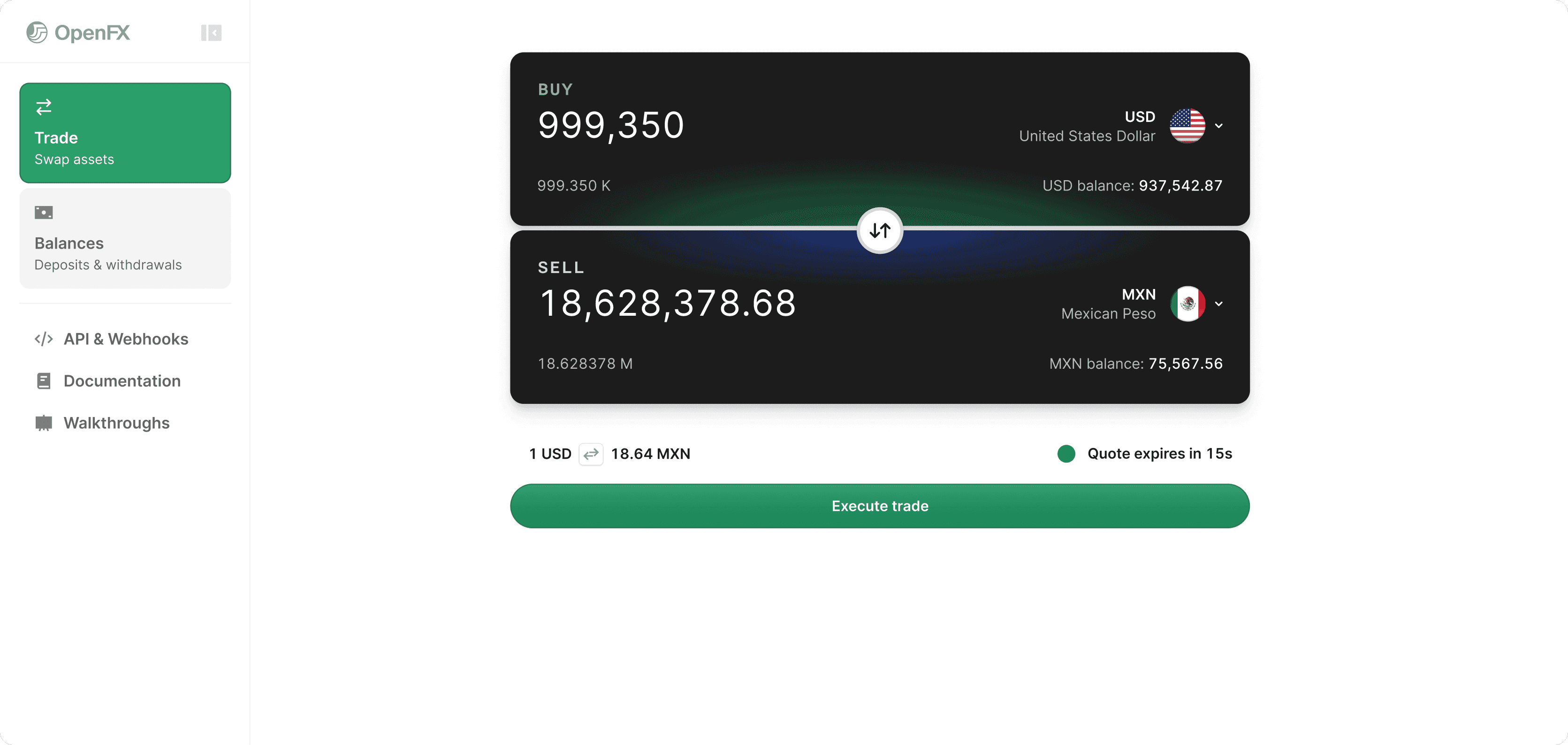
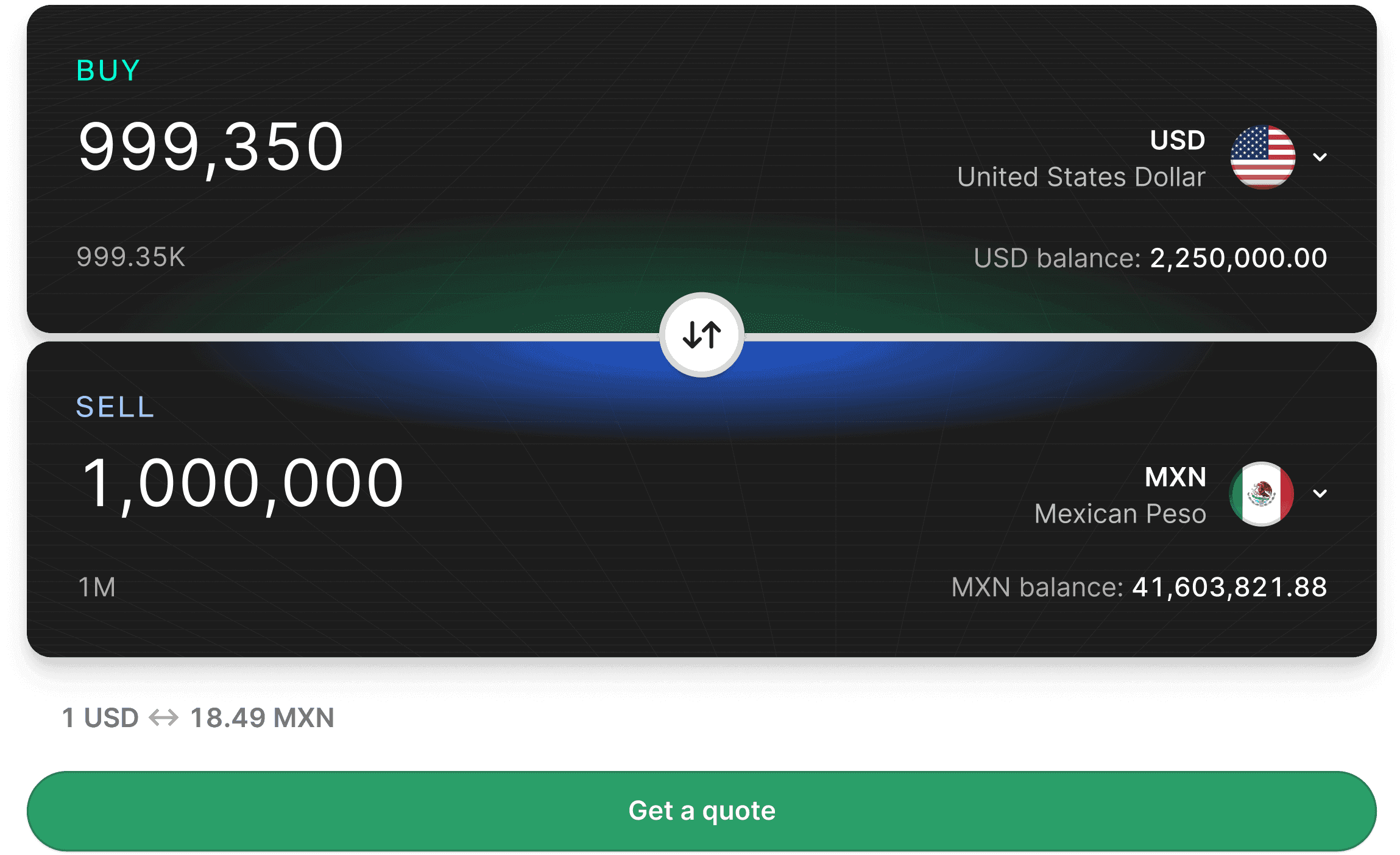
OpenFX trading interface.

FX liquidity available 24/7

Settle multiple times a day. Withdraw in under 60 mins.

OpenFX trading interface.

FX liquidity available 24/7

Settle multiple times a day. Withdraw in under 60 mins.

OpenFX trading interface.

Ask AI about OpenFX

Global network

Teams operating across North America, Europe, Middle East, and Asia

Operating Hours

We never close. Our platform and
support teams are available 24/7/365

Write to us

Red Envelope Delta, Inc, NMLS ID No. 2680829
All rights reserved, © OpenFX 2026.

Ask AI about OpenFX

Global network

Teams operating across North America, Europe, Middle East, and Asia

Operating Hours

We never close. Our platform and support teams are available 24/7/365

Write to us

Red Envelope Delta, Inc, NMLS ID No. 2680829
All rights reserved, © OpenFX 2026.

Ask AI about OpenFX

Global network

Teams operating across North America, Europe, Middle East, and Asia

Operating Hours

We never close. Our platform
and support teams are available 24/7/365

Write to us

Red Envelope Delta, Inc, NMLS ID No. 2680829
All rights reserved, © OpenFX 2026.