Providing Liquidity to Exotic Markets: The ATM at the End of the World

Harrison Mann
,
Head of Growth

There is a ATM at McMurdo Station, Antarctica. It’s the southernmost one on the planet.
It works well enough, but restocking it is an extraordinary undertaking, and the economics underpinning its need couldn’t be any more different than the kind of machine you might find sitting in an airport somewhere.
Volume is low and risk is high. The machine charges $0 in fees, rendering potential profits moot. Its existence depends almost entirely on whether someone, somewhere thinks that it should be there. Seems like a bad business, until you try to take it away and the 75 or so people at the station riot.
Providing liquidity to exotic FX corridors is a little like this. Everyone agrees the machine should exist, but almost nobody is invested in stocking it.
What makes exotic markets so punitive
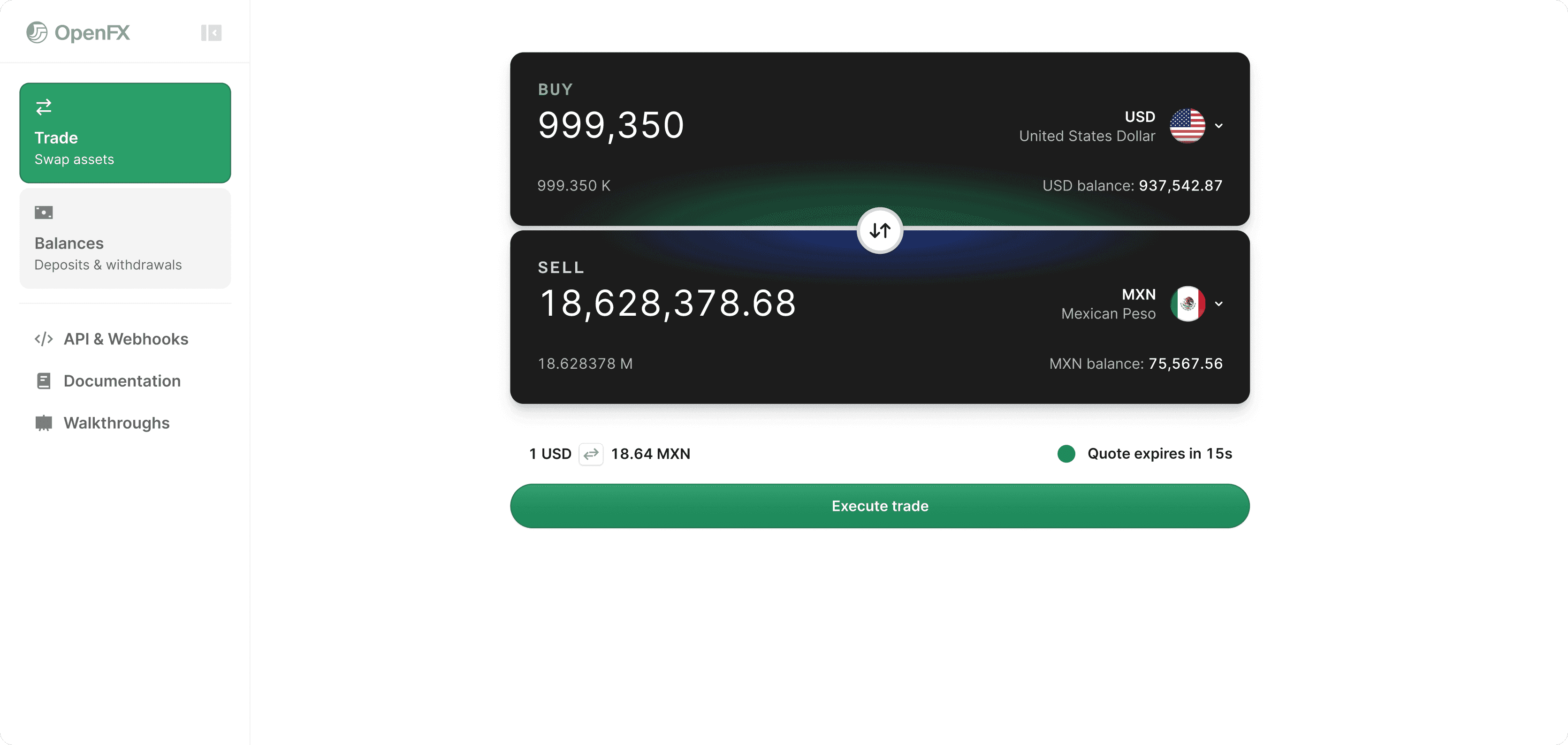
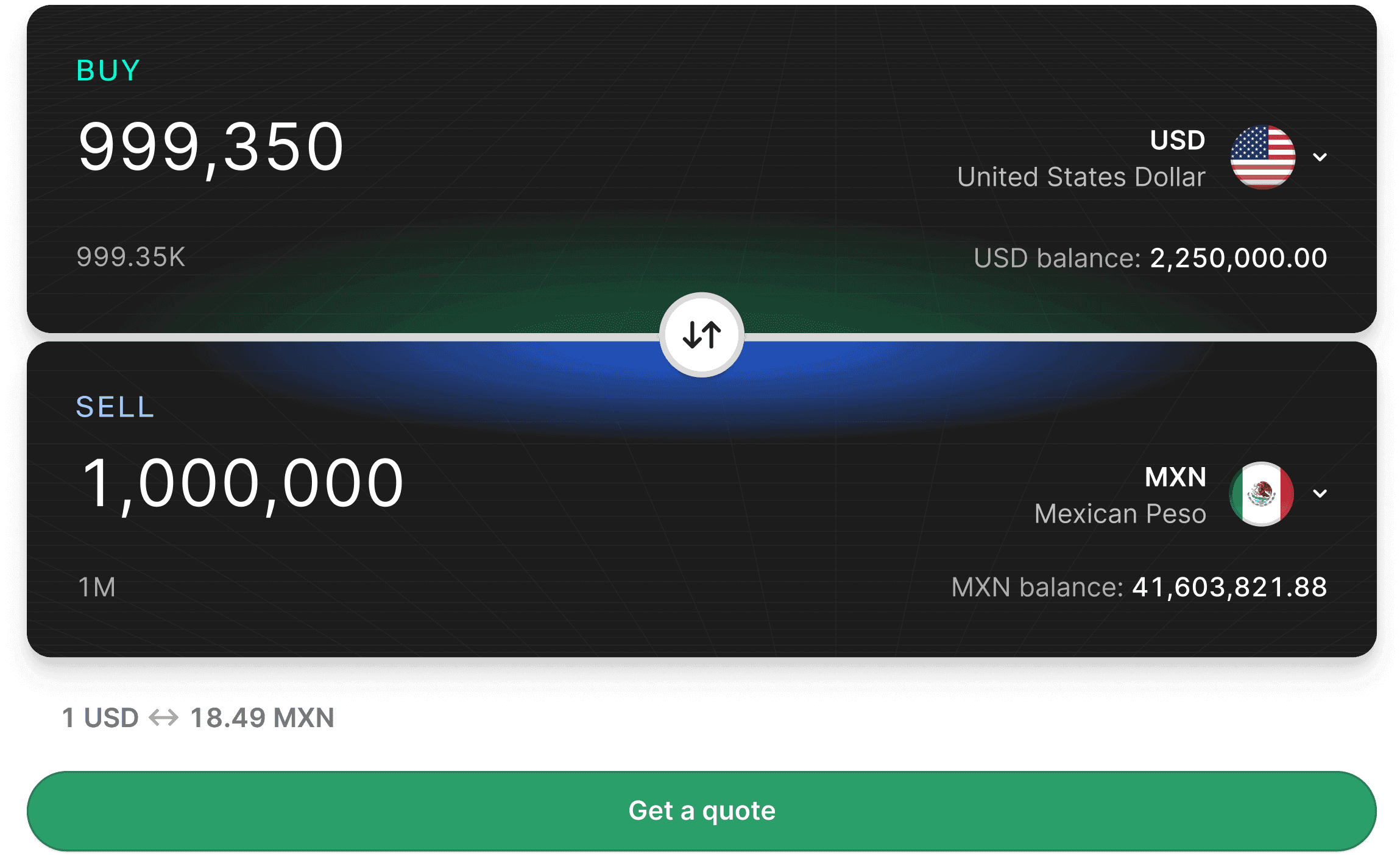
As evidenced by our last report, exotic FX corridors command spreads that dwarf what you can find in G7 pairs. Where EUR/USD might trade at a fraction of a basis point, an emerging market pair can carry spreads of 200 basis points or more. That’s an incredible unit economics proposition for liquidity providers.
In theory, anyway.
But the reality of operating in these markets is even more complicated. Market making requires capital commitment: Quoting a price means being around to fill an order at that price, so somebody has to be holding inventory in the relevant currencies.
In liquid G7 markets, that inventory turns over rapidly. In exotic corridors, it can sit on the books for extended periods, exposed to the volatility of structurally less stable currencies.
Then there’s political and regulatory risk. Exotic corridors are, almost by definition, run through jurisdictions with less predictable policy environments. Capital controls can appear with little notice, settlement windows can extend unpredictably, and counterparty risk takes on an additional dimension when the counterparties themselves operate under regulatory regimes that don’t always align with international norms.
The settlement risk part of this equation deserves specific attention.
In G7 markets, the infrastructure for clearing and settling trades is standardized and fast. In many emerging markets, this isn’t always the case.
Accessing rails in these areas can require local banking relationships that take years to establish. Reconciliation is often manual in ways that global FX operations have not had to think about for decades.
The economics of absence
We see a system developing where volume in exotic corridors is too low, and the operational overhead too high for most banks and non-bank market makers to justify the investment. The few who do operate in these markets typically do so at elevated spreads, a kind of geographic tax.
This creates a strange dynamic. Exotic FX corridors are both the most richly rewarded and most underserved segment of global currency markets. Spreads are high because the liquidity is thin, and liquidity is thin because the conditions required to provide it are so demanding. No one has found a way to break the cycle at scale, so the machine at the end of the world stays empty more often than not.
Stablecoins are starting to rewrite this calculus. Because a stablecoin is essentially a digital bearer instrument, it sidesteps much of the legacy infrastructure that makes exotic market making so expensive. You don’t need a nostro account in Nairobi if you can settle in USDC. It’s not necessary to have a bilateral credit relationship with a local prime broker if counterparty risk is managed by a smart contract. Settlement windows shrink from days to minutes.
If stablecoin rails can reduce the settlement and infrastructure costs of exotic market making by a meaningful fraction, the ATM economics we have been discussing begin to change.
What it takes to close the circuit
Even with better technology, exotic market making remains hard because the historical infrastructure in place for G7 currencies was never designed with these regions in mind.
What’s more, the risk of political interference doesn’t disappear because you settled on-chain. What does change is the cost structure, which determines who can afford to show up.
Those who succeed in exotic corridors can combine real-time risk management with the operational agility to navigate uncertain regulatory environments, without requiring the balance-sheet commitments that historically priced out all but the largest institutions.
That’s a narrow area of focus, but these are also the capabilities that define the harder parts of what we’re building.
FAQ
What does "market making" in cross-border FX actually involve?
A market maker is whoever stands ready to fill your order at a quoted price the moment you want to trade, instead of making you wait for a matching counterparty to turn up. To do that in a currency pair, they keep a working balance of both currencies on hand, so they can deliver one side the instant an order arrives. In pairs like USD/EUR the trade appears almost instantly. In an exotic pair the offsetting trade might not appear for hours or days, and for that whole stretch the position is exposed to whatever the currency does. The spread charged covers the risk they hold.
What is a nostro account?
A nostro account is an account one bank holds, in a foreign currency, at another bank inside that currency's home country. (The term is Latin for "ours," our money, in your custody.) To pay out Kenyan shillings, you generally need shillings already sitting at a bank in Kenya, because that local account is what gives you access to the domestic payment system. So a firm working a corridor has to open and fund accounts at local banks in every country it settles in, and keep each one topped up. Every account ties up capital and depends on an existing banking relationship.
Why does calling a stablecoin a "bearer instrument" matter for how it settles in a cross-border transaction?
A bearer instrument is one whose ownership is set by possession itself, the way cash in your pocket is yours with no registry recording the fact. Most money moves the opposite way: paying someone is a sequence of banks updating ledgers to debit one account and credit another, each link trusting the next to do its part. This is what correspondent banks are designed to coordinate. Conversely, a stablecoin transfers like the bearer asset it is, holding it is owning it, and sending it discharges the obligation directly, with no chain of intermediaries needed to reconcile the books.
How can a smart contract help manage risk in cross-border transactions?
Counterparty risk is the danger that the other side takes your money and fails to deliver theirs, whether through fraud, insolvency or error. The traditional defenses involve legal agreements and bureaucratic machinery designed to establish a trust relationship between parties. A smart contract is code that holds both sides of the exchange and releases each only once the other is in place, so neither party can take possession without surrendering its own side. The trade clears in full or not at all. Trust exists as a matter of infrastructure. While this doesn't erase every hazard in an exotic corridor, it removes the specific fear that the party across from you won't pay, and with it the web of credit relationships built to contain that fear.
What are capital controls as they relate to cross-border FX?
Capital controls are government limits on money entering or leaving a country: restrictions on converting the local currency, caps on how much can exit, etc… Governments reach for them to defend a currency, particularly from unchecked outflows under stress. These can often come without warning. A control announced on a Tuesday can trap a balance inside the country or block the conversion a trade depends on, turning a routine position into money that cannot move. Because these are policy decisions rather than market events, they don't show up in prices ahead of time the way ordinary volatility does, which is what makes them so hard to hedge.
Share article
Read other articles
Stay informed with our latest articles on currency launches, institutional FX trends, and global liquidity.