Orchestration, Stablecoins, and the Problem of Fragmentation

Harrison Mann
,
Head of Growth

Here’s a fun fact: The Beatles were the first band to bring whole orchestras into recording studios, then put microphones up against their instruments. This was so they could get a lot of clear, original sounds, which they could then manipulate after the fact.
Orchestral members didn’t like this. They found it disrespectful - a way of reducing complex, live experiences into noise hacks for pop culture. Luckily for The Beatles, they had a great sound engineer - Geoff Emerick. He knew how to take thousands of random sounds and partial-songs that didn’t match, and he made hits out of them.
Stablecoins work like that for big-volume trades. What you see on the surface is a payment converted and sent, received in minutes, but a lot of engineering happens under the hood to ensure that result.
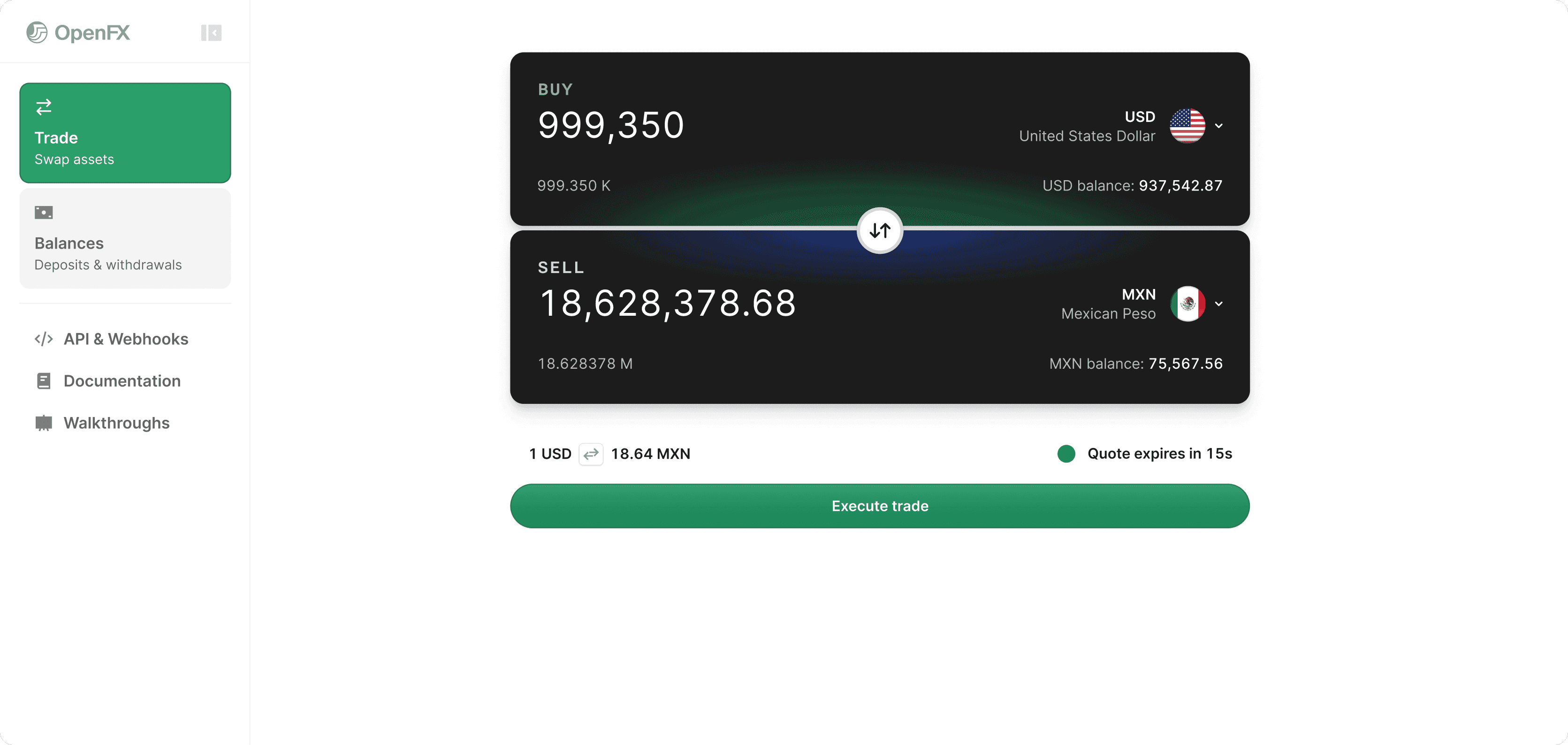
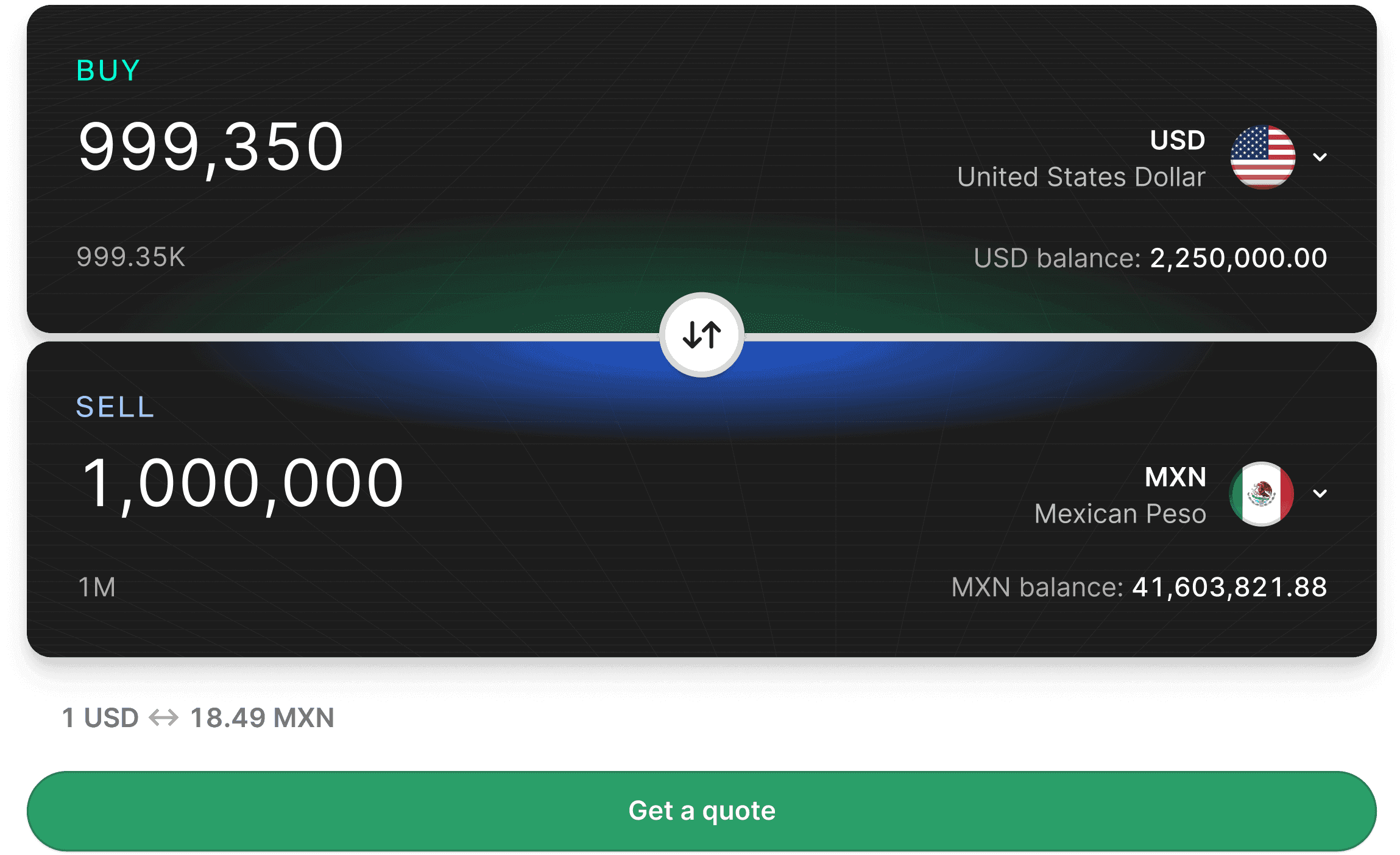
Imagine converting $50 million into USDC, then into a client’s local currency. Doing that requires liquidity. There’s no reservoir sitting around with that much cash at the ready; instead, the liquidity gets scattered across dozens of blockchains.
None of them coordinate with one another. None are deep enough to absorb your order alone. Take too much from any single pool, and you move the price against yourself—the kind of discord a deft hand knows to avoid.
Thus the order gets cut up across chains and market makers. Multiple well-timed draws are executed in parallel. Underneath all that simultaneous routing and conversion, reconciliation and compliance happens, too, until everything is brought back together on the other side of the transaction - $50 million, converted, sent, received. This is the essence of stablecoin orchestration.
Stablecoin Orchestration: The Breakdown
Orchestration is the word used to describe the software layer that sits on top of all of this coordination. Money can move through many channels at once, and the orchestration layer draws all those elements back together into a traceable flow, turning a messy network of cross-rail payments into something a company can manage from a dashboard.
Step by step, here’s how it works:
A payment needs making. An orchestration-ready API offers multiple rails to ensure it can happen, whatever its size and wherever it’s going, with varying degrees of complexity.
The orchestration engine evaluates the transaction against the market. It chooses rails based on that reality, rerouting if it encounters friction on a ramp. This is part of what makes stablecoin orchestration different from a small, simple stablecoin transfer. Routing for volume is never assumed to be a fixed path; it’s dynamic, conditional on many elements (the state of the rails, the market, the liquidity demand, pricing, technical issues, on-ramping or off-ramping regulations in host countries).
Funds convert into stablecoins and get on-ramped into the blockchain for their transfer.
In the recipient country, the stablecoin leg off-ramps to a domestic rail. The last mile is usually managed by a local instant-payment service, like SEPA Instant in Europe or UPI in India.
Why Do Stablecoins Need So Much Coordinating?
The problem of managing high-value trades already exists in traditional finance. To keep the market stable and maintain good prices for traders, large-order executions already get split into multiple small orders, with tools like smart order routing automating that process.
Stablecoins make the process of transforming money faster, but they still inherit this convoluted framework. Circle’s USDC is deployed across over 35 separate blockchains, all with varying liquidity states at any given moment. A big transfer inevitably has to flow through many of them.
On a single chain, liquidity splits further still. Uniswap, for example, gives just one trading pair four separate pools at different fee tiers, each with their own depth.
For ordinary people moving smaller amounts of money like remittances, none of this matters. But it’s crucial knowledge for institutions, because they’re moving volume that can potentially move the market.
Step back and look at it from the liquidity providers perspective, they may need to use a combination of USDC, USDT and perhaps even local-currency stablecoins to serve their customer’s needs. To decide how much to draw from each pool, they need good orchestration.
So from the outside, a $50 million stablecoin conversion looks simple. It’s not. To feel simple, you need a Geoff Emerick, the kind of automated treasury management that we talk about.
Orchestration For Any Future
Stablecoins were meant to simplify cross-border payments. They have in a sense - not because they eliminate the problems of the traditional correspondent banking system, but because they reduce the inefficiencies of it. Everything that must be done in traditional finance must also be done on stablecoin-driven rails in one form or another, and each of these steps adds opportunities for error. Whether those errors come in the form of a bank failing to process your transfer, or an API failing at some point in the execution of a transaction, they remain.
Some weeks ago we wrote about embedded FX - our mission to create an automated cross-border payments platform as ambient as electricity or running water, one that payment providers and project managers can plug into. Stablecoin orchestration is a crucial aspect of that plumbing; if the system is unable to select the right pools at the right time, settlement speed and cost will always suffer.
It’s also often overlooked, even in spaces where other portions of the end-to-end transaction are highlighted.
That’s why we created the FX Iceberg, to look beneath the surface like Geoff Emerick and separate the big picture from the noise. The goal is not just to be good at moving money from wallet to wallet, but to be great at moving it from your treasury into your clients’ accounts.
Orchestration for us then starts with stablecoins, but doesn’t end there.They represent a means to an end, the current best available delivery method for value cross-borders. We are designing orchestration systems that don’t rely on any individual coin to work, perhaps the future is some coin that doesn’t yet exist, perhaps its local-currency tokens, perhaps it’s something else entirely. It won't matter to us; we are building an orchestration layer that will support it all.
Share article
Read other articles
Stay informed with our latest articles on currency launches, institutional FX trends, and global liquidity.