February 19, 2026
Last Look: Why 20% of FX Trades Get Axed Before They Execute

Harrison Mann,
Head of Growth


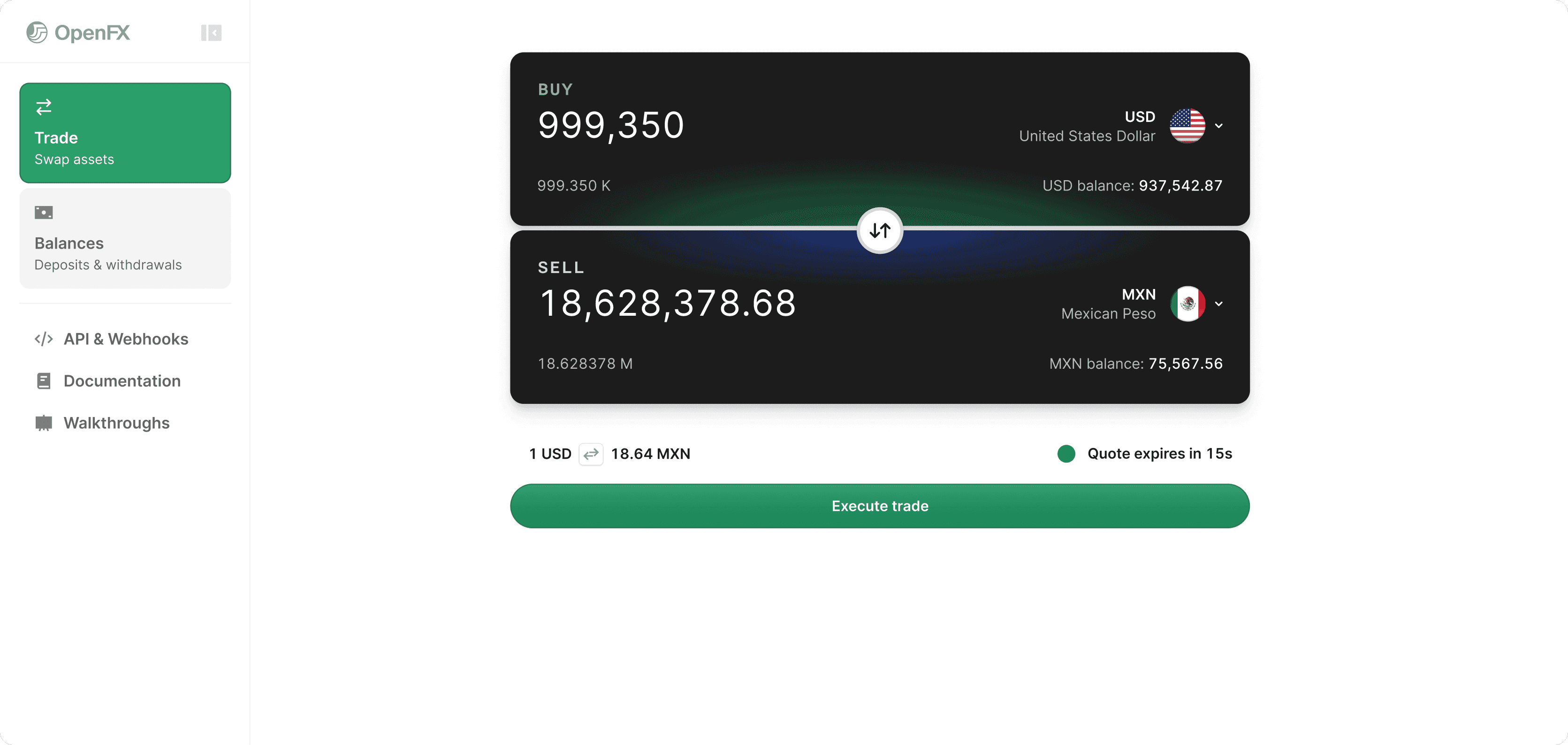
You see a price. You click to trade. Then ... rejected! The market maker changed their mind in the 10 milliseconds between quoting the price and execution.
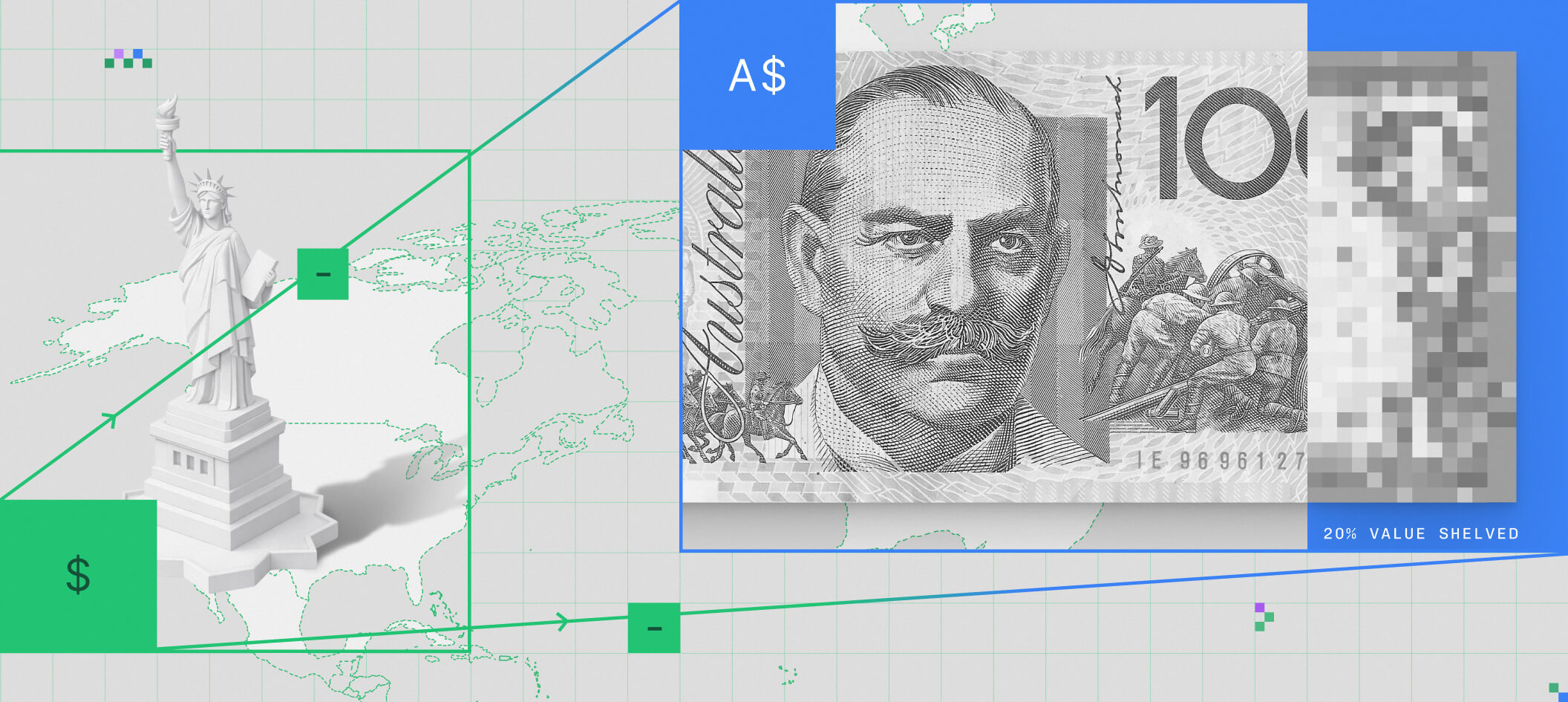
You’ve just encountered "last look," one of the most controversial practices in foreign exchange trading. On major FX platforms, fill rates hover between 80-82%, meaning roughly 18-20% of trade requests get rejected. In volatile markets or exotic currency pairs, rejection rates climb even higher.
Learning why this practice exists, how it works, and what it costs traders reveals both the technical constraints of traditional FX infrastructure and the opportunities for blockchain-based alternatives.
Below, take your first look at last look.
Origins of last look: How did we get here?
Last look isn’t the result of regulatory mandates or exchange rules. It evolved organically in the early 2000s as FX trading transitioned from voice-based phone dealing to electronic platforms.
When FX trading went electronic, market makers began streaming continuous prices to clients via Electronic Communication Networks (ECNs). A bank might quote EUR/USD at 1.0525/1.0526, updating this price multiple times per second as market conditions changed.
But in the time it takes that price to travel from the bank's pricing engine to your screen to your click to the bank's execution system—perhaps 10-50 milliseconds—the market might have moved. Network latency is real. If the euro appreciates from 1.0525 to 1.0527 in those milliseconds, and you're buying euros at the old price of 1.0525, the market maker just lost money.
Last look was conceived as a solution: Give the market maker a final opportunity to verify that the price is still valid before committing to the trade. The market maker receives your trade request, checks the current market price, and has a brief window—the "last look period"—to decide whether to accept or reject.
Market makers also justified last look as necessary for real-time credit verification. Before accepting a trade, they need to confirm you haven't exceeded your credit limit. In high-frequency trading environments where thousands of trades occur per second, this check needs to happen instantaneously. Last look provides the window to run these automated credit validations.
Lastly, market makers argue that last look allows them to quote tighter spreads. If they had to honor every trade request no matter what, they'd need to build a larger buffer—wider spreads—to protect against adverse selection and latency. With last look, they can quote aggressively, knowing they have an escape valve if the market moves against them.
The industry thus settled into an implicit bargain: Traders get tighter spreads but face execution uncertainty. In liquid markets with minimal volatility, rejection rates stay low and everyone benefits. But as we'll see, this bargain becomes much more problematic in other contexts.
The mechanics of rejection—last look in practice
When you submit a trade request, the market maker can hold it for a brief period before responding. This additional hold time (AHT)—also called the last look window—has evolved over the years:
Early 2000s: Last look windows could be 200+ milliseconds
2015-2020: Industry pressure pushed maximums down to 50-100 milliseconds
2023-2025: Major platforms reduced thresholds to 10-30 milliseconds
As of 2025, the average realized hold time on the largest FX platforms is around 10 milliseconds, though maximum thresholds set by platforms can still be higher. EBS reduced its threshold to 30ms in 2023. Cboe FX reduced from 35ms to 20ms in April 2025, then to 10ms in October 2025.
When do rejections happen? Trade requests get rejected during the last look window for several reasons:
Price movement beyond tolerance: If the market price moves more than a certain threshold (set by the market maker) during the hold period, the trade is rejected. For example, if the market moves 0.2 pips against the market maker while they're holding your request, they might reject it.
Suspected latency arbitrage: If the market maker detects patterns suggesting you're exploiting stale quotes—maybe you only trade when the market is moving in your favor—they may reject trades preemptively. This is where last look becomes controversial: Market makers can use it to identify and reject profitable client orders, not just protect against technical latency issues.
Simultaneous order flow: Sometimes multiple large orders hit the market maker simultaneously, depleting available liquidity. The first few trades might execute, but later ones get rejected because the market maker has reached inventory limits.
Credit limit exceedance: If automated credit checks reveal you've exceeded your allocated credit limit, the trade gets rejected regardless of price.
Technical or operational issues: Sometimes rejections occur due to system errors, connectivity problems, or other technical glitches.
Industry data on rejection rates varies by platform, time period, and market conditions. Fill rates on major FX platforms typically range from 80-84%, implying rejection rates of 16-20%. However, this varies significantly. Euronext FX reported fill rates around 82-84% at the start of 2024, dropping to 80-81% later in the year.
Analysts note that rejection rates should have increased by only 0.5-0.7% due to market volatility in 2024-2025, suggesting the larger observed increases stem from changes in market maker behavior, potentially related to new non-bank liquidity providers entering the market.
Last look creates a fundamental information asymmetry. When you click to trade, you're acting on the price you saw on your screen—information that's already milliseconds old. The market maker, during the last look window, has access to more current market data. They can see whether the market has moved in their favor or yours.
This creates adverse selection for traders. You're more likely to get filled on trades that move against you (the market maker is happy to accept) and more likely to get rejected on trades that would have been profitable (the market maker declines). Over thousands of trades, this asymmetry creates a cost that's real but difficult to quantify.
Impacts on liquidity
Last look doesn't just affect individual trades; it has systemic implications for market liquidity, particularly in exotic currency corridors where alternatives are scarce.
When a trade gets rejected, the costs extend beyond the obvious frustration:
Forgone profits: Your most profitable trades—those where you correctly anticipated market direction—are the most likely to be rejected. The market has moved in your favor during the last look window, so the market maker declines. You lose the profit you would have made.
Re-execution costs: After rejection, you return to the market to execute at the new price, which is now worse than your original request. If the market has moved 0.3 pips against you, that's an additional cost on top of the spread you're paying.
Immediacy costs: If you need immediate execution—perhaps to hedge an exposure or meet a settlement deadline—rejections force you to accept less favorable terms or pay wider spreads to ensure fills.
Opportunity costs: The time spent dealing with rejections and re-executing trades could be spent on other value-creating activities. For high-frequency traders, these delays can be particularly costly.
Information leakage: When you submit a trade request that gets rejected, you've revealed your trading intent to the market maker. There are concerns—though disputed—that market makers might use this information to adjust quotes or even front-run client orders.
But last look's impact is most severe for exotic currency pairs.
To start, there are fewer alternative liquidity sources. In EUR/USD, if one market maker rejects you, you can try another—there are dozens of competitors. In USD/NGN, if your trade gets rejected, you might have only 2-3 alternatives, possibly quoting even wider spreads.
Exotic currencies are more volatile than G7 pairs, and higher volatility increases rejection rates. This means prices move more during last look windows, triggering more rejections. A window that causes 2% rejection rates in EUR/USD might cause 10% rejections in USD/BRL.
Larger spreads make rejections more painful. When you're already paying 75-100 pips to trade an exotic pair, adding another 5-10 pips in re-execution costs from rejections significantly increases total trading costs.
Lastly, there are limited derivatives for hedging. Market makers in exotic currencies can't easily hedge exposure, so they're more likely to reject trades that push them beyond their risk tolerance.
Last look: Protection or profit?
The central debate around last look is whether market makers use it legitimately for risk management or exploitatively to cherry-pick profitable trades.
Banks and trading firms argue that last look is essential protection against latency arbitrage and toxic flow. High-frequency traders with superior technology can exploit stale quotes, and without last look, market makers would need to widen spreads significantly. The tighter spreads benefit all market participants.
Buy-side firms and trading platforms argue that market makers abuse last look to reject trades that have become unprofitable, not just to protect against latency arbitrage. They point to rejection rates that exceed what would be expected from pure latency protection.
The truth is, predictably, somewhere middlish of both positions. Last look serves legitimate purposes, but also creates opportunities for abuse. This is why regulatory bodies and industry groups have attempted to create standards around its use.
The Global Foreign Exchange Committee (GFXC) has published extensive guidance on last look, including requirements that market makers:
Disclose their use of last look to clients
Not trade in the market during the last look window (the "cover and deal" prohibition)
Use symmetric price tolerance (reject when prices move against them OR in their favor beyond the threshold)
Provide transaction cost analysis data so clients can monitor rejection rates
But market makers need leeway in order to do their jobs effectively. It’s exactly within that leeway where last look is both theoretically useful but also exploitable, much like Schrodinger’s cat.
Stablecoin infrastructure makes last look technically impossible. This is because of atomic settlement. When you trade on a blockchain-based platform using smart contracts, the transaction either executes completely or not at all. There's no "hold period" where one party can reconsider. Both legs of the swap happen simultaneously and atomically. If the smart contract conditions are met, the trade settles instantly. If not, it doesn't execute—but you never receive a provisional quote that later gets rejected.
The trade-off? Potentially wider spreads in stablecoin markets, particularly for larger trades or less liquid pairs, because market makers don't have last look as a risk management tool. But many traders prefer this transparency: They'd rather pay a slightly wider visible spread than face hidden costs from unpredictable rejections.
Last words on last look
Last look emerged to solve real technical problems in electronic FX trading—latency, credit verification, and risk management in fragmented markets. But it also creates systematic costs that disproportionately impact certain traders and certain currency pairs.
The practice persists because it genuinely enables tighter spreads in liquid markets. Market makers who can reject toxic flow can quote more aggressively for legitimate order flow. But the information asymmetry and execution uncertainty it creates are real costs that traders must account for.
For high-frequency, price-sensitive traders in liquid pairs, last look venues will continue to offer the tightest spreads despite rejection risk. The traders who rarely get rejected because they avoid latency arbitrage and trade during liquid hours benefit from this model.
For certainty-focused traders, particularly in exotic corridors, no-last-look venues and stablecoins offer guaranteed execution. They might pay slightly more in spread, but they value execution certainty over marginal spread improvements.
Whether a trade gets executed or rejected might feel like a technical detail. But multiply that uncertainty across millions of transactions in fragmented markets, and it becomes a systematic barrier to efficient global commerce. This is part of what makes understanding last look—and the alternatives—essential to a working knowledge of forex markets.
You see a price. You click to trade. Then ... rejected! The market maker changed their mind in the 10 milliseconds between quoting the price and execution.
You’ve just encountered "last look," one of the most controversial practices in foreign exchange trading. On major FX platforms, fill rates hover between 80-82%, meaning roughly 18-20% of trade requests get rejected. In volatile markets or exotic currency pairs, rejection rates climb even higher.
Learning why this practice exists, how it works, and what it costs traders reveals both the technical constraints of traditional FX infrastructure and the opportunities for blockchain-based alternatives.
Below, take your first look at last look.
Origins of last look: How did we get here?
Last look isn’t the result of regulatory mandates or exchange rules. It evolved organically in the early 2000s as FX trading transitioned from voice-based phone dealing to electronic platforms.
When FX trading went electronic, market makers began streaming continuous prices to clients via Electronic Communication Networks (ECNs). A bank might quote EUR/USD at 1.0525/1.0526, updating this price multiple times per second as market conditions changed.
But in the time it takes that price to travel from the bank's pricing engine to your screen to your click to the bank's execution system—perhaps 10-50 milliseconds—the market might have moved. Network latency is real. If the euro appreciates from 1.0525 to 1.0527 in those milliseconds, and you're buying euros at the old price of 1.0525, the market maker just lost money.
Last look was conceived as a solution: Give the market maker a final opportunity to verify that the price is still valid before committing to the trade. The market maker receives your trade request, checks the current market price, and has a brief window—the "last look period"—to decide whether to accept or reject.
Market makers also justified last look as necessary for real-time credit verification. Before accepting a trade, they need to confirm you haven't exceeded your credit limit. In high-frequency trading environments where thousands of trades occur per second, this check needs to happen instantaneously. Last look provides the window to run these automated credit validations.
Lastly, market makers argue that last look allows them to quote tighter spreads. If they had to honor every trade request no matter what, they'd need to build a larger buffer—wider spreads—to protect against adverse selection and latency. With last look, they can quote aggressively, knowing they have an escape valve if the market moves against them.
The industry thus settled into an implicit bargain: Traders get tighter spreads but face execution uncertainty. In liquid markets with minimal volatility, rejection rates stay low and everyone benefits. But as we'll see, this bargain becomes much more problematic in other contexts.
The mechanics of rejection—last look in practice
When you submit a trade request, the market maker can hold it for a brief period before responding. This additional hold time (AHT)—also called the last look window—has evolved over the years:
Early 2000s: Last look windows could be 200+ milliseconds
2015-2020: Industry pressure pushed maximums down to 50-100 milliseconds
2023-2025: Major platforms reduced thresholds to 10-30 milliseconds
As of 2025, the average realized hold time on the largest FX platforms is around 10 milliseconds, though maximum thresholds set by platforms can still be higher. EBS reduced its threshold to 30ms in 2023. Cboe FX reduced from 35ms to 20ms in April 2025, then to 10ms in October 2025.
When do rejections happen? Trade requests get rejected during the last look window for several reasons:
Price movement beyond tolerance: If the market price moves more than a certain threshold (set by the market maker) during the hold period, the trade is rejected. For example, if the market moves 0.2 pips against the market maker while they're holding your request, they might reject it.
Suspected latency arbitrage: If the market maker detects patterns suggesting you're exploiting stale quotes—maybe you only trade when the market is moving in your favor—they may reject trades preemptively. This is where last look becomes controversial: Market makers can use it to identify and reject profitable client orders, not just protect against technical latency issues.
Simultaneous order flow: Sometimes multiple large orders hit the market maker simultaneously, depleting available liquidity. The first few trades might execute, but later ones get rejected because the market maker has reached inventory limits.
Credit limit exceedance: If automated credit checks reveal you've exceeded your allocated credit limit, the trade gets rejected regardless of price.
Technical or operational issues: Sometimes rejections occur due to system errors, connectivity problems, or other technical glitches.
Industry data on rejection rates varies by platform, time period, and market conditions. Fill rates on major FX platforms typically range from 80-84%, implying rejection rates of 16-20%. However, this varies significantly. Euronext FX reported fill rates around 82-84% at the start of 2024, dropping to 80-81% later in the year.
Analysts note that rejection rates should have increased by only 0.5-0.7% due to market volatility in 2024-2025, suggesting the larger observed increases stem from changes in market maker behavior, potentially related to new non-bank liquidity providers entering the market.
Last look creates a fundamental information asymmetry. When you click to trade, you're acting on the price you saw on your screen—information that's already milliseconds old. The market maker, during the last look window, has access to more current market data. They can see whether the market has moved in their favor or yours.
This creates adverse selection for traders. You're more likely to get filled on trades that move against you (the market maker is happy to accept) and more likely to get rejected on trades that would have been profitable (the market maker declines). Over thousands of trades, this asymmetry creates a cost that's real but difficult to quantify.
Impacts on liquidity
Last look doesn't just affect individual trades; it has systemic implications for market liquidity, particularly in exotic currency corridors where alternatives are scarce.
When a trade gets rejected, the costs extend beyond the obvious frustration:
Forgone profits: Your most profitable trades—those where you correctly anticipated market direction—are the most likely to be rejected. The market has moved in your favor during the last look window, so the market maker declines. You lose the profit you would have made.
Re-execution costs: After rejection, you return to the market to execute at the new price, which is now worse than your original request. If the market has moved 0.3 pips against you, that's an additional cost on top of the spread you're paying.
Immediacy costs: If you need immediate execution—perhaps to hedge an exposure or meet a settlement deadline—rejections force you to accept less favorable terms or pay wider spreads to ensure fills.
Opportunity costs: The time spent dealing with rejections and re-executing trades could be spent on other value-creating activities. For high-frequency traders, these delays can be particularly costly.
Information leakage: When you submit a trade request that gets rejected, you've revealed your trading intent to the market maker. There are concerns—though disputed—that market makers might use this information to adjust quotes or even front-run client orders.
But last look's impact is most severe for exotic currency pairs.
To start, there are fewer alternative liquidity sources. In EUR/USD, if one market maker rejects you, you can try another—there are dozens of competitors. In USD/NGN, if your trade gets rejected, you might have only 2-3 alternatives, possibly quoting even wider spreads.
Exotic currencies are more volatile than G7 pairs, and higher volatility increases rejection rates. This means prices move more during last look windows, triggering more rejections. A window that causes 2% rejection rates in EUR/USD might cause 10% rejections in USD/BRL.
Larger spreads make rejections more painful. When you're already paying 75-100 pips to trade an exotic pair, adding another 5-10 pips in re-execution costs from rejections significantly increases total trading costs.
Lastly, there are limited derivatives for hedging. Market makers in exotic currencies can't easily hedge exposure, so they're more likely to reject trades that push them beyond their risk tolerance.
Last look: Protection or profit?
The central debate around last look is whether market makers use it legitimately for risk management or exploitatively to cherry-pick profitable trades.
Banks and trading firms argue that last look is essential protection against latency arbitrage and toxic flow. High-frequency traders with superior technology can exploit stale quotes, and without last look, market makers would need to widen spreads significantly. The tighter spreads benefit all market participants.
Buy-side firms and trading platforms argue that market makers abuse last look to reject trades that have become unprofitable, not just to protect against latency arbitrage. They point to rejection rates that exceed what would be expected from pure latency protection.
The truth is, predictably, somewhere middlish of both positions. Last look serves legitimate purposes, but also creates opportunities for abuse. This is why regulatory bodies and industry groups have attempted to create standards around its use.
The Global Foreign Exchange Committee (GFXC) has published extensive guidance on last look, including requirements that market makers:
Disclose their use of last look to clients
Not trade in the market during the last look window (the "cover and deal" prohibition)
Use symmetric price tolerance (reject when prices move against them OR in their favor beyond the threshold)
Provide transaction cost analysis data so clients can monitor rejection rates
But market makers need leeway in order to do their jobs effectively. It’s exactly within that leeway where last look is both theoretically useful but also exploitable, much like Schrodinger’s cat.
Stablecoin infrastructure makes last look technically impossible. This is because of atomic settlement. When you trade on a blockchain-based platform using smart contracts, the transaction either executes completely or not at all. There's no "hold period" where one party can reconsider. Both legs of the swap happen simultaneously and atomically. If the smart contract conditions are met, the trade settles instantly. If not, it doesn't execute—but you never receive a provisional quote that later gets rejected.
The trade-off? Potentially wider spreads in stablecoin markets, particularly for larger trades or less liquid pairs, because market makers don't have last look as a risk management tool. But many traders prefer this transparency: They'd rather pay a slightly wider visible spread than face hidden costs from unpredictable rejections.
Last words on last look
Last look emerged to solve real technical problems in electronic FX trading—latency, credit verification, and risk management in fragmented markets. But it also creates systematic costs that disproportionately impact certain traders and certain currency pairs.
The practice persists because it genuinely enables tighter spreads in liquid markets. Market makers who can reject toxic flow can quote more aggressively for legitimate order flow. But the information asymmetry and execution uncertainty it creates are real costs that traders must account for.
For high-frequency, price-sensitive traders in liquid pairs, last look venues will continue to offer the tightest spreads despite rejection risk. The traders who rarely get rejected because they avoid latency arbitrage and trade during liquid hours benefit from this model.
For certainty-focused traders, particularly in exotic corridors, no-last-look venues and stablecoins offer guaranteed execution. They might pay slightly more in spread, but they value execution certainty over marginal spread improvements.
Whether a trade gets executed or rejected might feel like a technical detail. But multiply that uncertainty across millions of transactions in fragmented markets, and it becomes a systematic barrier to efficient global commerce. This is part of what makes understanding last look—and the alternatives—essential to a working knowledge of forex markets.
You see a price. You click to trade. Then ... rejected! The market maker changed their mind in the 10 milliseconds between quoting the price and execution.
You’ve just encountered "last look," one of the most controversial practices in foreign exchange trading. On major FX platforms, fill rates hover between 80-82%, meaning roughly 18-20% of trade requests get rejected. In volatile markets or exotic currency pairs, rejection rates climb even higher.
Learning why this practice exists, how it works, and what it costs traders reveals both the technical constraints of traditional FX infrastructure and the opportunities for blockchain-based alternatives.
Below, take your first look at last look.
Origins of last look: How did we get here?
Last look isn’t the result of regulatory mandates or exchange rules. It evolved organically in the early 2000s as FX trading transitioned from voice-based phone dealing to electronic platforms.
When FX trading went electronic, market makers began streaming continuous prices to clients via Electronic Communication Networks (ECNs). A bank might quote EUR/USD at 1.0525/1.0526, updating this price multiple times per second as market conditions changed.
But in the time it takes that price to travel from the bank's pricing engine to your screen to your click to the bank's execution system—perhaps 10-50 milliseconds—the market might have moved. Network latency is real. If the euro appreciates from 1.0525 to 1.0527 in those milliseconds, and you're buying euros at the old price of 1.0525, the market maker just lost money.
Last look was conceived as a solution: Give the market maker a final opportunity to verify that the price is still valid before committing to the trade. The market maker receives your trade request, checks the current market price, and has a brief window—the "last look period"—to decide whether to accept or reject.
Market makers also justified last look as necessary for real-time credit verification. Before accepting a trade, they need to confirm you haven't exceeded your credit limit. In high-frequency trading environments where thousands of trades occur per second, this check needs to happen instantaneously. Last look provides the window to run these automated credit validations.
Lastly, market makers argue that last look allows them to quote tighter spreads. If they had to honor every trade request no matter what, they'd need to build a larger buffer—wider spreads—to protect against adverse selection and latency. With last look, they can quote aggressively, knowing they have an escape valve if the market moves against them.
The industry thus settled into an implicit bargain: Traders get tighter spreads but face execution uncertainty. In liquid markets with minimal volatility, rejection rates stay low and everyone benefits. But as we'll see, this bargain becomes much more problematic in other contexts.
The mechanics of rejection—last look in practice
When you submit a trade request, the market maker can hold it for a brief period before responding. This additional hold time (AHT)—also called the last look window—has evolved over the years:
Early 2000s: Last look windows could be 200+ milliseconds
2015-2020: Industry pressure pushed maximums down to 50-100 milliseconds
2023-2025: Major platforms reduced thresholds to 10-30 milliseconds
As of 2025, the average realized hold time on the largest FX platforms is around 10 milliseconds, though maximum thresholds set by platforms can still be higher. EBS reduced its threshold to 30ms in 2023. Cboe FX reduced from 35ms to 20ms in April 2025, then to 10ms in October 2025.
When do rejections happen? Trade requests get rejected during the last look window for several reasons:
Price movement beyond tolerance: If the market price moves more than a certain threshold (set by the market maker) during the hold period, the trade is rejected. For example, if the market moves 0.2 pips against the market maker while they're holding your request, they might reject it.
Suspected latency arbitrage: If the market maker detects patterns suggesting you're exploiting stale quotes—maybe you only trade when the market is moving in your favor—they may reject trades preemptively. This is where last look becomes controversial: Market makers can use it to identify and reject profitable client orders, not just protect against technical latency issues.
Simultaneous order flow: Sometimes multiple large orders hit the market maker simultaneously, depleting available liquidity. The first few trades might execute, but later ones get rejected because the market maker has reached inventory limits.
Credit limit exceedance: If automated credit checks reveal you've exceeded your allocated credit limit, the trade gets rejected regardless of price.
Technical or operational issues: Sometimes rejections occur due to system errors, connectivity problems, or other technical glitches.
Industry data on rejection rates varies by platform, time period, and market conditions. Fill rates on major FX platforms typically range from 80-84%, implying rejection rates of 16-20%. However, this varies significantly. Euronext FX reported fill rates around 82-84% at the start of 2024, dropping to 80-81% later in the year.
Analysts note that rejection rates should have increased by only 0.5-0.7% due to market volatility in 2024-2025, suggesting the larger observed increases stem from changes in market maker behavior, potentially related to new non-bank liquidity providers entering the market.
Last look creates a fundamental information asymmetry. When you click to trade, you're acting on the price you saw on your screen—information that's already milliseconds old. The market maker, during the last look window, has access to more current market data. They can see whether the market has moved in their favor or yours.
This creates adverse selection for traders. You're more likely to get filled on trades that move against you (the market maker is happy to accept) and more likely to get rejected on trades that would have been profitable (the market maker declines). Over thousands of trades, this asymmetry creates a cost that's real but difficult to quantify.
Impacts on liquidity
Last look doesn't just affect individual trades; it has systemic implications for market liquidity, particularly in exotic currency corridors where alternatives are scarce.
When a trade gets rejected, the costs extend beyond the obvious frustration:
Forgone profits: Your most profitable trades—those where you correctly anticipated market direction—are the most likely to be rejected. The market has moved in your favor during the last look window, so the market maker declines. You lose the profit you would have made.
Re-execution costs: After rejection, you return to the market to execute at the new price, which is now worse than your original request. If the market has moved 0.3 pips against you, that's an additional cost on top of the spread you're paying.
Immediacy costs: If you need immediate execution—perhaps to hedge an exposure or meet a settlement deadline—rejections force you to accept less favorable terms or pay wider spreads to ensure fills.
Opportunity costs: The time spent dealing with rejections and re-executing trades could be spent on other value-creating activities. For high-frequency traders, these delays can be particularly costly.
Information leakage: When you submit a trade request that gets rejected, you've revealed your trading intent to the market maker. There are concerns—though disputed—that market makers might use this information to adjust quotes or even front-run client orders.
But last look's impact is most severe for exotic currency pairs.
To start, there are fewer alternative liquidity sources. In EUR/USD, if one market maker rejects you, you can try another—there are dozens of competitors. In USD/NGN, if your trade gets rejected, you might have only 2-3 alternatives, possibly quoting even wider spreads.
Exotic currencies are more volatile than G7 pairs, and higher volatility increases rejection rates. This means prices move more during last look windows, triggering more rejections. A window that causes 2% rejection rates in EUR/USD might cause 10% rejections in USD/BRL.
Larger spreads make rejections more painful. When you're already paying 75-100 pips to trade an exotic pair, adding another 5-10 pips in re-execution costs from rejections significantly increases total trading costs.
Lastly, there are limited derivatives for hedging. Market makers in exotic currencies can't easily hedge exposure, so they're more likely to reject trades that push them beyond their risk tolerance.
Last look: Protection or profit?
The central debate around last look is whether market makers use it legitimately for risk management or exploitatively to cherry-pick profitable trades.
Banks and trading firms argue that last look is essential protection against latency arbitrage and toxic flow. High-frequency traders with superior technology can exploit stale quotes, and without last look, market makers would need to widen spreads significantly. The tighter spreads benefit all market participants.
Buy-side firms and trading platforms argue that market makers abuse last look to reject trades that have become unprofitable, not just to protect against latency arbitrage. They point to rejection rates that exceed what would be expected from pure latency protection.
The truth is, predictably, somewhere middlish of both positions. Last look serves legitimate purposes, but also creates opportunities for abuse. This is why regulatory bodies and industry groups have attempted to create standards around its use.
The Global Foreign Exchange Committee (GFXC) has published extensive guidance on last look, including requirements that market makers:
Disclose their use of last look to clients
Not trade in the market during the last look window (the "cover and deal" prohibition)
Use symmetric price tolerance (reject when prices move against them OR in their favor beyond the threshold)
Provide transaction cost analysis data so clients can monitor rejection rates
But market makers need leeway in order to do their jobs effectively. It’s exactly within that leeway where last look is both theoretically useful but also exploitable, much like Schrodinger’s cat.
Stablecoin infrastructure makes last look technically impossible. This is because of atomic settlement. When you trade on a blockchain-based platform using smart contracts, the transaction either executes completely or not at all. There's no "hold period" where one party can reconsider. Both legs of the swap happen simultaneously and atomically. If the smart contract conditions are met, the trade settles instantly. If not, it doesn't execute—but you never receive a provisional quote that later gets rejected.
The trade-off? Potentially wider spreads in stablecoin markets, particularly for larger trades or less liquid pairs, because market makers don't have last look as a risk management tool. But many traders prefer this transparency: They'd rather pay a slightly wider visible spread than face hidden costs from unpredictable rejections.
Last words on last look
Last look emerged to solve real technical problems in electronic FX trading—latency, credit verification, and risk management in fragmented markets. But it also creates systematic costs that disproportionately impact certain traders and certain currency pairs.
The practice persists because it genuinely enables tighter spreads in liquid markets. Market makers who can reject toxic flow can quote more aggressively for legitimate order flow. But the information asymmetry and execution uncertainty it creates are real costs that traders must account for.
For high-frequency, price-sensitive traders in liquid pairs, last look venues will continue to offer the tightest spreads despite rejection risk. The traders who rarely get rejected because they avoid latency arbitrage and trade during liquid hours benefit from this model.
For certainty-focused traders, particularly in exotic corridors, no-last-look venues and stablecoins offer guaranteed execution. They might pay slightly more in spread, but they value execution certainty over marginal spread improvements.
Whether a trade gets executed or rejected might feel like a technical detail. But multiply that uncertainty across millions of transactions in fragmented markets, and it becomes a systematic barrier to efficient global commerce. This is part of what makes understanding last look—and the alternatives—essential to a working knowledge of forex markets.
Frequently Asked Questions
1. Is "last look" essentially a free option for the bank to reject my trade?
In its most controversial form, yes. Critics argue that last look gives market makers a "free option" to reject trades that become unprofitable milliseconds after you click. However, market makers argue it is a necessary "risk control" mechanism.
To determine if you are being treated fairly, you must ask if your provider uses Symmetric or Asymmetric price tolerance:
Asymmetric (Bad for you): The bank rejects the trade if the price moves against them, but accepts it if the price moves against you. This ensures they never lose, and you often get filled at worse rates.
Symmetric (Fairer): The bank rejects the trade if the price moves beyond a threshold in either direction. This prevents the "heads I win, tails you lose" dynamic.
2. Is this practice actually legal?
Yes, it is legal, but it is heavily scrutinized. There are no laws explicitly banning last look, but the Global Foreign Exchange Committee (GFXC)—a central bank-sponsored industry body—sets standards under Principle 17 of the FX Global Code.
Principle 17 states that market makers should only use last look for validity and price checks, not for trading activity. It explicitly discourages "Cover and Deal" (see below) without explicit disclosure. While the Code is voluntary, violating it can lead to reputational damage and loss of major clients.
3. What is "Cover and Deal," and why is it considered abusive?
"Cover and Deal" is a practice where a market maker receives your trade request, and during the last look window, they go out into the market to hedge (cover) that position before accepting your trade.
The Problem: By hedging before they accept, they are effectively using your trading intent to move the market. If their hedge moves the price against you, they might then reject your original trade, leaving you to re-enter the market at a worse price that they caused.
The Regulation: The GFXC guidance states that trading during the last look window is generally inconsistent with good market practice unless explicitly disclosed and agreed upon.
4. Why don't we just ban last look entirely?
If last look were banned, spread costs would likely rise. Market makers quote tight spreads (e.g., 0.00005 USD) because they know they have a safety valve (last look) to protect them if their price becomes stale. If you force them to honor every click immediately ("Firm Liquidity"), they face higher risk of being picked off by high-frequency traders. To compensate for this risk, they would widen their spreads. Traders essentially choose between Cheaper + Uncertain (Last Look) or More Expensive + Certain (Firm Liquidity).
5. Does "Last Look" exist in crypto or stablecoin markets?
Generally, no and this is a major structural difference. Most crypto and stablecoin trading on decentralized infrastructure uses Atomic Settlement. Smart contracts ensure that the swap of assets happens simultaneously or not at all. There is no "holding period" where one party can back out while the other is committed.
The Trade-off: While you get execution certainty (no rejections), you often pay higher gas fees or wider spreads to account for the on-chain risks.
6. Why are rejection rates so much higher in "Exotic" currencies?
Exotic pairs (like USD/NGN or USD/ZAR) are thinner and more volatile.
Volatility: In a stable pair like EUR/USD, the price might not move for 100ms. In a volatile exotic pair, the price can jump significantly in just 10ms. This triggers the market maker's price tolerance filters more often, causing frequent rejections.
Lack of Hedging: Market makers often cannot easily hedge exotic currencies. If they can't offset the risk immediately, they are more likely to use the last look window to reject any trade that looks even slightly risky.
Frequently Asked Questions
1. Is "last look" essentially a free option for the bank to reject my trade?
In its most controversial form, yes. Critics argue that last look gives market makers a "free option" to reject trades that become unprofitable milliseconds after you click. However, market makers argue it is a necessary "risk control" mechanism.
To determine if you are being treated fairly, you must ask if your provider uses Symmetric or Asymmetric price tolerance:
Asymmetric (Bad for you): The bank rejects the trade if the price moves against them, but accepts it if the price moves against you. This ensures they never lose, and you often get filled at worse rates.
Symmetric (Fairer): The bank rejects the trade if the price moves beyond a threshold in either direction. This prevents the "heads I win, tails you lose" dynamic.
2. Is this practice actually legal?
Yes, it is legal, but it is heavily scrutinized. There are no laws explicitly banning last look, but the Global Foreign Exchange Committee (GFXC)—a central bank-sponsored industry body—sets standards under Principle 17 of the FX Global Code.
Principle 17 states that market makers should only use last look for validity and price checks, not for trading activity. It explicitly discourages "Cover and Deal" (see below) without explicit disclosure. While the Code is voluntary, violating it can lead to reputational damage and loss of major clients.
3. What is "Cover and Deal," and why is it considered abusive?
"Cover and Deal" is a practice where a market maker receives your trade request, and during the last look window, they go out into the market to hedge (cover) that position before accepting your trade.
The Problem: By hedging before they accept, they are effectively using your trading intent to move the market. If their hedge moves the price against you, they might then reject your original trade, leaving you to re-enter the market at a worse price that they caused.
The Regulation: The GFXC guidance states that trading during the last look window is generally inconsistent with good market practice unless explicitly disclosed and agreed upon.
4. Why don't we just ban last look entirely?
If last look were banned, spread costs would likely rise. Market makers quote tight spreads (e.g., 0.00005 USD) because they know they have a safety valve (last look) to protect them if their price becomes stale. If you force them to honor every click immediately ("Firm Liquidity"), they face higher risk of being picked off by high-frequency traders. To compensate for this risk, they would widen their spreads. Traders essentially choose between Cheaper + Uncertain (Last Look) or More Expensive + Certain (Firm Liquidity).
5. Does "Last Look" exist in crypto or stablecoin markets?
Generally, no and this is a major structural difference. Most crypto and stablecoin trading on decentralized infrastructure uses Atomic Settlement. Smart contracts ensure that the swap of assets happens simultaneously or not at all. There is no "holding period" where one party can back out while the other is committed.
The Trade-off: While you get execution certainty (no rejections), you often pay higher gas fees or wider spreads to account for the on-chain risks.
6. Why are rejection rates so much higher in "Exotic" currencies?
Exotic pairs (like USD/NGN or USD/ZAR) are thinner and more volatile.
Volatility: In a stable pair like EUR/USD, the price might not move for 100ms. In a volatile exotic pair, the price can jump significantly in just 10ms. This triggers the market maker's price tolerance filters more often, causing frequent rejections.
Lack of Hedging: Market makers often cannot easily hedge exotic currencies. If they can't offset the risk immediately, they are more likely to use the last look window to reject any trade that looks even slightly risky.
Frequently Asked Questions
1. Is "last look" essentially a free option for the bank to reject my trade?
In its most controversial form, yes. Critics argue that last look gives market makers a "free option" to reject trades that become unprofitable milliseconds after you click. However, market makers argue it is a necessary "risk control" mechanism.
To determine if you are being treated fairly, you must ask if your provider uses Symmetric or Asymmetric price tolerance:
Asymmetric (Bad for you): The bank rejects the trade if the price moves against them, but accepts it if the price moves against you. This ensures they never lose, and you often get filled at worse rates.
Symmetric (Fairer): The bank rejects the trade if the price moves beyond a threshold in either direction. This prevents the "heads I win, tails you lose" dynamic.
2. Is this practice actually legal?
Yes, it is legal, but it is heavily scrutinized. There are no laws explicitly banning last look, but the Global Foreign Exchange Committee (GFXC)—a central bank-sponsored industry body—sets standards under Principle 17 of the FX Global Code.
Principle 17 states that market makers should only use last look for validity and price checks, not for trading activity. It explicitly discourages "Cover and Deal" (see below) without explicit disclosure. While the Code is voluntary, violating it can lead to reputational damage and loss of major clients.
3. What is "Cover and Deal," and why is it considered abusive?
"Cover and Deal" is a practice where a market maker receives your trade request, and during the last look window, they go out into the market to hedge (cover) that position before accepting your trade.
The Problem: By hedging before they accept, they are effectively using your trading intent to move the market. If their hedge moves the price against you, they might then reject your original trade, leaving you to re-enter the market at a worse price that they caused.
The Regulation: The GFXC guidance states that trading during the last look window is generally inconsistent with good market practice unless explicitly disclosed and agreed upon.
4. Why don't we just ban last look entirely?
If last look were banned, spread costs would likely rise. Market makers quote tight spreads (e.g., 0.00005 USD) because they know they have a safety valve (last look) to protect them if their price becomes stale. If you force them to honor every click immediately ("Firm Liquidity"), they face higher risk of being picked off by high-frequency traders. To compensate for this risk, they would widen their spreads. Traders essentially choose between Cheaper + Uncertain (Last Look) or More Expensive + Certain (Firm Liquidity).
5. Does "Last Look" exist in crypto or stablecoin markets?
Generally, no and this is a major structural difference. Most crypto and stablecoin trading on decentralized infrastructure uses Atomic Settlement. Smart contracts ensure that the swap of assets happens simultaneously or not at all. There is no "holding period" where one party can back out while the other is committed.
The Trade-off: While you get execution certainty (no rejections), you often pay higher gas fees or wider spreads to account for the on-chain risks.
6. Why are rejection rates so much higher in "Exotic" currencies?
Exotic pairs (like USD/NGN or USD/ZAR) are thinner and more volatile.
Volatility: In a stable pair like EUR/USD, the price might not move for 100ms. In a volatile exotic pair, the price can jump significantly in just 10ms. This triggers the market maker's price tolerance filters more often, causing frequent rejections.
Lack of Hedging: Market makers often cannot easily hedge exotic currencies. If they can't offset the risk immediately, they are more likely to use the last look window to reject any trade that looks even slightly risky.
Share article
FX liquidity available 24/7
Settle multiple times a day. Withdraw in under 60 mins.


FX liquidity available 24/7
Settle multiple times a day. Withdraw in under 60 mins.


FX liquidity available 24/7
Settle multiple times a day. Withdraw in under 60 mins.

Read other articles
Stay informed with our latest articles on currency launches, institutional FX trends, and global liquidity.
Making money move as
freely as data
Ask AI about OpenFX
Global network
Teams operating across North America, Europe, Middle East, and Asia
Operating Hours
We never close. Our platform and
support teams are available 24/7/365
Write to us
Red Envelope Delta, Inc, NMLS ID No. 2680829
All rights reserved, © OpenFX 2026.
Making money move as
freely as data
Ask AI about OpenFX
Global network
Teams operating across North America, Europe, Middle East, and Asia
Operating Hours
We never close. Our platform and support teams are available 24/7/365
Write to us
Red Envelope Delta, Inc, NMLS ID No. 2680829
All rights reserved, © OpenFX 2026.
Making money move as
freely as data
Ask AI about OpenFX
Global network
Teams operating across North America, Europe, Middle East, and Asia
Operating Hours
We never close. Our platform
and support teams are available 24/7/365
Write to us
Red Envelope Delta, Inc, NMLS ID No. 2680829
All rights reserved, © OpenFX 2026.