December 22, 2025

Understanding FX and Cross-Border Payments in Brazil (Updated: 2025)

OpenFX

Stylized image of stacks of Brazilian Reais

Brazil is Latin America’s largest economy and one of the world’s top commodity exporters. In 2024 the country shipped US 337 billion worth of goods and purchased US $277.55 billion, trade making up roughly 34% of GDP. Its FX market is defined by a central tension: a highly advanced and rapidly digitizing financial sector operating within a framework of significant fiscal vulnerability and policy instability.

On one hand, even as:

  • Brazil’s instant payment rails, Pix, becomes a model of successful payments infrastructure, with 70% of Brazilians registered.

  • The country's Open Finance framework grants new opportunities for innovation in fintech.

  • The country's traditionally onerous FX legal architecture is modernized under Law 14,286.

Cross‑border transactions remain slow, expensive, and paperwork‑heavy. Banks still route many international transfers through U.S. correspondent networks, apply the IOF transactions tax, and require detailed registrations with the Central Bank

At the same time, the macro economic backdrop is shifting. Real GDP growth peaked at 3.4% in 2024,and is forecast to slow to 2.4% in 2025 and 2.2 % in 2026. Inflation is expected to tick up from 4.4% in 2024 to 5.2% in 2025, while fiscal consolidation efforts will still leave a deficit of ~8.5% of GDP in 2025.

The so-called “super Real” (an unusually strong currency relative to USD) helped tame imported inflation in the 2010s, but made exports less competitive and harmed domestic industries, leading Brazil to make concerted efforts to weaken the currency.

Brazil also faces high poverty rates and regional inequalities, even as digital payment adoption has vaulted financial inclusion, leading to less than 10% of Brazilians remaining unbanked by 2024.

To better understand this, let's dig in a bit deeper and look at some of the conditions that Brazil’s FX infrastructure operate under, first their macroeconomic environment, then Pix, and finally the new legal and regulatory frameworks coming into play, including changes to the IOF tax.

Brazil at a Glance

  • Population: Brazil is home to approximately 212.9 million people as of mid-2025, with a high urbanization rate of 91.37% and a median age of 34.8 years.

  • Economic Output: The nation's nominal GDP stood at roughly $2.179 trillion in 2024.

  • Trade Balance: Trade accounts for about 34% of GDP. In 2024, Brazil posted a strong trade surplus of $59.49 billion, with exports of $337.04 billion and imports of $277.55 billion.

  • Remittances: Brazil is primarily a remittance-sending country. Inflows were only $3.997 billion in 2023 (a tiny 0.18% of GDP), while outflows hit $2.140 billion. The average cost to send $200 to Brazil in Q1 2024 was 6.39%.

  • Digital Economy: Pix is ubiquitous. As of late 2024, 154 million people were registered, and the system handled 68.7 billion transactions worth roughly $5 trillion. This digital wave has dropped the unbanked population to below 10%, with digital payments forecast to account for ~95% of consumer expenditure.

  • Cryptocurrency Adoption: Brazil has a growing crypto ecosystem. The central bank has noted a jump in stablecoin transactions over Pix, and major exchanges facilitate remittances and treasury hedging for businesses.

  • FDI & Nearshoring: Brazil attracted $86 billion in FDI in 2022 (5th largest recipient globally) and $64.2 billion in 2023. Investment is concentrated in agribusiness, mining, and manufacturing, with nearshoring driving new facilities for autos and green energy.

Pix: Brazil’s Domestic Payment Rails

Launched in late 2020 by Brazil's Central Bank (BCB), Pix is a real-time gross settlement system that has fundamentally changed the country's economy. It allows individuals and businesses to transfer funds 24/7, instantly, using simple "keys" like QR codes, phone numbers, or email addresses.

By September 2024, 154 million people, about 70% of the population, were registered. Pix has become the dominant payment method, surpassing cards and cash, and has been the single biggest driver in reducing Brazil's unbanked rate to below 10%.

Transfers are free for consumers and highly cost-effective for businesses. However, Pix has one critical limitation: it is a domestic-only rail and does not handle cross-border payments.

A New FX Legal Framework: Law 14,286

In late 2022, Brazil enacted Law 14,286, the most significant overhaul of its foreign exchange regulations in decades. The primary goal is to simplify, consolidate, and modernize the archaic rules governing the FX market, with a key driver being Brazil's ambition to align with OECD and FATF (Financial Action Task Force) standards.

Its key provisions include:

  • Liberalization of Transactions: Exchange rates can be freely negotiated, and predefined value limits on FX operations have been removed (though they must still be done through authorized institutions).

  • Increased Competition: The law expands the types of institutions that can operate in the FX market, opening the door for fintechs to challenge the dominance of traditional banks.

  • Simplification for Individuals: It is now legal for individuals to trade up to $500 in cash with each other on an occasional basis. The limit for carrying cash abroad was also raised from BRL 10,000 to a more practical $10,000.

  • Modernized Non-Resident Accounts: The law repeals the highly bureaucratic "CC5 account" regime, stipulating that accounts held by non-residents should be treated the same as resident accounts, removing a major operational barrier.

  • Enabling Brazilian Capital Abroad: It overturns a 1966 rule, now expressly authorizing Brazilian financial institutions to use funds raised in Brazil for credit and financing operations abroad.

The IOF Tax

Despite the modernizing law, frictions remain. The most prominent is the IOF tax (Imposto sobre Operações Financeiras). This is a tax levied on various financial operations, including credit, insurance, and foreign exchange. It serves as both a revenue source and a tool for the government to influence the economy.

For businesses, this tax adds a significant, unavoidable spread to all cross-border payments. As of mid-2025, outgoing FX transactions are taxed at 3.5%.

Worse, the IOF has been subject to near constant revision. A planned, gradual reduction to 0% by 2029 was abruptly reversed in 2023:

  • The Reversal (May '23): Citing fiscal needs, a new decree suddenly hiked most IOF-FX rates. The general rate for outbound service payments surged from 0.38% to 3.5%.

  • Congressional Intervention (June '23): Congress viewed this as an overreach and passed a legislative decree to suspend the rate hikes.

  • Judicial Ruling (July '23): The Supreme Federal Court (STF) intervened, partially reinstating the government's increased rates. This ruling established the complex, hybrid set of rates currently in effect, pending a final court decision.

The Compliance Hurdle: Foreign Capital Registration (RDE)

In addition to taxes, businesses must navigate a heavy compliance burden. All foreign investments and cross-border loans must be registered with the Central Bank via its Electronic Declaratory Registry (RDE). This system is split into modules:

  • RDE-IED: For direct foreign investment (i.e., equity).

  • RDE-ROF: For financial operations, including loans, import financing, royalties, and leases.

  • RDE-Portfolio: For portfolio investments.

This registration is a prerequisite for remitting dividends or interest abroad. Any non-compliance can lead to heavy fines and settlement delays.

FX Tailwinds and Stormclouds

This environment presents both powerful opportunities and significant risks.

Tailwinds

  • Pix Ubiquity & Financial Inclusion: With 95% of consumer spending projected to be digital, Brazilians are accustomed to real-time, low-cost transfers, creating massive demand for a similar cross-border experience.

  • Commodity Export Strength: As a top exporter of iron ore, soybeans, and crude oil, Brazil enjoys large, consistent FX inflows that support the Real and provide liquidity.

  • Nearshoring & FDI: A surge in FDI for new manufacturing plants in the auto, electronics, and green energy sectors is boosting demand for cross-border supplier payments and payrolls.

  • Digital Bank & Fintech Wave: Neobanks and digital wallets are leveraging Pix rails for domestic flows and are actively integrating crypto rails to solve cross-border remittance challenges.

Stormclouds

  • IOF Tax Volatility: The IOF tax of up to 3.5% (plus other taxes) makes payments expensive, and its frequent, unpredictable changes add massive uncertainty.

  • Documentation & Compliance Burden: The complex RDE registrations, purpose-of-payment codes, and AML checks cause significant delays, especially for SMEs without specialized treasury teams.

  • Low Liquidity on Non-USD Pairs: Payments to Europe or Asia are often routed BRL -> USD -> EUR/CNY, introducing extra conversion legs, costs, and delays.

  • SME Hedging Limitations: While hedging tools exist, they require significant credit lines and collateral, leaving most SMEs exposed to currency swings.

  • Fiscal and Growth Headwinds: Slowing GDP growth and a public debt climbing toward 82% of GDP create a difficult macroeconomic environment.

Where OpenFX Fits

As we’ve seen, Brazil's cross-border payment market is a clear paradox: it's instantaneous domestically but stubbornly expensive and slow across borders. This creates a clear opportunity for modern rails.

The market shows a strong appetite for crypto-based solutions, and the high volume of trade and investment creates a deep need for more efficient rails. OpenFX can provide more reliable liquidity, particularly for exotic pairs, reducing the costly "USD hops." For the $4 billion remittance market, even small cost reductions can save millions, offering a clear alternative to a system still burdened by legacy friction.

Macroeconomics

Indicator
2023 (actual)
2024 (estimate)
2025 (forecast)
2026 (forecast)
Source
Real GDP growth (% change)
3.4
3.4
2.4
2.2
World Bank MPO
Inflation (CPI, %, avg)
4.4
4.4
5.2
4.5
World Bank MPO
Fiscal balance (% GDP)
–6.3
–8.5
–7.5
–5.9
World Bank MPO
Public debt (% GDP)
76.5
79.6
81.4
82.5
World Bank MPO
Current account balance (% GDP)
–2.6
–2.8
–2.7
–2.4
World Bank MPO

Import/Exports

Exports
Value (US$ B)
Share of total
Imports
Value (US$ B)
Share of total
China
94.41
~28%
China
69.19
~25%
United States
40.92
~12%
United States
43.17
~16%
Argentina
13.78
~4%
Germany
14.14
~5%
Netherlands
11.76
~3.5%
Argentina
14.08
~5%
Spain
9.94
~3%
Russia
12.21
~4%
Total goods exports
US $337.04 B
100 %
Total goods imports
US $277.55 B
100 %

Source: Trading Economics

FAQs: Understanding the Brazilian FX Landscape

What is Pix, and can I use it for international payments?

Pix is Brazil's revolutionary instant payment system for 24/7 domestic transfers. It is incredibly popular, with over 70% of the population registered. However, it is domestic only and cannot be used for cross-border transactions.

Why are cross-border payments in Brazil so slow and expensive if Pix is so fast?

This is Brazil's main paradox. While Pix is a modern domestic rail, international payments are stuck on old systems. They require costly "USD hops" (converting BRL -> USD -> final currency), are subject to the IOF tax (up to 3.5%), and must clear heavy compliance checks like the RDE.

What is the IOF Tax?

The IOF (Imposto sobre Operações Financeiras) is a financial transactions tax that the government levies on FX, credit, and other operations. It adds a significant cost (up to 3.5%) to all cross-border payments and is notoriously volatile, with rates changing frequently by government decree.

What is the new FX Law (Law 14,286)?

This is a major 2022 reform aimed at modernizing Brazil's old FX rules to align with OECD standards. It simplifies transactions, allows new fintech players to compete with banks, and makes it easier for non-residents to hold accounts in Brazil, though it does not remove key frictions like the IOF tax.

What is RDE (Foreign Capital Registration)?

RDE (Registro Declaratório Eletrônico) is the Central Bank's mandatory electronic registry for all foreign capital. Businesses must register foreign direct investments (RDE-IED) and foreign loans (RDE-ROF). Failure to comply can result in fines and block the company from sending profits or loan payments abroad.

Brazil is Latin America’s largest economy and one of the world’s top commodity exporters. In 2024 the country shipped US 337 billion worth of goods and purchased US $277.55 billion, trade making up roughly 34% of GDP. Its FX market is defined by a central tension: a highly advanced and rapidly digitizing financial sector operating within a framework of significant fiscal vulnerability and policy instability.

On one hand, even as:

  • Brazil’s instant payment rails, Pix, becomes a model of successful payments infrastructure, with 70% of Brazilians registered.

  • The country's Open Finance framework grants new opportunities for innovation in fintech.

  • The country's traditionally onerous FX legal architecture is modernized under Law 14,286.

Cross‑border transactions remain slow, expensive, and paperwork‑heavy. Banks still route many international transfers through U.S. correspondent networks, apply the IOF transactions tax, and require detailed registrations with the Central Bank

At the same time, the macro economic backdrop is shifting. Real GDP growth peaked at 3.4% in 2024,and is forecast to slow to 2.4% in 2025 and 2.2 % in 2026. Inflation is expected to tick up from 4.4% in 2024 to 5.2% in 2025, while fiscal consolidation efforts will still leave a deficit of ~8.5% of GDP in 2025.

The so-called “super Real” (an unusually strong currency relative to USD) helped tame imported inflation in the 2010s, but made exports less competitive and harmed domestic industries, leading Brazil to make concerted efforts to weaken the currency.

Brazil also faces high poverty rates and regional inequalities, even as digital payment adoption has vaulted financial inclusion, leading to less than 10% of Brazilians remaining unbanked by 2024.

To better understand this, let's dig in a bit deeper and look at some of the conditions that Brazil’s FX infrastructure operate under, first their macroeconomic environment, then Pix, and finally the new legal and regulatory frameworks coming into play, including changes to the IOF tax.

Brazil at a Glance

  • Population: Brazil is home to approximately 212.9 million people as of mid-2025, with a high urbanization rate of 91.37% and a median age of 34.8 years.

  • Economic Output: The nation's nominal GDP stood at roughly $2.179 trillion in 2024.

  • Trade Balance: Trade accounts for about 34% of GDP. In 2024, Brazil posted a strong trade surplus of $59.49 billion, with exports of $337.04 billion and imports of $277.55 billion.

  • Remittances: Brazil is primarily a remittance-sending country. Inflows were only $3.997 billion in 2023 (a tiny 0.18% of GDP), while outflows hit $2.140 billion. The average cost to send $200 to Brazil in Q1 2024 was 6.39%.

  • Digital Economy: Pix is ubiquitous. As of late 2024, 154 million people were registered, and the system handled 68.7 billion transactions worth roughly $5 trillion. This digital wave has dropped the unbanked population to below 10%, with digital payments forecast to account for ~95% of consumer expenditure.

  • Cryptocurrency Adoption: Brazil has a growing crypto ecosystem. The central bank has noted a jump in stablecoin transactions over Pix, and major exchanges facilitate remittances and treasury hedging for businesses.

  • FDI & Nearshoring: Brazil attracted $86 billion in FDI in 2022 (5th largest recipient globally) and $64.2 billion in 2023. Investment is concentrated in agribusiness, mining, and manufacturing, with nearshoring driving new facilities for autos and green energy.

Pix: Brazil’s Domestic Payment Rails

Launched in late 2020 by Brazil's Central Bank (BCB), Pix is a real-time gross settlement system that has fundamentally changed the country's economy. It allows individuals and businesses to transfer funds 24/7, instantly, using simple "keys" like QR codes, phone numbers, or email addresses.

By September 2024, 154 million people, about 70% of the population, were registered. Pix has become the dominant payment method, surpassing cards and cash, and has been the single biggest driver in reducing Brazil's unbanked rate to below 10%.

Transfers are free for consumers and highly cost-effective for businesses. However, Pix has one critical limitation: it is a domestic-only rail and does not handle cross-border payments.

A New FX Legal Framework: Law 14,286

In late 2022, Brazil enacted Law 14,286, the most significant overhaul of its foreign exchange regulations in decades. The primary goal is to simplify, consolidate, and modernize the archaic rules governing the FX market, with a key driver being Brazil's ambition to align with OECD and FATF (Financial Action Task Force) standards.

Its key provisions include:

  • Liberalization of Transactions: Exchange rates can be freely negotiated, and predefined value limits on FX operations have been removed (though they must still be done through authorized institutions).

  • Increased Competition: The law expands the types of institutions that can operate in the FX market, opening the door for fintechs to challenge the dominance of traditional banks.

  • Simplification for Individuals: It is now legal for individuals to trade up to $500 in cash with each other on an occasional basis. The limit for carrying cash abroad was also raised from BRL 10,000 to a more practical $10,000.

  • Modernized Non-Resident Accounts: The law repeals the highly bureaucratic "CC5 account" regime, stipulating that accounts held by non-residents should be treated the same as resident accounts, removing a major operational barrier.

  • Enabling Brazilian Capital Abroad: It overturns a 1966 rule, now expressly authorizing Brazilian financial institutions to use funds raised in Brazil for credit and financing operations abroad.

The IOF Tax

Despite the modernizing law, frictions remain. The most prominent is the IOF tax (Imposto sobre Operações Financeiras). This is a tax levied on various financial operations, including credit, insurance, and foreign exchange. It serves as both a revenue source and a tool for the government to influence the economy.

For businesses, this tax adds a significant, unavoidable spread to all cross-border payments. As of mid-2025, outgoing FX transactions are taxed at 3.5%.

Worse, the IOF has been subject to near constant revision. A planned, gradual reduction to 0% by 2029 was abruptly reversed in 2023:

  • The Reversal (May '23): Citing fiscal needs, a new decree suddenly hiked most IOF-FX rates. The general rate for outbound service payments surged from 0.38% to 3.5%.

  • Congressional Intervention (June '23): Congress viewed this as an overreach and passed a legislative decree to suspend the rate hikes.

  • Judicial Ruling (July '23): The Supreme Federal Court (STF) intervened, partially reinstating the government's increased rates. This ruling established the complex, hybrid set of rates currently in effect, pending a final court decision.

The Compliance Hurdle: Foreign Capital Registration (RDE)

In addition to taxes, businesses must navigate a heavy compliance burden. All foreign investments and cross-border loans must be registered with the Central Bank via its Electronic Declaratory Registry (RDE). This system is split into modules:

  • RDE-IED: For direct foreign investment (i.e., equity).

  • RDE-ROF: For financial operations, including loans, import financing, royalties, and leases.

  • RDE-Portfolio: For portfolio investments.

This registration is a prerequisite for remitting dividends or interest abroad. Any non-compliance can lead to heavy fines and settlement delays.

FX Tailwinds and Stormclouds

This environment presents both powerful opportunities and significant risks.

Tailwinds

  • Pix Ubiquity & Financial Inclusion: With 95% of consumer spending projected to be digital, Brazilians are accustomed to real-time, low-cost transfers, creating massive demand for a similar cross-border experience.

  • Commodity Export Strength: As a top exporter of iron ore, soybeans, and crude oil, Brazil enjoys large, consistent FX inflows that support the Real and provide liquidity.

  • Nearshoring & FDI: A surge in FDI for new manufacturing plants in the auto, electronics, and green energy sectors is boosting demand for cross-border supplier payments and payrolls.

  • Digital Bank & Fintech Wave: Neobanks and digital wallets are leveraging Pix rails for domestic flows and are actively integrating crypto rails to solve cross-border remittance challenges.

Stormclouds

  • IOF Tax Volatility: The IOF tax of up to 3.5% (plus other taxes) makes payments expensive, and its frequent, unpredictable changes add massive uncertainty.

  • Documentation & Compliance Burden: The complex RDE registrations, purpose-of-payment codes, and AML checks cause significant delays, especially for SMEs without specialized treasury teams.

  • Low Liquidity on Non-USD Pairs: Payments to Europe or Asia are often routed BRL -> USD -> EUR/CNY, introducing extra conversion legs, costs, and delays.

  • SME Hedging Limitations: While hedging tools exist, they require significant credit lines and collateral, leaving most SMEs exposed to currency swings.

  • Fiscal and Growth Headwinds: Slowing GDP growth and a public debt climbing toward 82% of GDP create a difficult macroeconomic environment.

Where OpenFX Fits

As we’ve seen, Brazil's cross-border payment market is a clear paradox: it's instantaneous domestically but stubbornly expensive and slow across borders. This creates a clear opportunity for modern rails.

The market shows a strong appetite for crypto-based solutions, and the high volume of trade and investment creates a deep need for more efficient rails. OpenFX can provide more reliable liquidity, particularly for exotic pairs, reducing the costly "USD hops." For the $4 billion remittance market, even small cost reductions can save millions, offering a clear alternative to a system still burdened by legacy friction.

Macroeconomics

Indicator
2023 (actual)
2024 (estimate)
2025 (forecast)
2026 (forecast)
Source
Real GDP growth (% change)
3.4
3.4
2.4
2.2
World Bank MPO
Inflation (CPI, %, avg)
4.4
4.4
5.2
4.5
World Bank MPO
Fiscal balance (% GDP)
–6.3
–8.5
–7.5
–5.9
World Bank MPO
Public debt (% GDP)
76.5
79.6
81.4
82.5
World Bank MPO
Current account balance (% GDP)
–2.6
–2.8
–2.7
–2.4
World Bank MPO

Import/Exports

Exports
Value (US$ B)
Share of total
Imports
Value (US$ B)
Share of total
China
94.41
~28%
China
69.19
~25%
United States
40.92
~12%
United States
43.17
~16%
Argentina
13.78
~4%
Germany
14.14
~5%
Netherlands
11.76
~3.5%
Argentina
14.08
~5%
Spain
9.94
~3%
Russia
12.21
~4%
Total goods exports
US $337.04 B
100 %
Total goods imports
US $277.55 B
100 %

Source: Trading Economics

FAQs: Understanding the Brazilian FX Landscape

What is Pix, and can I use it for international payments?

Pix is Brazil's revolutionary instant payment system for 24/7 domestic transfers. It is incredibly popular, with over 70% of the population registered. However, it is domestic only and cannot be used for cross-border transactions.

Why are cross-border payments in Brazil so slow and expensive if Pix is so fast?

This is Brazil's main paradox. While Pix is a modern domestic rail, international payments are stuck on old systems. They require costly "USD hops" (converting BRL -> USD -> final currency), are subject to the IOF tax (up to 3.5%), and must clear heavy compliance checks like the RDE.

What is the IOF Tax?

The IOF (Imposto sobre Operações Financeiras) is a financial transactions tax that the government levies on FX, credit, and other operations. It adds a significant cost (up to 3.5%) to all cross-border payments and is notoriously volatile, with rates changing frequently by government decree.

What is the new FX Law (Law 14,286)?

This is a major 2022 reform aimed at modernizing Brazil's old FX rules to align with OECD standards. It simplifies transactions, allows new fintech players to compete with banks, and makes it easier for non-residents to hold accounts in Brazil, though it does not remove key frictions like the IOF tax.

What is RDE (Foreign Capital Registration)?

RDE (Registro Declaratório Eletrônico) is the Central Bank's mandatory electronic registry for all foreign capital. Businesses must register foreign direct investments (RDE-IED) and foreign loans (RDE-ROF). Failure to comply can result in fines and block the company from sending profits or loan payments abroad.

Brazil is Latin America’s largest economy and one of the world’s top commodity exporters. In 2024 the country shipped US 337 billion worth of goods and purchased US $277.55 billion, trade making up roughly 34% of GDP. Its FX market is defined by a central tension: a highly advanced and rapidly digitizing financial sector operating within a framework of significant fiscal vulnerability and policy instability.

On one hand, even as:

  • Brazil’s instant payment rails, Pix, becomes a model of successful payments infrastructure, with 70% of Brazilians registered.

  • The country's Open Finance framework grants new opportunities for innovation in fintech.

  • The country's traditionally onerous FX legal architecture is modernized under Law 14,286.

Cross‑border transactions remain slow, expensive, and paperwork‑heavy. Banks still route many international transfers through U.S. correspondent networks, apply the IOF transactions tax, and require detailed registrations with the Central Bank

At the same time, the macro economic backdrop is shifting. Real GDP growth peaked at 3.4% in 2024,and is forecast to slow to 2.4% in 2025 and 2.2 % in 2026. Inflation is expected to tick up from 4.4% in 2024 to 5.2% in 2025, while fiscal consolidation efforts will still leave a deficit of ~8.5% of GDP in 2025.

The so-called “super Real” (an unusually strong currency relative to USD) helped tame imported inflation in the 2010s, but made exports less competitive and harmed domestic industries, leading Brazil to make concerted efforts to weaken the currency.

Brazil also faces high poverty rates and regional inequalities, even as digital payment adoption has vaulted financial inclusion, leading to less than 10% of Brazilians remaining unbanked by 2024.

To better understand this, let's dig in a bit deeper and look at some of the conditions that Brazil’s FX infrastructure operate under, first their macroeconomic environment, then Pix, and finally the new legal and regulatory frameworks coming into play, including changes to the IOF tax.

Brazil at a Glance

  • Population: Brazil is home to approximately 212.9 million people as of mid-2025, with a high urbanization rate of 91.37% and a median age of 34.8 years.

  • Economic Output: The nation's nominal GDP stood at roughly $2.179 trillion in 2024.

  • Trade Balance: Trade accounts for about 34% of GDP. In 2024, Brazil posted a strong trade surplus of $59.49 billion, with exports of $337.04 billion and imports of $277.55 billion.

  • Remittances: Brazil is primarily a remittance-sending country. Inflows were only $3.997 billion in 2023 (a tiny 0.18% of GDP), while outflows hit $2.140 billion. The average cost to send $200 to Brazil in Q1 2024 was 6.39%.

  • Digital Economy: Pix is ubiquitous. As of late 2024, 154 million people were registered, and the system handled 68.7 billion transactions worth roughly $5 trillion. This digital wave has dropped the unbanked population to below 10%, with digital payments forecast to account for ~95% of consumer expenditure.

  • Cryptocurrency Adoption: Brazil has a growing crypto ecosystem. The central bank has noted a jump in stablecoin transactions over Pix, and major exchanges facilitate remittances and treasury hedging for businesses.

  • FDI & Nearshoring: Brazil attracted $86 billion in FDI in 2022 (5th largest recipient globally) and $64.2 billion in 2023. Investment is concentrated in agribusiness, mining, and manufacturing, with nearshoring driving new facilities for autos and green energy.

Pix: Brazil’s Domestic Payment Rails

Launched in late 2020 by Brazil's Central Bank (BCB), Pix is a real-time gross settlement system that has fundamentally changed the country's economy. It allows individuals and businesses to transfer funds 24/7, instantly, using simple "keys" like QR codes, phone numbers, or email addresses.

By September 2024, 154 million people, about 70% of the population, were registered. Pix has become the dominant payment method, surpassing cards and cash, and has been the single biggest driver in reducing Brazil's unbanked rate to below 10%.

Transfers are free for consumers and highly cost-effective for businesses. However, Pix has one critical limitation: it is a domestic-only rail and does not handle cross-border payments.

A New FX Legal Framework: Law 14,286

In late 2022, Brazil enacted Law 14,286, the most significant overhaul of its foreign exchange regulations in decades. The primary goal is to simplify, consolidate, and modernize the archaic rules governing the FX market, with a key driver being Brazil's ambition to align with OECD and FATF (Financial Action Task Force) standards.

Its key provisions include:

  • Liberalization of Transactions: Exchange rates can be freely negotiated, and predefined value limits on FX operations have been removed (though they must still be done through authorized institutions).

  • Increased Competition: The law expands the types of institutions that can operate in the FX market, opening the door for fintechs to challenge the dominance of traditional banks.

  • Simplification for Individuals: It is now legal for individuals to trade up to $500 in cash with each other on an occasional basis. The limit for carrying cash abroad was also raised from BRL 10,000 to a more practical $10,000.

  • Modernized Non-Resident Accounts: The law repeals the highly bureaucratic "CC5 account" regime, stipulating that accounts held by non-residents should be treated the same as resident accounts, removing a major operational barrier.

  • Enabling Brazilian Capital Abroad: It overturns a 1966 rule, now expressly authorizing Brazilian financial institutions to use funds raised in Brazil for credit and financing operations abroad.

The IOF Tax

Despite the modernizing law, frictions remain. The most prominent is the IOF tax (Imposto sobre Operações Financeiras). This is a tax levied on various financial operations, including credit, insurance, and foreign exchange. It serves as both a revenue source and a tool for the government to influence the economy.

For businesses, this tax adds a significant, unavoidable spread to all cross-border payments. As of mid-2025, outgoing FX transactions are taxed at 3.5%.

Worse, the IOF has been subject to near constant revision. A planned, gradual reduction to 0% by 2029 was abruptly reversed in 2023:

  • The Reversal (May '23): Citing fiscal needs, a new decree suddenly hiked most IOF-FX rates. The general rate for outbound service payments surged from 0.38% to 3.5%.

  • Congressional Intervention (June '23): Congress viewed this as an overreach and passed a legislative decree to suspend the rate hikes.

  • Judicial Ruling (July '23): The Supreme Federal Court (STF) intervened, partially reinstating the government's increased rates. This ruling established the complex, hybrid set of rates currently in effect, pending a final court decision.

The Compliance Hurdle: Foreign Capital Registration (RDE)

In addition to taxes, businesses must navigate a heavy compliance burden. All foreign investments and cross-border loans must be registered with the Central Bank via its Electronic Declaratory Registry (RDE). This system is split into modules:

  • RDE-IED: For direct foreign investment (i.e., equity).

  • RDE-ROF: For financial operations, including loans, import financing, royalties, and leases.

  • RDE-Portfolio: For portfolio investments.

This registration is a prerequisite for remitting dividends or interest abroad. Any non-compliance can lead to heavy fines and settlement delays.

FX Tailwinds and Stormclouds

This environment presents both powerful opportunities and significant risks.

Tailwinds

  • Pix Ubiquity & Financial Inclusion: With 95% of consumer spending projected to be digital, Brazilians are accustomed to real-time, low-cost transfers, creating massive demand for a similar cross-border experience.

  • Commodity Export Strength: As a top exporter of iron ore, soybeans, and crude oil, Brazil enjoys large, consistent FX inflows that support the Real and provide liquidity.

  • Nearshoring & FDI: A surge in FDI for new manufacturing plants in the auto, electronics, and green energy sectors is boosting demand for cross-border supplier payments and payrolls.

  • Digital Bank & Fintech Wave: Neobanks and digital wallets are leveraging Pix rails for domestic flows and are actively integrating crypto rails to solve cross-border remittance challenges.

Stormclouds

  • IOF Tax Volatility: The IOF tax of up to 3.5% (plus other taxes) makes payments expensive, and its frequent, unpredictable changes add massive uncertainty.

  • Documentation & Compliance Burden: The complex RDE registrations, purpose-of-payment codes, and AML checks cause significant delays, especially for SMEs without specialized treasury teams.

  • Low Liquidity on Non-USD Pairs: Payments to Europe or Asia are often routed BRL -> USD -> EUR/CNY, introducing extra conversion legs, costs, and delays.

  • SME Hedging Limitations: While hedging tools exist, they require significant credit lines and collateral, leaving most SMEs exposed to currency swings.

  • Fiscal and Growth Headwinds: Slowing GDP growth and a public debt climbing toward 82% of GDP create a difficult macroeconomic environment.

Where OpenFX Fits

As we’ve seen, Brazil's cross-border payment market is a clear paradox: it's instantaneous domestically but stubbornly expensive and slow across borders. This creates a clear opportunity for modern rails.

The market shows a strong appetite for crypto-based solutions, and the high volume of trade and investment creates a deep need for more efficient rails. OpenFX can provide more reliable liquidity, particularly for exotic pairs, reducing the costly "USD hops." For the $4 billion remittance market, even small cost reductions can save millions, offering a clear alternative to a system still burdened by legacy friction.

Macroeconomics

Indicator
2023 (actual)
2024 (estimate)
2025 (forecast)
2026 (forecast)
Source
Real GDP growth (% change)
3.4
3.4
2.4
2.2
World Bank MPO
Inflation (CPI, %, avg)
4.4
4.4
5.2
4.5
World Bank MPO
Fiscal balance (% GDP)
–6.3
–8.5
–7.5
–5.9
World Bank MPO
Public debt (% GDP)
76.5
79.6
81.4
82.5
World Bank MPO
Current account balance (% GDP)
–2.6
–2.8
–2.7
–2.4
World Bank MPO

Import/Exports

Exports
Value (US$ B)
Share of total
Imports
Value (US$ B)
Share of total
China
94.41
~28%
China
69.19
~25%
United States
40.92
~12%
United States
43.17
~16%
Argentina
13.78
~4%
Germany
14.14
~5%
Netherlands
11.76
~3.5%
Argentina
14.08
~5%
Spain
9.94
~3%
Russia
12.21
~4%
Total goods exports
US $337.04 B
100 %
Total goods imports
US $277.55 B
100 %

Source: Trading Economics

FAQs: Understanding the Brazilian FX Landscape

What is Pix, and can I use it for international payments?

Pix is Brazil's revolutionary instant payment system for 24/7 domestic transfers. It is incredibly popular, with over 70% of the population registered. However, it is domestic only and cannot be used for cross-border transactions.

Why are cross-border payments in Brazil so slow and expensive if Pix is so fast?

This is Brazil's main paradox. While Pix is a modern domestic rail, international payments are stuck on old systems. They require costly "USD hops" (converting BRL -> USD -> final currency), are subject to the IOF tax (up to 3.5%), and must clear heavy compliance checks like the RDE.

What is the IOF Tax?

The IOF (Imposto sobre Operações Financeiras) is a financial transactions tax that the government levies on FX, credit, and other operations. It adds a significant cost (up to 3.5%) to all cross-border payments and is notoriously volatile, with rates changing frequently by government decree.

What is the new FX Law (Law 14,286)?

This is a major 2022 reform aimed at modernizing Brazil's old FX rules to align with OECD standards. It simplifies transactions, allows new fintech players to compete with banks, and makes it easier for non-residents to hold accounts in Brazil, though it does not remove key frictions like the IOF tax.

What is RDE (Foreign Capital Registration)?

RDE (Registro Declaratório Eletrônico) is the Central Bank's mandatory electronic registry for all foreign capital. Businesses must register foreign direct investments (RDE-IED) and foreign loans (RDE-ROF). Failure to comply can result in fines and block the company from sending profits or loan payments abroad.

FX liquidity available 24/7

Settle multiple times a day. Withdraw in under 60 mins.

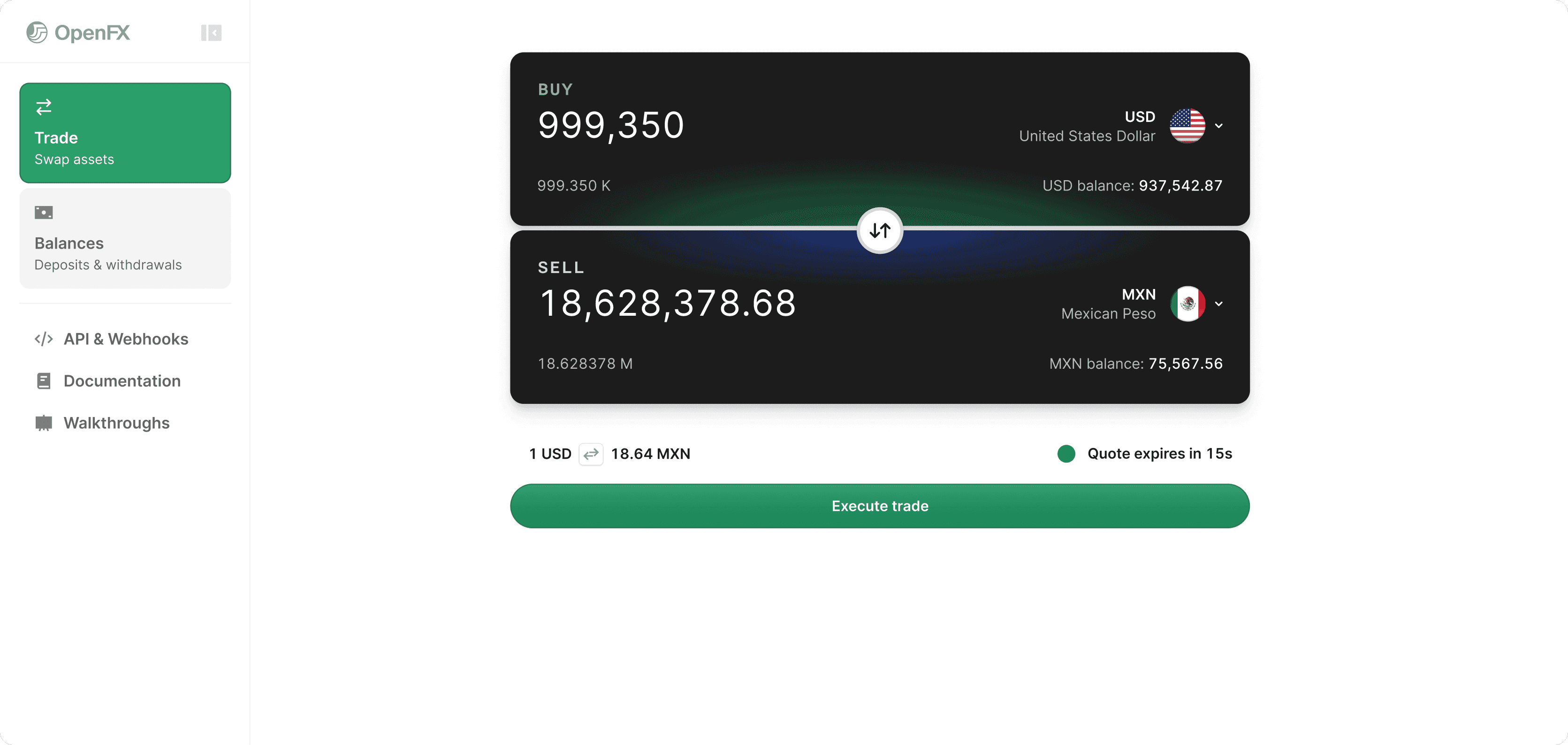
OpenFX trading interface.

FX liquidity available 24/7

Settle multiple times a day. Withdraw in under 60 mins.

FX liquidity available 24/7

Settle multiple times a day. Withdraw in under 60 mins.

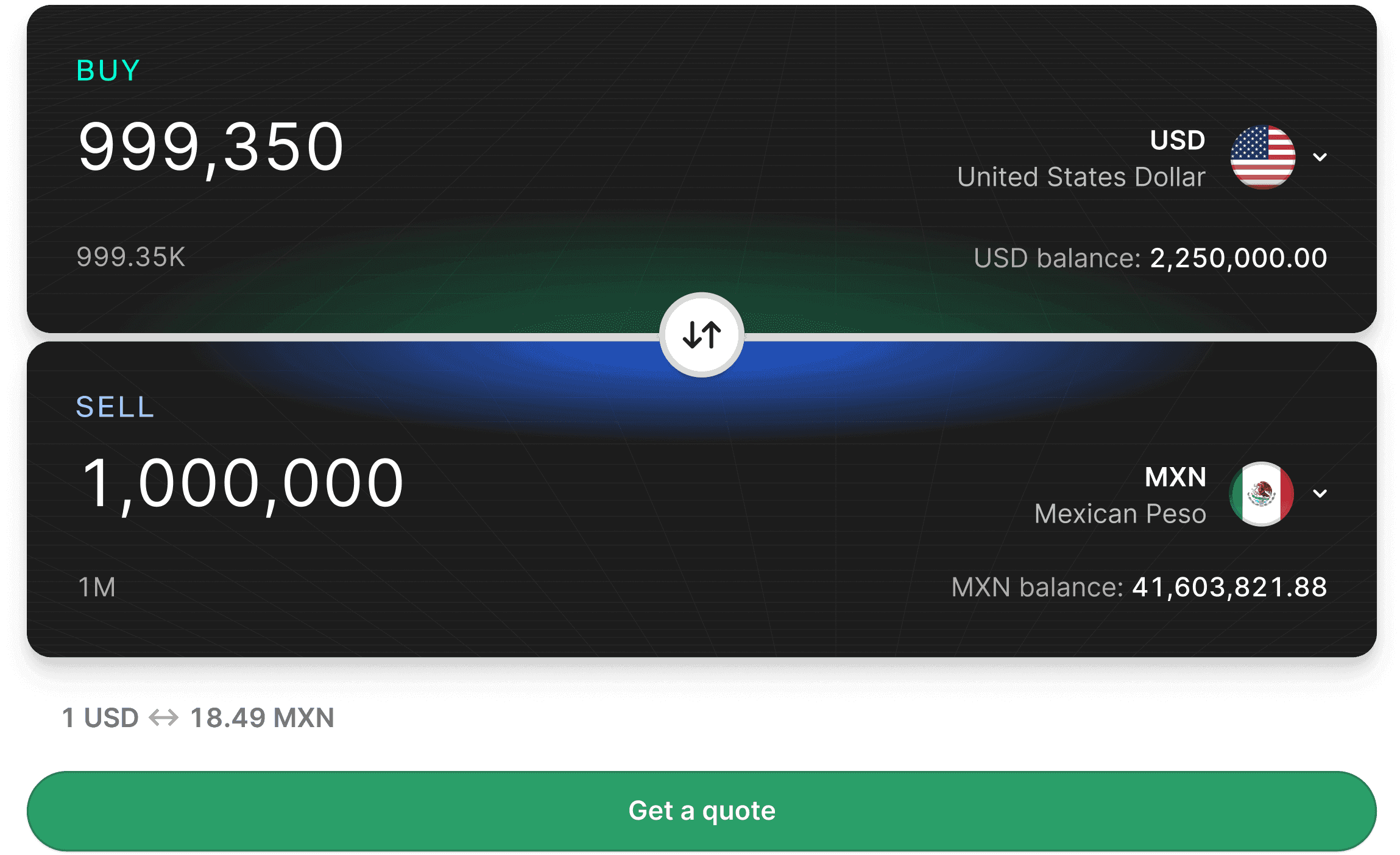
OpenFX trading interface.

Global network

Teams operating across North America, Europe, Middle East, and Asia

Operating Hours

We never close. Our platform and
support teams are available 24/7/365

Write to us

Red Envelope Delta, Inc, NMLS ID No. 2680829
All rights reserved, © OpenFX 2025.

Global network

Teams operating across North America, Europe, Middle East, and Asia

Operating Hours

We never close. Our platform and support teams are available 24/7/365

Write to us

Red Envelope Delta, Inc, NMLS ID No. 2680829
All rights reserved, © OpenFX 2025.

Global network

Teams operating across North America, Europe, Middle East, and Asia

Operating Hours

We never close. Our platform and support teams are available 24/7/365

Write to us

Red Envelope Delta, Inc, NMLS ID No. 2680829
All rights reserved, © OpenFX 2025.