Automated Treasury Management: Stablecoins, LLMs, and the Disintermediation of Cross-Border Payments

Harrison Mann
,
Head of Growth
Something’s gone rotten in enterprise software.
Craft Docs recently made waves by open-sourcing "Craft Agents," a visual interface for AI-powered automation that its non-technical teams now use more than its engineers. The customer support team now processes tickets in 2-3 minutes instead of 20-30. Marketing builds websites without developer support. HR now automates payroll integrations that previously required manual data entry.
The result? They're considering moving off Zendesk entirely—not because Zendesk is bad, but because they've built something that fits their exact needs better than any off-the-shelf SaaS product ever could. Something that has allowed non-technical staff to remove the intermediaries that often slowed the pace of development.
This isn't an isolated incident. It's the start of a fundamental shift in how companies think about operational infrastructure.
Creation is the new configuration
For two decades, enterprise software followed a predictable arc: Companies bought SaaS platforms and configured them, within limited customization options, to roughly fit their workflows. The trade-off made sense: Building bespoke software was expensive, time-consuming, and required specialized engineering talent.
But LLMs have changed that equation. When a marketing intern can build somewhat functional web pages through conversation (“vibe coding”), or when customer support can create database integrations without touching code, standards shift. The need for intermediaries is evaporating before our eyes.
We’ve seen this process of disintermediation before, but typically it has been limited to consumer facing products. When you need an Uber, you don’t have to make a phone call and negotiate a pickup location. You don’t have to read out your credit card number or shuffle with your wallet. You press a few buttons and a car arrives as if by magic.
LLMs allow this same sort of magic but for cognitive tasks. This has rapidly changed market expectations. No one wants to wait around for their favorite SaaS product to add the feature they need, they don’t want to be dumped into the same standardized processes built for the median use case, instead customers increasingly expect to be able to mold the software they use to their particular workflows in real-time.
Implications for financial infrastructure
This change in mindset is not limited to traditional corporate SaaS, it is rapidly spilling over into cross-border payments.
As payment providers build increasingly customized, automated workflows across departments, the trading systems they rely on have to keep pace. With custom LLM-driven systems managing the bulk of treasury operations, reducing transaction overhead to minutes – having a liquidity leg predicated on “chat trades” and manual approvals, beholden to weekends and the half-century old correspondent banking network, becomes increasingly untenable.
The $7.5 trillion daily FX market was built from the ground up as a system of intermediaries, conceived of when phone calls and fax machines were cutting-edge. Traditional banking infrastructure was designed for humans deciding things during office hours, but those expectations are rapidly changing, and the question being asked is, “Are all these intermediaries really necessary?”
Making banking invisible
This is where the concept of "programmatic treasury" becomes compelling. This is the idea that cross-border transactions can be as frictionless as ordering an Uber. Stablecoins allow payment providers to remove the correspondent banking network as a financial intermediary, and LLMs connected to APIs will allow them to remove human beings as an operational one.
Let's compare. Today if a treasury manager were trying to move $50 Million USD to MXN they would have to:
Log into Bloomberg
Check the spot rate
Call their relationship manager
Negotiate a quote
Confirm the quote
Wait for a settlement that might take days as the transaction passes through multiple hops in the correspondent banking network.
Lots of intermediaries, lots of time, prone to failures and slippage.
Soon, with Stablecoins and LLMs they will:
Submit the transaction
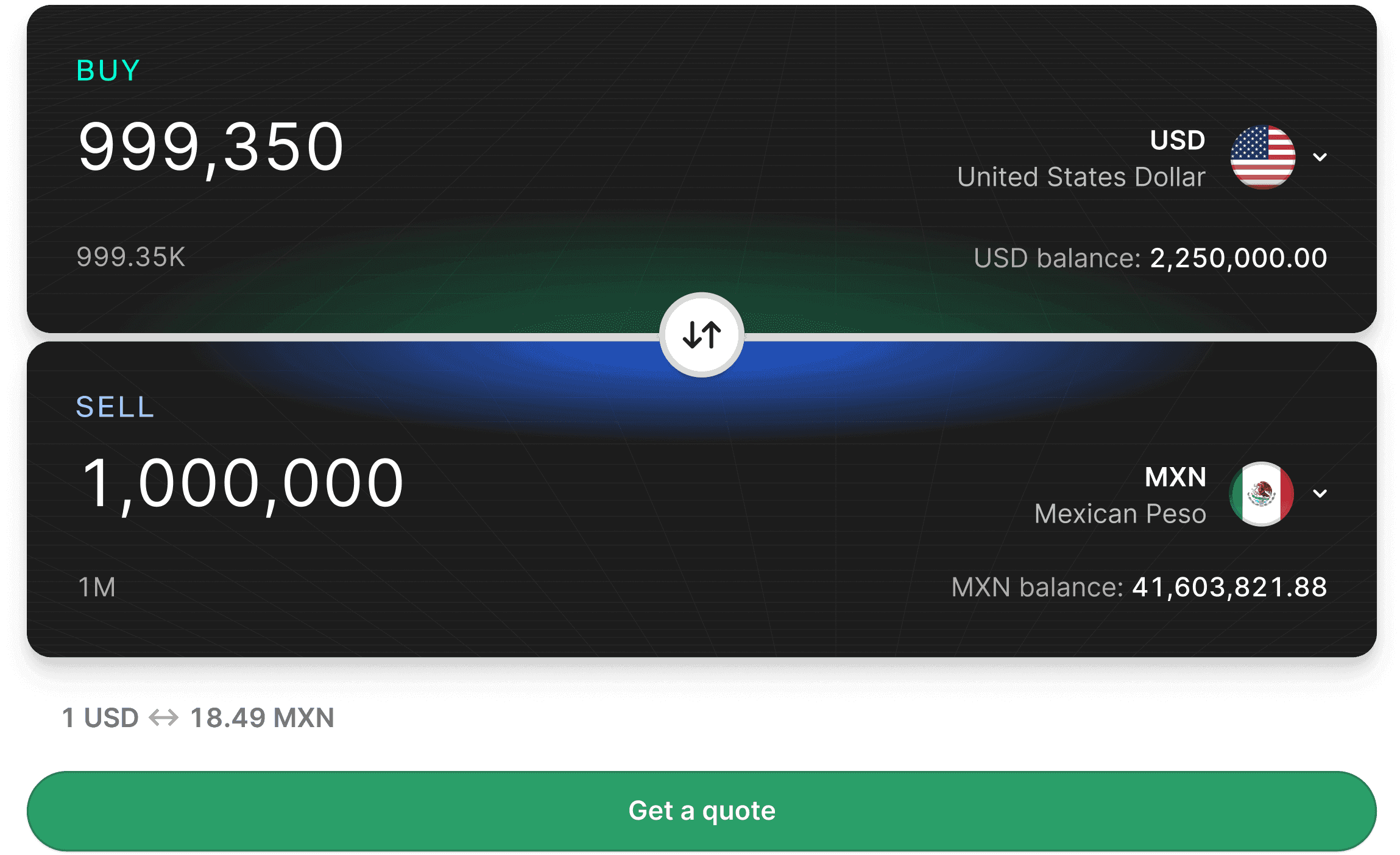
Wait moments as a conversational system uses APIs connected to liquidity providers to present the best available quote
Confirm the quote
Wait minutes rather than days for settlement, as the transaction passes through the blockchain plus local RTP rather than the correspondent banking system.
On the other side of the transaction, a human will check the machine’s work, making certain the automated treasury system is executing as expected.
From the perspective of the payment provider, all of this will have happened near instantly.
Fewer intermediaries, far less friction, speed that results in fewer transaction failures and less slippage.
Automating everything
Programmatic treasury extends well beyond just trading. In the future, treasury managers will be able to:
Automate reconciliation and manage cash flows across various accounts
Get real-time, end-to-end visibility into transactions
Hedge FX exposure with automated triggers
Create automated investment rules based on a variety of different risk criteria
The crypto world has been living this reality for years. When you interact with a DeFi protocol, you're not filling out forms and waiting for approvals; you're executing programmatic transactions that settle instantly, 24/7, with full transparency and atomic execution.
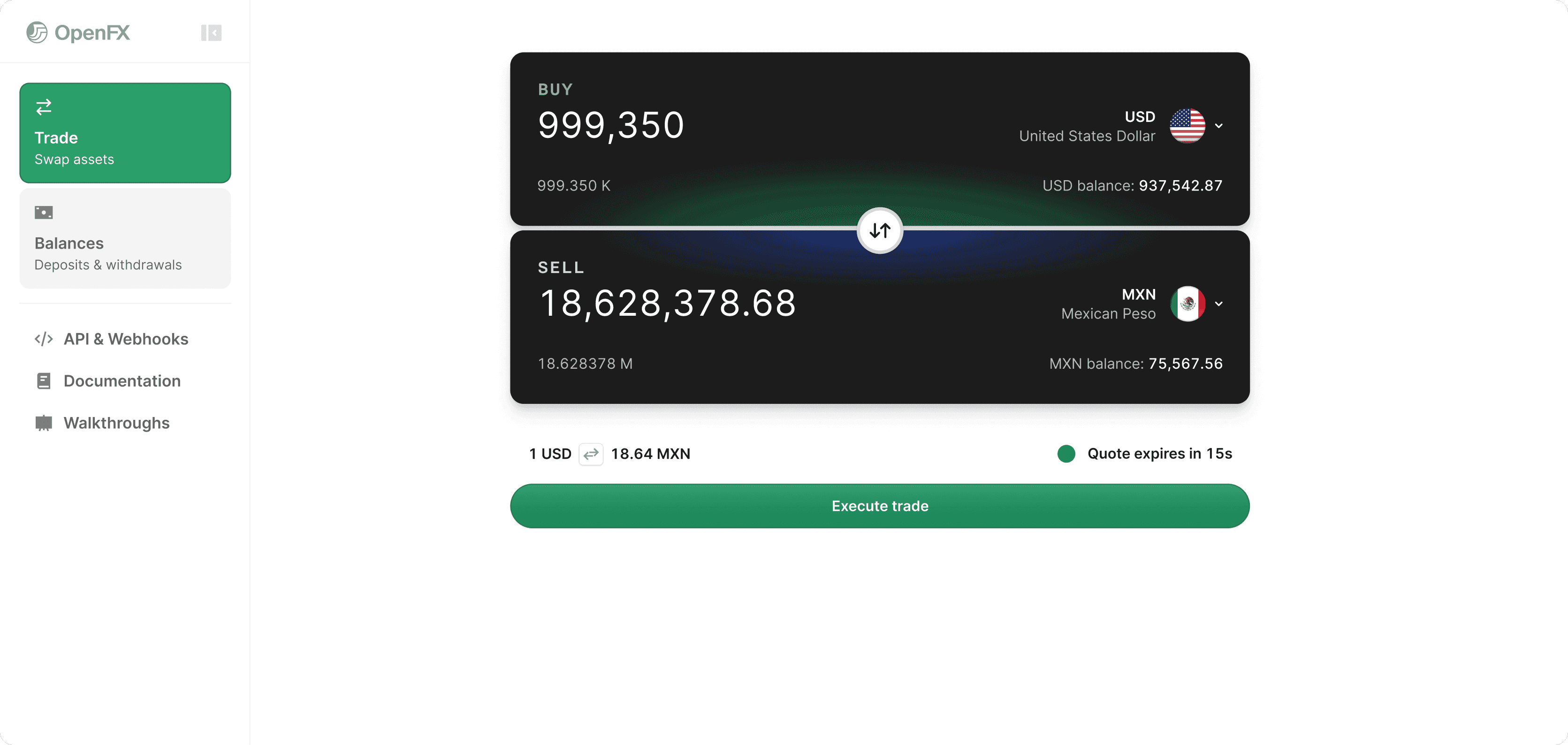
At OpenFX, we're trying to build for this future, creating APIs that help treasurers manage their operations:
24/7 trading and settlement
Programmatic execution of quotes, trades, deposits, and withdrawals
Real-time visibility into all money movement
And far more.
It is our goal to provide an infrastructural layer that makes programmatic treasury operations possible—what Antropic did for enterprise LLMs, we want to do for cross-border liquidity.
The bigger design
What Craft's story illustrates is that we're moving from an era of exclusive talking about platforms towards one where the pipes become equally important, where many traditional intermediaries will be replaced by automated systems ingesting data from a variety of sources. Companies that thrive will embrace this shift, understanding their competitive advantage comes from how they orchestrate operations, not what tools they use. It's about having infrastructure flexible enough that teams can build what they need, when they need it, without waiting for a vendor roadmap or settling for someone else's model.
In keeping for financial operations, the winners won't be those with the most features in their treasury management platform. They'll instead be in possession of deeply programmable, composable infrastructure—systems designed to be orchestrated by both humans and agents, operating at the speed of modern commerce rather than the pace of legacy banking.
Money should move as freely as data.
Share article
Read other articles
Stay informed with our latest articles on currency launches, institutional FX trends, and global liquidity.